Breaking News
next news
prev news
published Monday, March 22nd, 2010

Nuclear waste piling up in region

  • photo
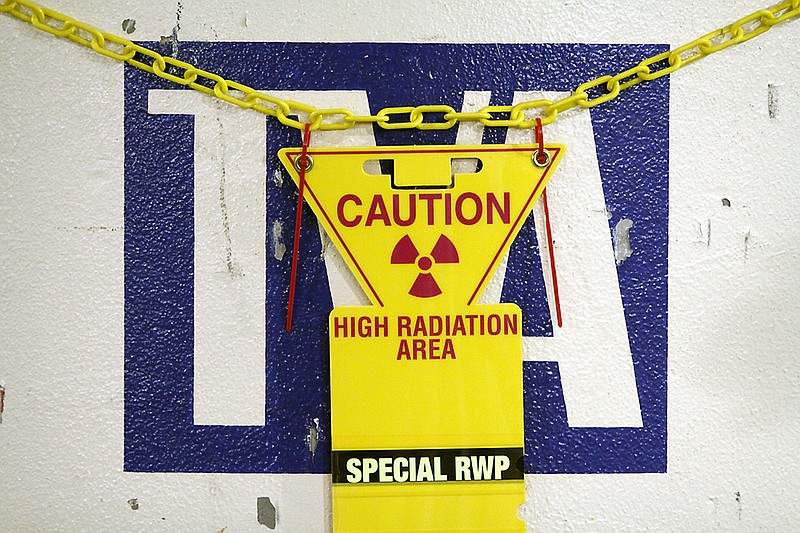
    Staff Photo by Dan Henry/Chattanooga Times Free Press A caution sign designates a radioactive area in front of a canister in TVA's Sequoyah Nuclear Power Plant in Soddy-Daisy.

Three nuclear power plants along the Tennessee River near Chattanooga are storing 3,013 metric tons of highly radioactive nuclear waste.

By mid-century, the waste volume stored in Soddy-Daisy and Spring City, Tenn., and Athens, Ala., could more than double if no permanent solution for storing or reducing spent nuclear fuel is found, government studies show.

Sara Barczak, program director for high risk energy choices at the Southern Alliance for Clean Energy, said the lack of storage for nuclear waste is a national problem. But it is especially problematic in the Southeast, where there is a concentration of nuclear plants, she said.

She said reactor sites never were intended to be "mini Yucca Mountains."

"These were sites that were evaluated in the 1970s and 1980s to be homes for nuclear power plants for about 40 years," Ms. Barczak said. "They were never intended to store what is basically the most toxic waste known to man."

Spent fuel rods from the reactors are stored in water pools and dry casks at the plants as the federal government continues a decades-long effort to build a permanent nuclear waste storage facility.

Terry Johnson and Ray Golden, spokesmen for TVA's nuclear program, said the spent fuel rods in pool storage are closely monitored and removed to dry cask storage as they cool. That's because at both Sequoyah, in Soddy-Daisy, and Browns Ferry, in Alabama, the pool storage capacity is maxed out.

At Sequoyah, about 20 casks sit on a concrete pad inside a fence. Armed guards man checkpoints nearby. A similar scenario is in place at Browns Ferry.

PDF: Environmental assessment of Bellefonte

PDF: NRC report on Browns Ferry

PDF: Decision on Bellefonte Nuclear Plant

Article: Radioactive issue

Slideshow: Bellefonte future

Article: Step-by-step approach improves TVA performance

Article: Nuclear options for Bellefonte

Article: Georgia leads way in next generation of nuclear design

PDF: NRC letter to TVA

PDF: B&W nuclear reactor

Article: TVA eyes Oak Ridge nuclear plant

PDF: Sen. Lamar Alexander speech

Article: Alexander wants 100 reactors

Article: Georgia likely site for nuke’s new design

Article: Tennessee Valley Authority urged to increase nuclear power at Bellefonte

PDF: NRC concerns about Bellefonte permit

PDF: List of proposed reactors

Article: Tennessee Valley Authority seeks green power from windy Midwest

Article: Advocates push for more green power use

PDF: TVA renewable purchases

PDF: NRC comments on Bellefonte license

Article: Salvaging Bellefonte

PDF: NRC Bellefonte report

PDF: TVA renewable power

Article: Tennessee: TVA considers more renewable power

Article:Union rips Tennessee Valley Authority guard changes

Article: Tennessee: NRC OKs new work at Bellefonte

PDF: NRC Bellefonte permits

Article: Chattanooga: Nuclear power touted as solution to U.S. energy woes

PDF: Sequoyah order

Article: Tennessee: TVA guard falsified records, report says

Article: Prepping for a nuclear rebound

Article: Lining up for nuclear revival

PDF: Draft GNEP impact study

Article: East Tennessee makes push for nuclear fuel recycling site

Article: Tennessee Valley Authority power cheaper, more reliable, but operating costs still above average

Article:Tennessee: Area aglow over nuclear growth

Article: Chattanooga: Capitol ambitions held for cell Wamp says fuel unit tested at UTC lands $3.5 million in taxpayer money

Article: Lawmakers say lower gas prices shouldn’t dampen focus on energy

Article: Tennessee Valley Authority urges conservation to limit rate impact

Article: Tennessee: Staying beneath the debt cap

Article:Tennessee Valley Authority cuts contract for nuclear security

Article: Tennessee Valley Authority rate increase electrifies Congress

Article: Tennessee Valley Authority to study reviving Bellefonte reactors

Article: New Energy Reform Act of 2008

Article: Chattanooga: Law enforcement learns about transuranic waste

Article: Chattanooga: Nuclear may power local jobs

Article: Tennessee: New nuclear plants get more expensive

Environmentalists warming up to nuclear energy options

TVA a player in nuclear’s comeback

Nuclear waste shipments in Chattanooga growing sharply

Nuclear poised to take slice of energy pie

Each dry cask is a steel canister, placed within another steel canister and layered in between with concrete. The casks are designed to safely hold the waste for 100 years.

TVA officials insist the stored wastes are safe where they are.

"We have back-ups after back-ups," said Kevin Wilkes, Sequoyah's operations superintendent and senior reactor operator.

Stored in limbo

When the nation's nuclear program was developed, the plan was that the U.S. Department of Energy would site and build a permanent resting place for the highly radioactive waste. But that hasn't happened.

Last month, the Obama administration effectively ended the long-studied idea of storing the nation's spent nuclear fuel deep under Yucca Mountain in Nevada.

Meanwhile, the nation's 104 reactors continue to produce about 2,000 metric tons of highly radioactive waste each year, and now the country is moving toward adding new nuclear reactors.

Locally, TVA plans to add one at Watts Bar and two at Bellefonte Nuclear Plant in Hollywood, Ala.

TVA, like other utilities, sued the U.S. Department of Energy in 2001 after DOE failed to pick up the waste and move it to a permanent storage place as contracted in 1998.

A federal court ruled in favor of TVA. The Energy Department has paid the federal utility $45 million to compensate for spent fuel handling costs through fiscal 2005 for failing to take custody of the waste as required by law. Pending payments for FY 2006-08 total about $25 million.

In the meantime, TVA has paid $923 million to the Nuclear Waste Fund for an eventual permanent repository -- about $50 million a year, Mr. Golden said.

But Mr. Golden said TVA eventually will run out of storage space for the spent fuel.

Browns Ferry will reach its storage room capacity in 2018, and Sequoyah will run out of room in 2028, he said.

Watts Bar's storage pool will reach capacity in 2015. With a storage rack modification, that date can be stretched to 2020, he said.

NUCLEAR WASTE FUND

All commercial nuclear plants contribute to a Nuclear Waste Fund to go toward siting and building a permanent spent fuel storage facility. To date, $17.2 billion has been contributed, including:

* $478.6 million: Tennessee plants

* $701.7 million: Georgia plants

* $774.2 million: Alabama plants

Source: Nuclear Energy Institute

Nuclear waste stored locally

Sequoyah

1,094 metric tons

812 in pool storage inside the plant

282 in casks outside the plant

Watts Bar

315 metric tons

All in pool storage inside the plant

Browns Ferry

1,604 metric tons

1,415 in pool storage inside the plant

189 in casks outside the plant

All TVA plants

3013 metric tons

YEARLY LOCAL WASTE TOTALS

Per reactor

* Browns Ferry: 32 metric tons

* Sequoyah: 25

* Watts Bar: 25

Source: TVA

about Pam Sohn...

Pam Sohn has been reporting or editing Chattanooga news for 25 years. A Walden’s Ridge native, she began her journalism career with a 10-year stint at the Anniston (Ala.) Star. She came to the Chattanooga Times Free Press in 1999 after working at the Chattanooga Times for 14 years. She has been a city editor, Sunday editor, wire editor, projects team leader and assistant lifestyle editor. As a reporter, she also has covered the police, ...

3
Comments do not represent the opinions of the Chattanooga Times Free Press, nor does it review every comment. Profanities, slurs and libelous remarks are prohibited. For more information you can view our Terms & Conditions and/or Ethics policy.
sunshine said...

-----══════∩═════.      ╭╬╮         .◢. .▁╭▅▆▇□□█▇▆▅▄▃▂▁(╳)█╮.  .╰═▃__▁▁▁▁▁∠════▔▔▔      ╙O. .╙O. -----http://www.wowgoods.net/------- ----http://www.wowgoods.net/------

March 22, 2010 at 8:11 a.m.
GarryMorgan said...

What does the first post diagram represent?

Excellent article on nuclear waste. At the end of this year there will be near 7 million pounds of nuclear waste in the TVA area. The TVA has no idea what they are going to do with the nuclear waste except increase the size of the radioactive nuclear waste dump at each nuclear plant.

Bellefonte going nuclear will bring more waste, or maybe TVA plans on turning Bellefonte into its radioactive nuclear waste dumping ground???

March 22, 2010 at 2:47 p.m.
SkyWatcher said...

Every method of generating electricity has its drawbacks. But your lifetime usage is the equivalent of a lipstick-sized chunk of nuclear waste, as opposed to the tons of toxic fly ash and air emissions (both of which are also slightly radioactive) if all of your electricity came from coal. Coal usage has had a much more damaging environmental, health, and worker-safety impact than nuclear ever has. In the southeast there are no other reliable and cost effective ways of generating the necessary baseline electricity for our households and industry than nuclear or coal. Solar, hydroelectric, biofuels, landfill gas, and wind can help, but they will necessarily remain a small percentage of generation options because they are difficult to scale up without damaging environmental impacts. Natural gas can be used for peak demand times, but tends to be expensive.

What will TVA do with their nuclear waste? Realistically they should recycle (reprocess) it, as spent fuel has a great deal of remaining fuel value, then dispose of the remnants in a geological repository. We have the technology, it is now a matter of political will.

March 23, 2010 at 1:01 p.m.
please login to post a comment

videos »         

photos »         

e-edition »

advertisement
advertisement
400 East 11th St., Chattanooga, TN 37403
General Information (423) 756-6900
Copyright, permissions and privacy policy, Ethics policy - Copyright ©2012, Chattanooga Publishing Company, Inc. All rights reserved.
This document may not be reprinted without the express written permission of Chattanooga Publishing Company, Inc.