
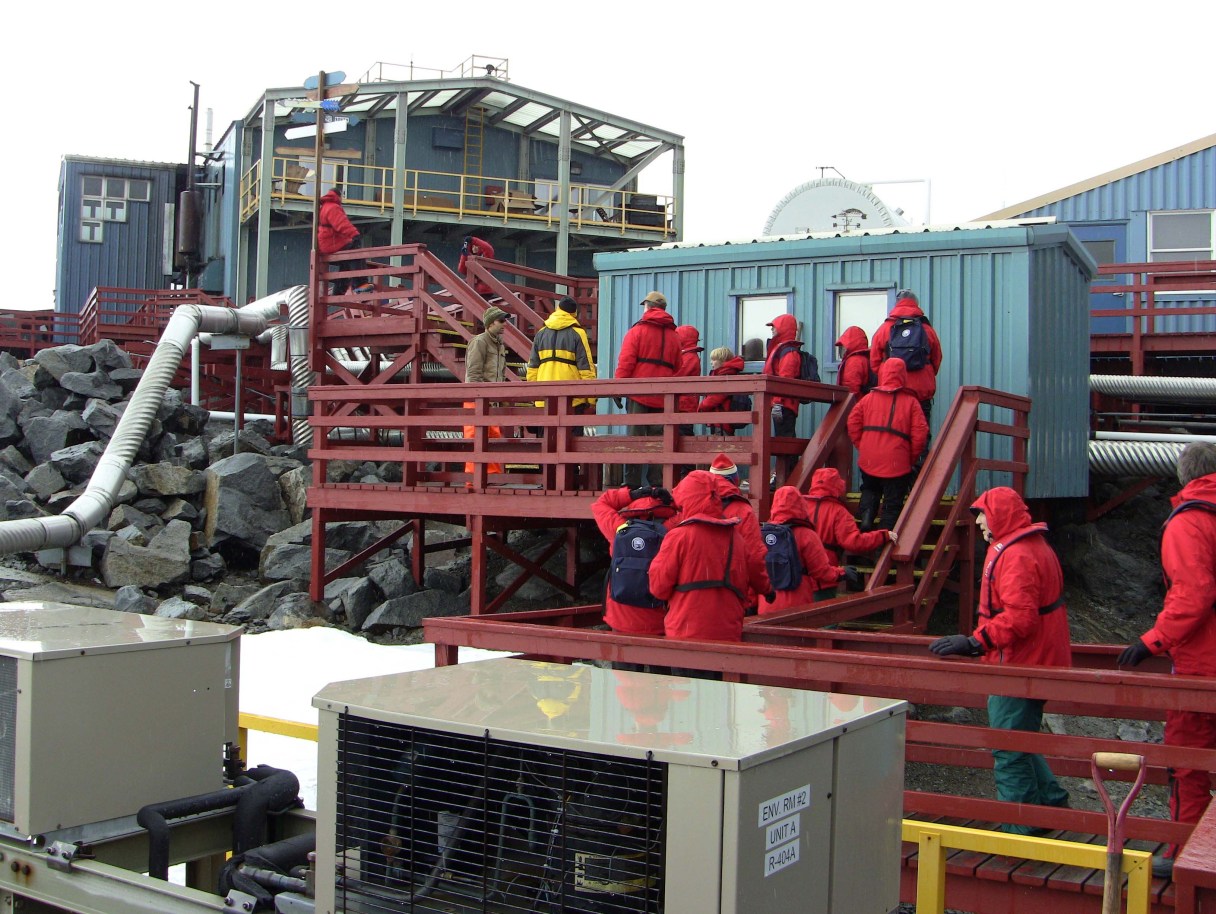
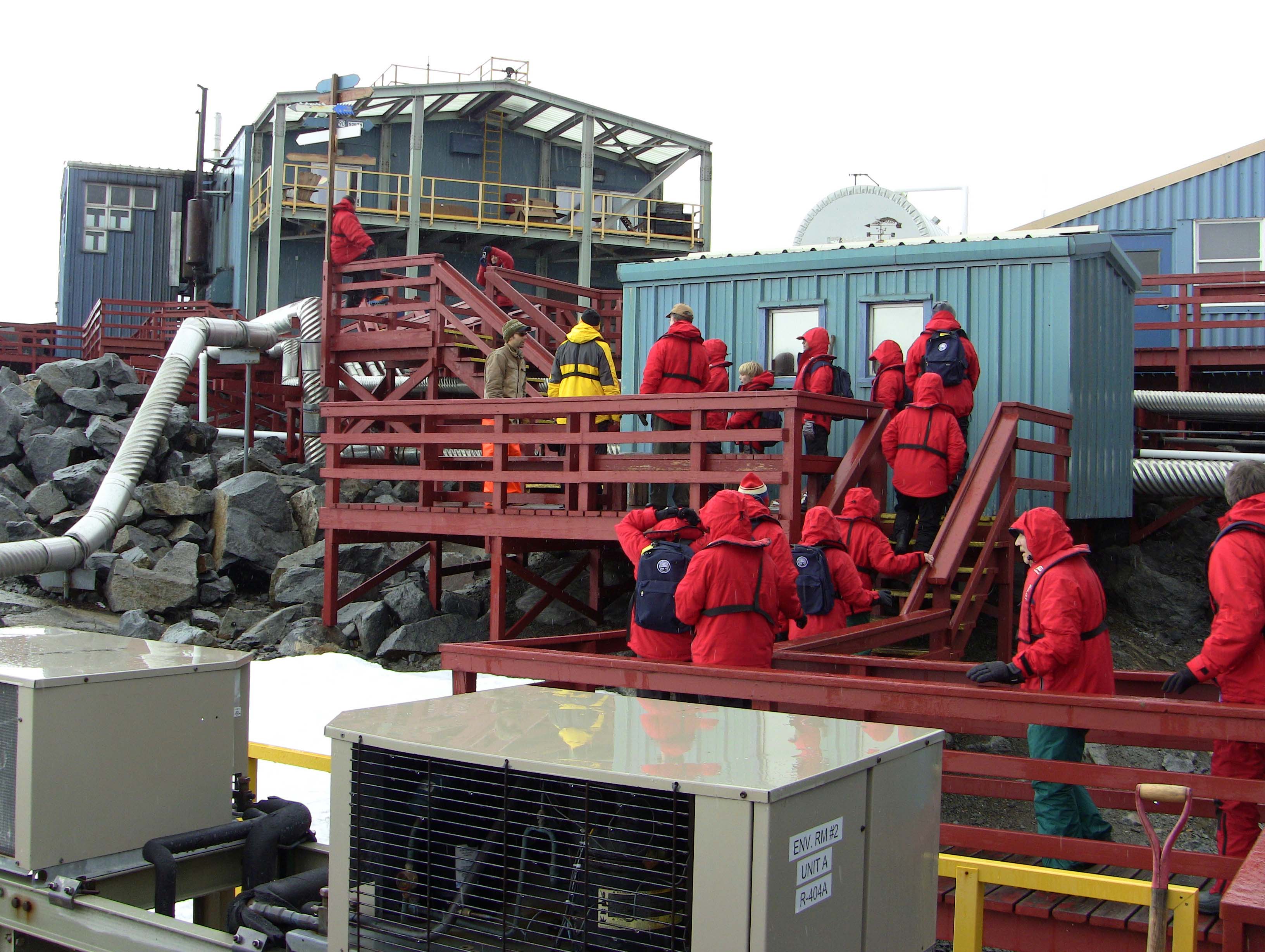
 Palmer Tour
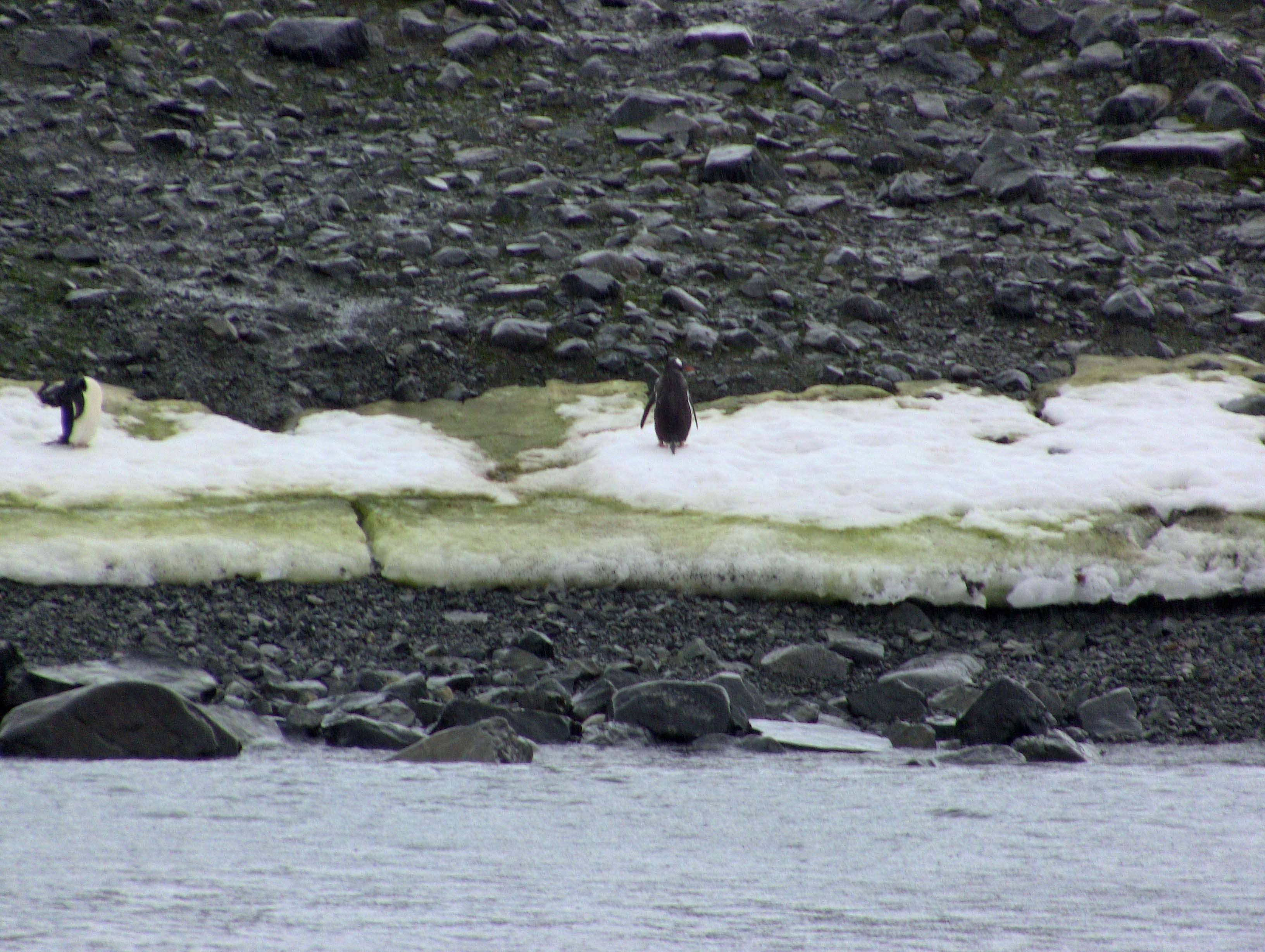 Gentoos at Palmer
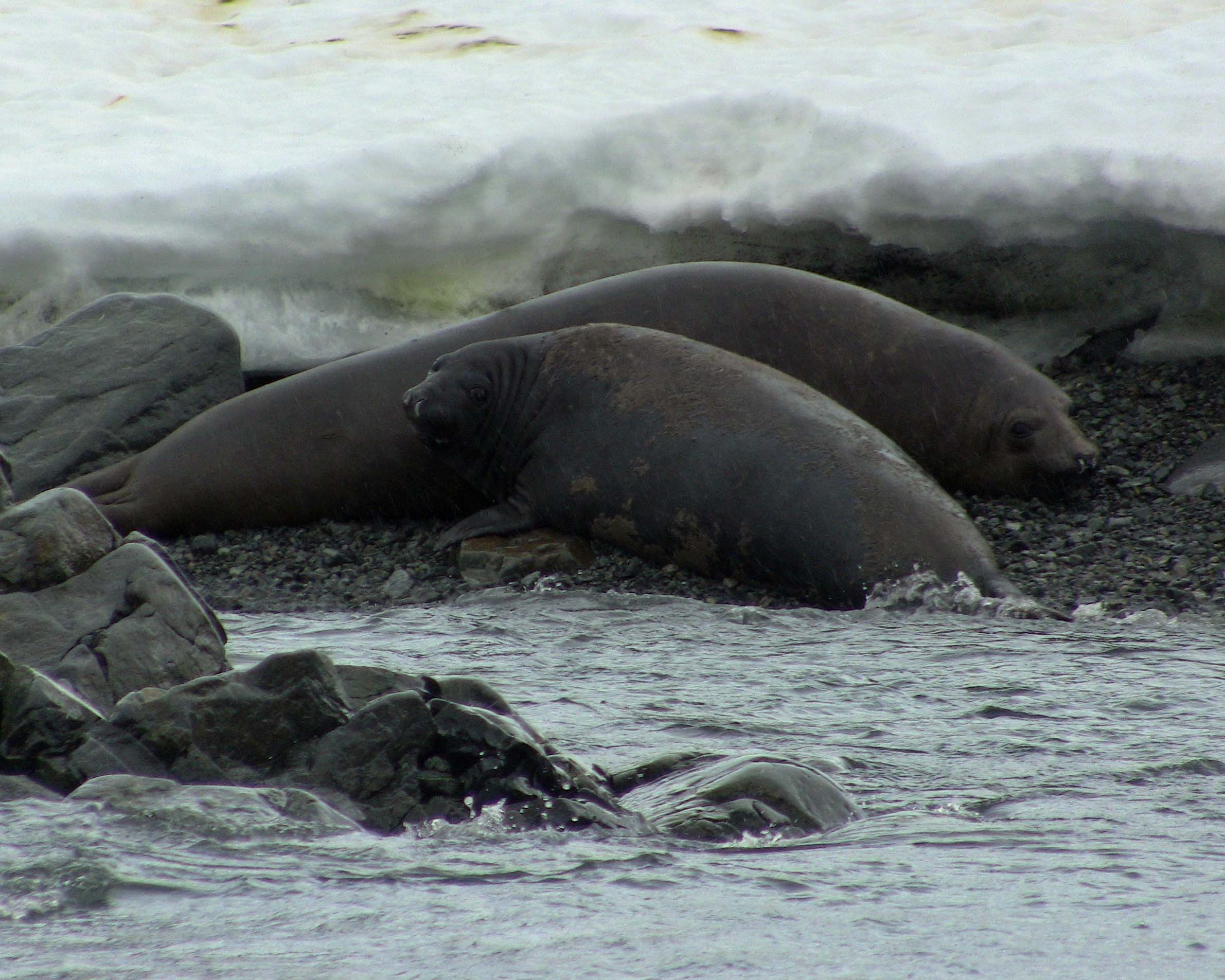 Elephant seals
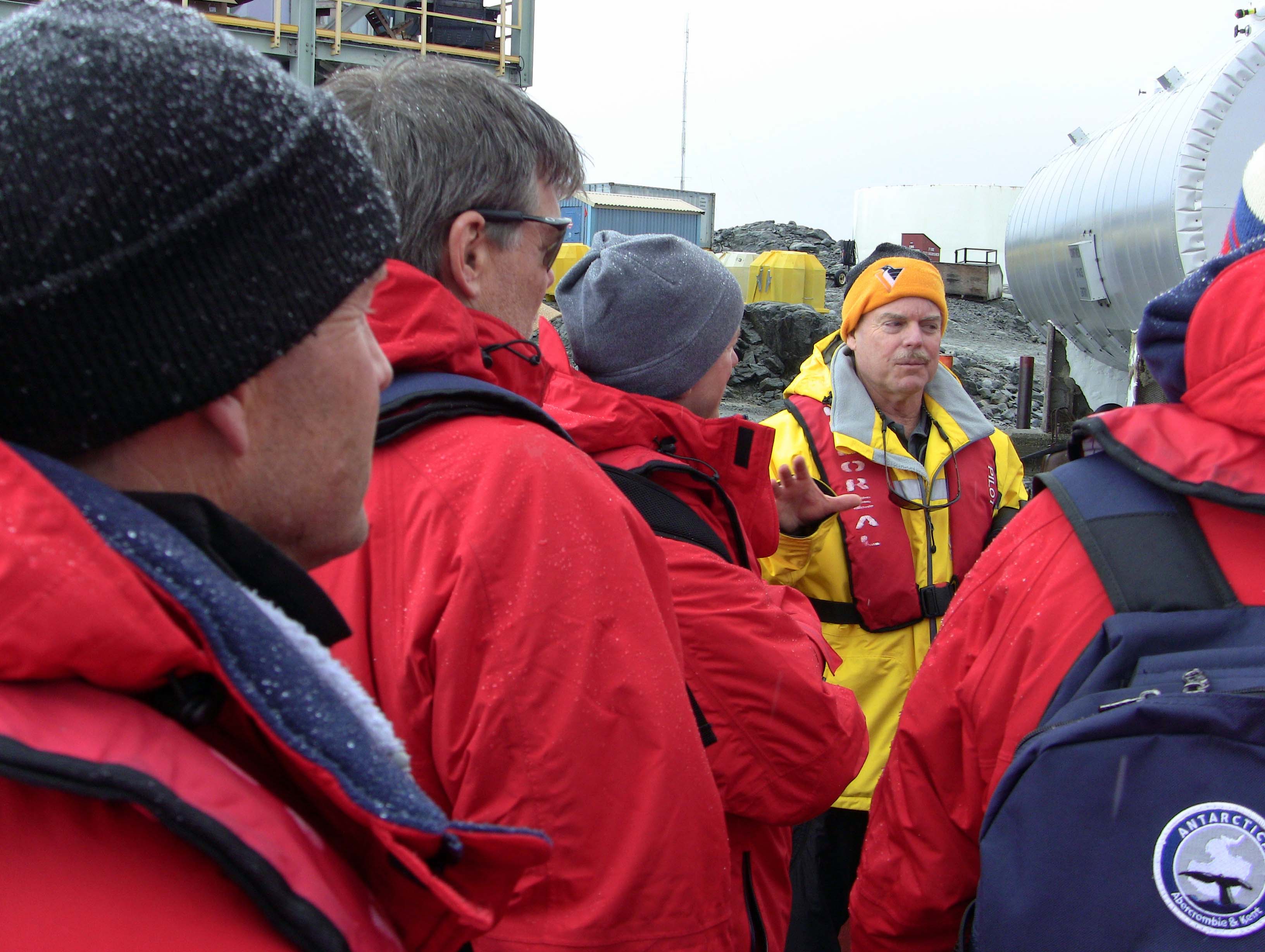 Dr Jim at Palmer
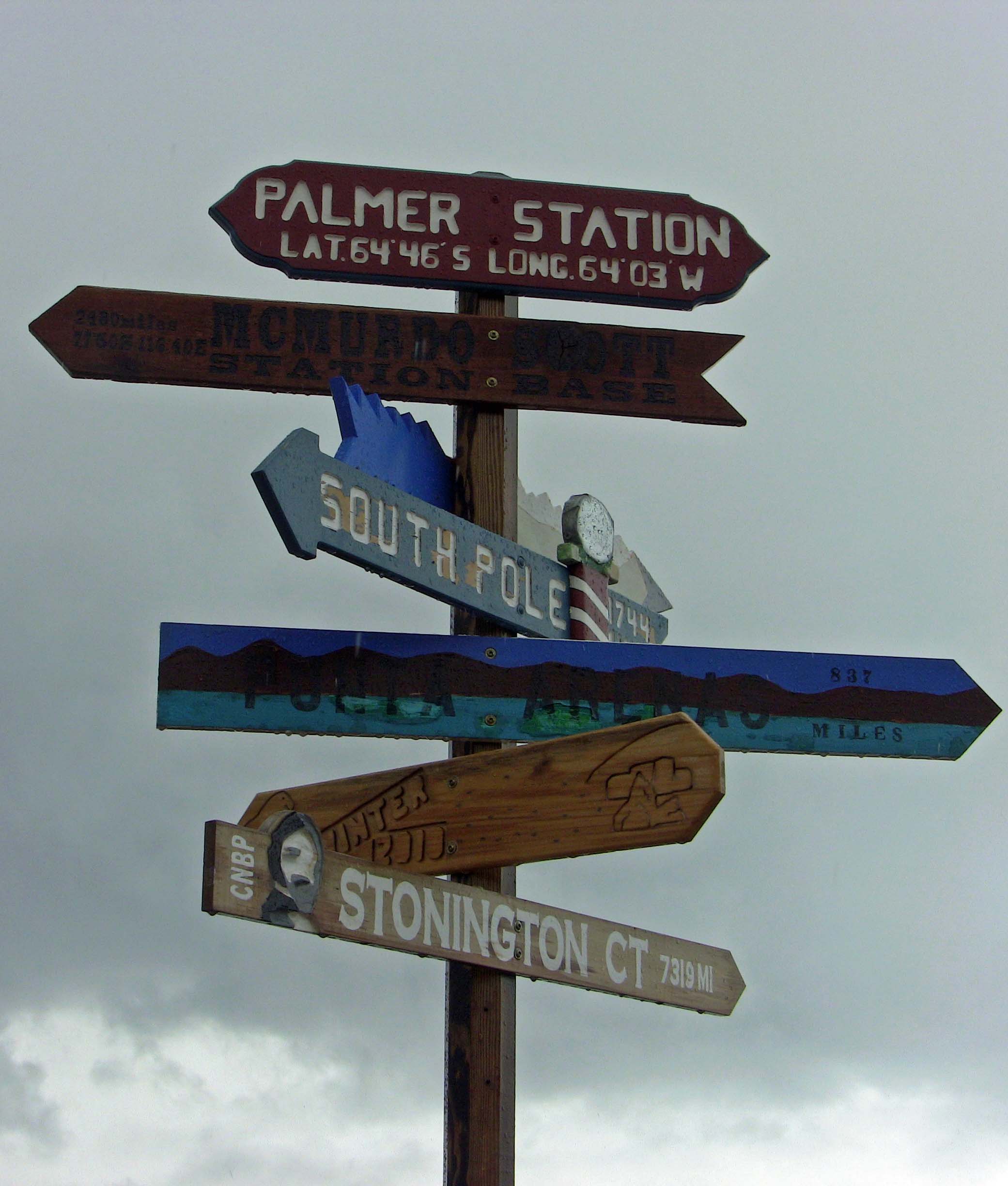 Crossroads at Palmer
Thursday, December 15th, 2011
There was a patter of raindrops on my cabin window this morning. Through the light showers, I could see the Palmer Long Term Ecological Research Station across Arthur Harbor from Le Boreal. Rain in Antarctica – yet another face of the “White Continent” we are seeing at the bottom of the Earth. Rainfall is becoming more and more common in this part of the Antarctic Peninsula. And it is one of the many things scientists are studying at Palmer Station.
We began our day with a Zodiac tour of the harbor, cruising through “brash ice” before spotting southern elephant seals, one of the six species of seals that live in the southern ocean. These guys are giants, sometimes reaching five tons in weight. Most of the elephant seals we saw this morning were juveniles, lacking the trunk-like noses of the mature males. These elephant seals were molting, or replacing their fur. They are amazing animals to observe, even though they don’t move much once on land. In spite of their size, most elephant seals are rather shy and docile.
Did you know that a 10,000 pound elephant seal is not the largest Antarctic animal? If not, what is?
Senior educator Julia Gregory and the kids who are part of The Tennessee Aquarium’s Bug Club: http://www.tnaqua.org/Education/BugClub.aspx http://www.tnaqua.org/Education/BugClub.aspx will be interested to know the answer.