
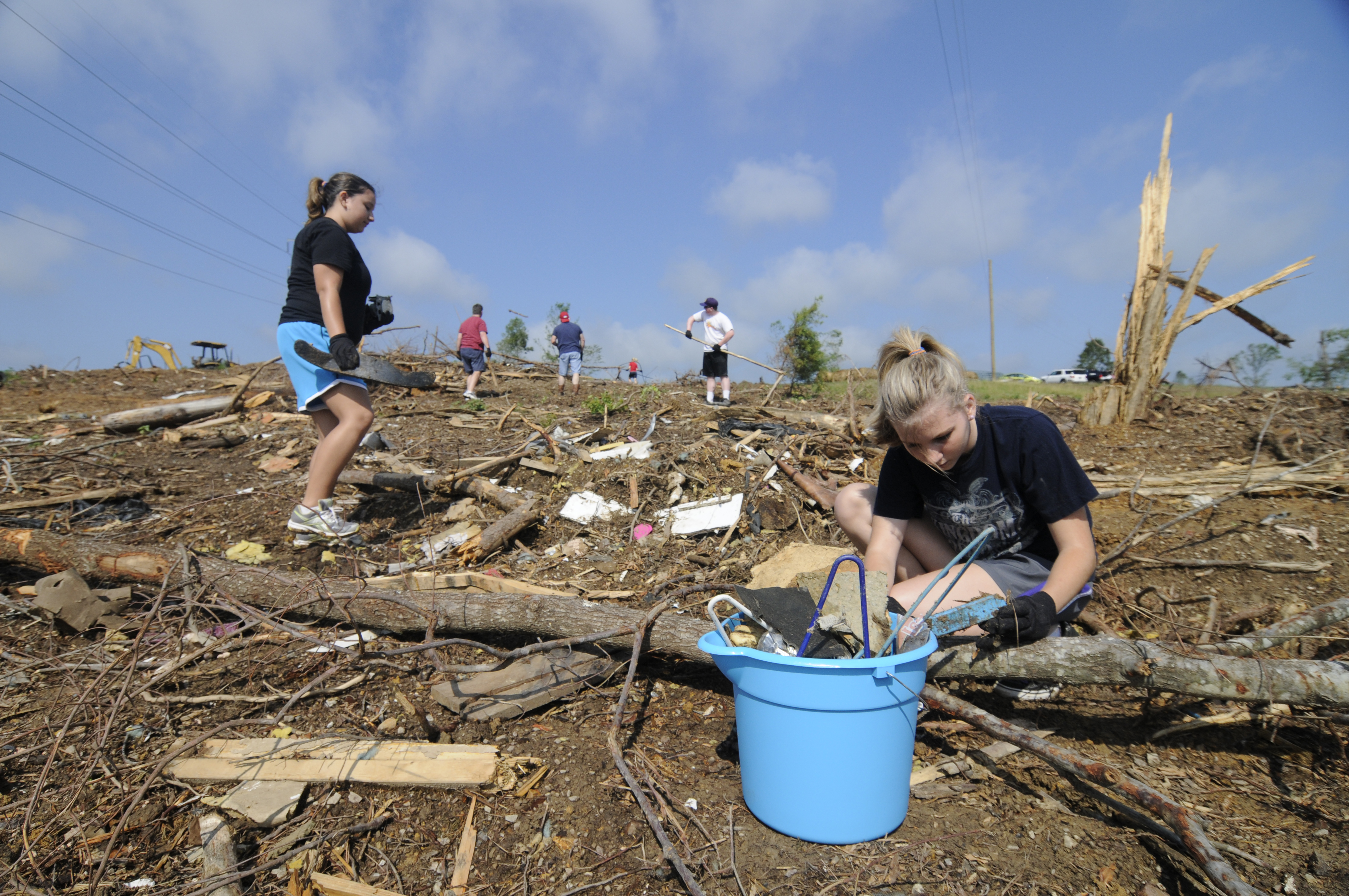
 Stephanie Poposky, right, sorts through debris as Sarah Maddox walks nearby while working in June 2011 with the Alive In You work camp on Clonts Road in Apison.
Read more’I just can’t throw them away’: Patty Bullion made Facebook page to help return heirlooms to families
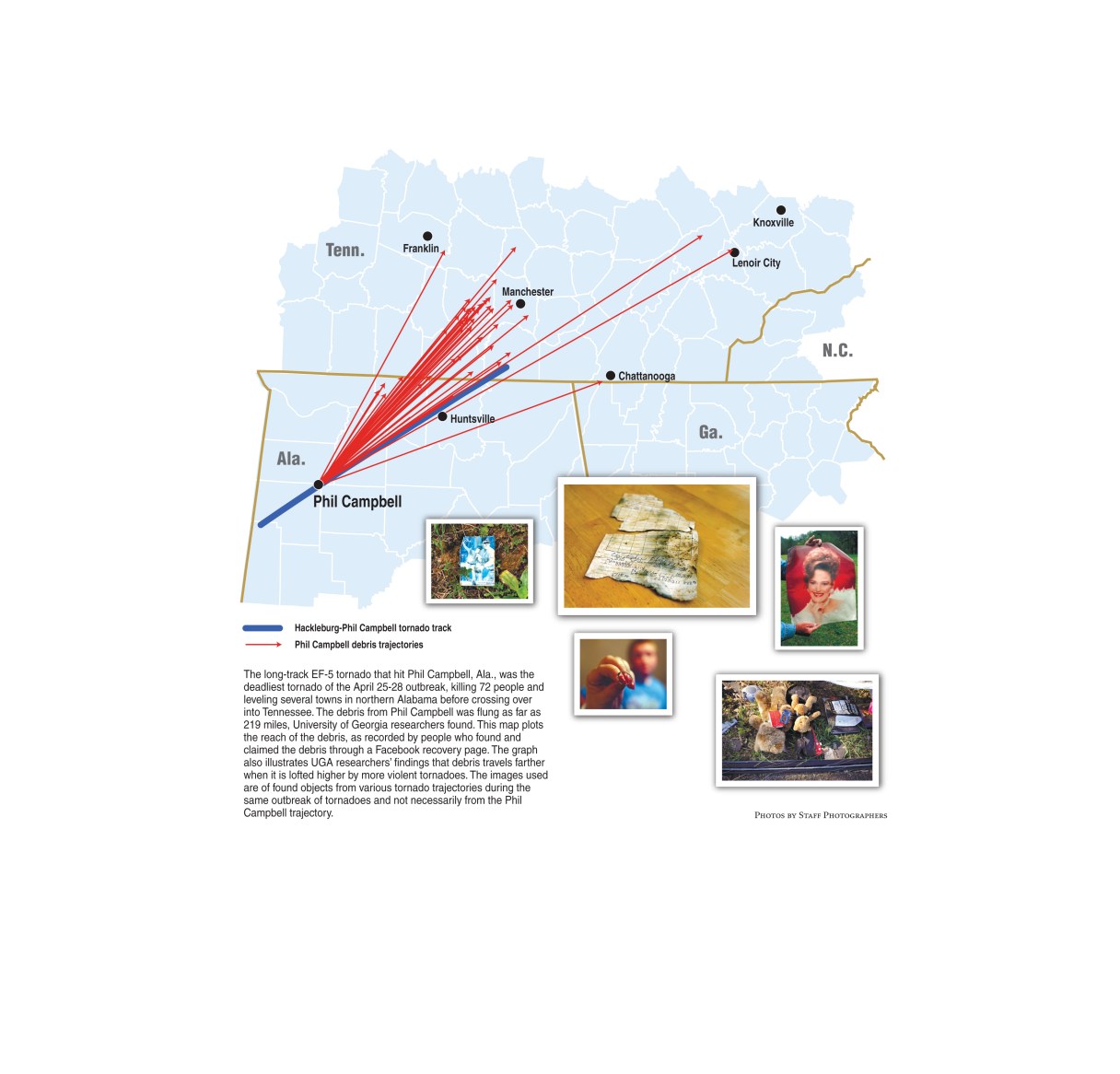
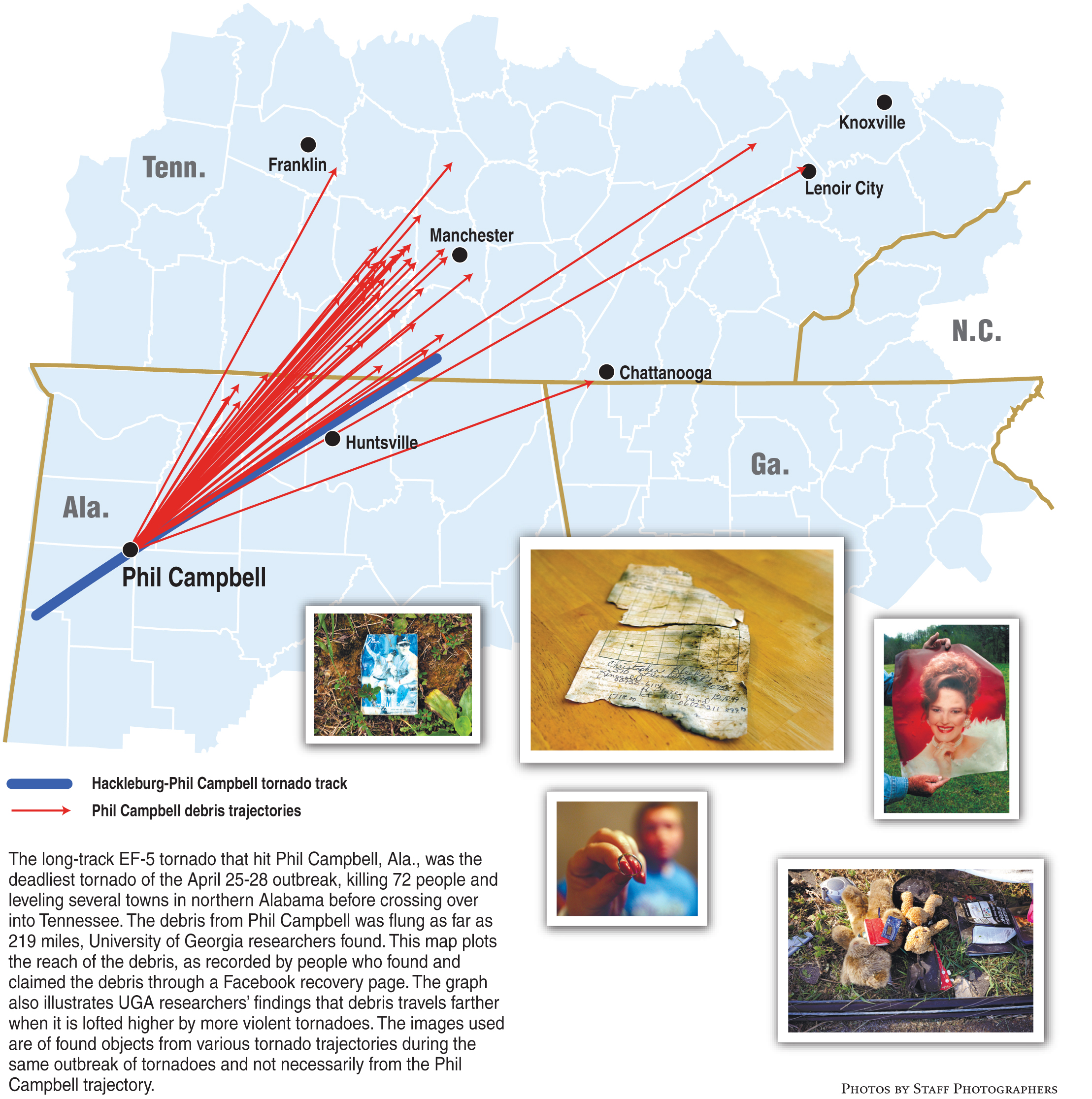
APRIL 27 TORNADO OUTBREAKTwo years ago, more than 200 tornadoes touched down in the Southeast, killing more than 340 people and wreaking millions of dollars in damage. In the tri-state region alone, 81 people died as the twisters devastated communities around Ringgold, Ga.; Trenton, Ga.; Rainsville, Ala.; Apison, Tenn.; Cleveland, Tenn.; and the New Harmony community in Bledsoe County, Tenn.DEBRIS STUDY934 — Number of debris objects studied.15 — Minimum number of tornadoes that carried the debris in the data set.219 — Miles traveled by a photo from Phil Campbell, Ala., to Lenoir City, Tenn. The journey broke the previous record for the longest-documented debris trajectory.Source: Tornado Debris Characteristics and Trajectories During the 27 April 2011 Super Outbreak as Determined by Using Social Media Data.
Tornado debris can’t talk.
Wrinkled photographs can’t explain how they were torn from albums and sucked into storm clouds. Old receipts can’t describe how they soared over miles of countryside until they were dumped into pastures like snow. Quilts can’t recount whipping and tumbling on the winds like wild birds.
The debris can’t talk, University of Georgia professor Dr. John Knox repeats. But the people on either end of the debris’s journey can.