
ABOUT THE WRITER
Riley Draper is a writer and entrepreneur from Chattanooga. He is the co-founder of WeCounsel Solutions, and the former editor-in-chief of the University of Tennessee at Chattanooga’s literary journal, the Sequoya Review. In 2013 he received a grant from the Mozilla Foundation.
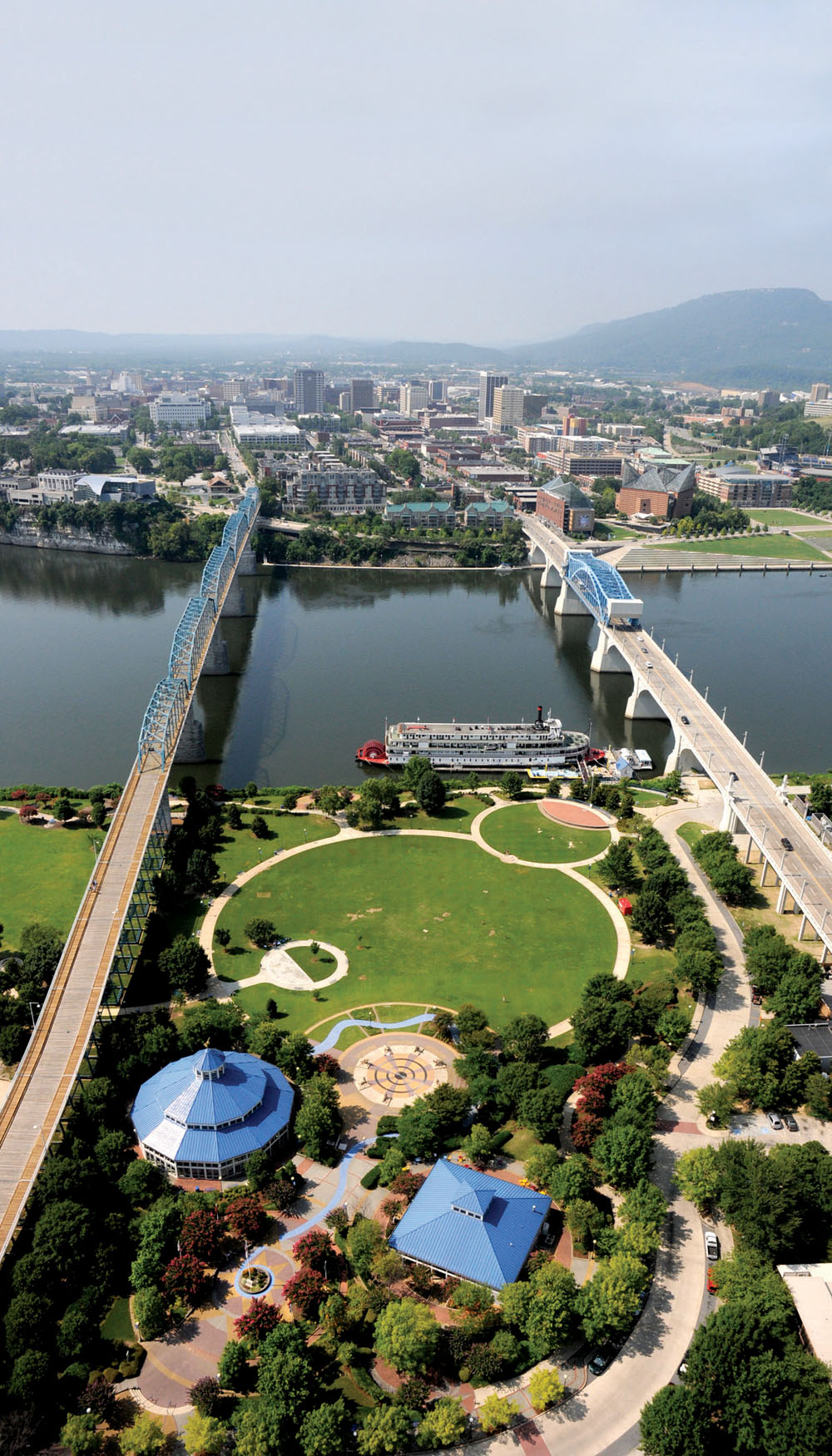 The Delta Queen is docked on the North Shore of the Chattanooga riverfront near Coolidge Park.
I get asked a lot about what it’s like to be an entrepreneur living in Chattanooga and if I’d be happier living somewhere else like San Francisco or New York.
Truth be told, I had never given it much thought until I visited the bay area last May. By the time I had fought my way through the crowded aisle of the airplane and escaped into the terminal I had already met close to 10 entrepreneurs. Before returning home a week later, I would meet dozens more – each one hailing from a city they had outgrown in pursuit of something bigger, the way actors flock to New York City for a shot on broadway. Whether any of them had considered Chattanooga as an option before leaving, I could never know for sure, but here’s a few reasons for the ones that didn’t:
Unsaturated: As wonderful and dazzling as the Golden Gate Bridge is from Crissy Field at twilight or the way the Painted Ladies line the streets of Alamo Square, unless you’re Mark Zuckerberg, in San Francisco you’re just another entrepreneur. And that’s fine for some people. But if you’re like me, you want your startup to have as much exposure as possible and that means clear visibility for mentors, investors, and the community. This way, when your startup does something exciting people will actually hear about it. Launching in a city that isn’t saturated with entrepreneurs and big ideas affords your startup the opportunity to get the attention it needs to grow into something truly remarkable.
Inexpensive: Chattanooga is perfect for entrepreneurs (especially for the majority of us who are poor) because it’s the one place you can get the resources you need without being forced to salvage your money on excessive salaries or expensive rent. The office space I share (which is filled with Smart Furniture) has been paid for since last fall by the Company Lab and GigTank, accelerators funded by state programs such as LaunchTN and technology enterprises like Alcatel-Lucent.