
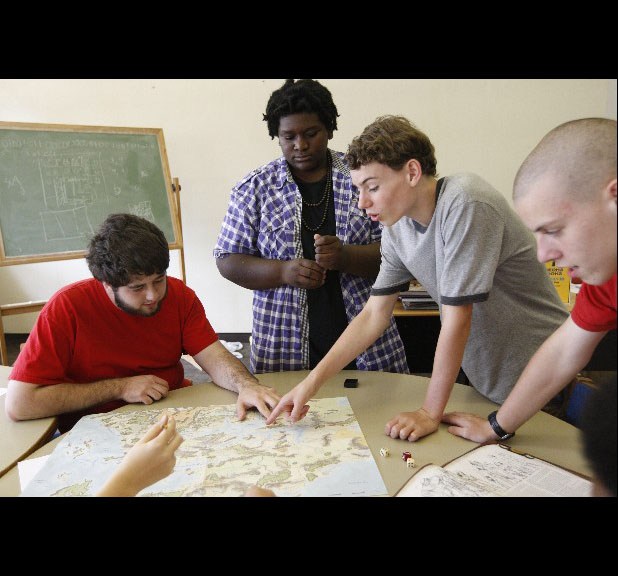
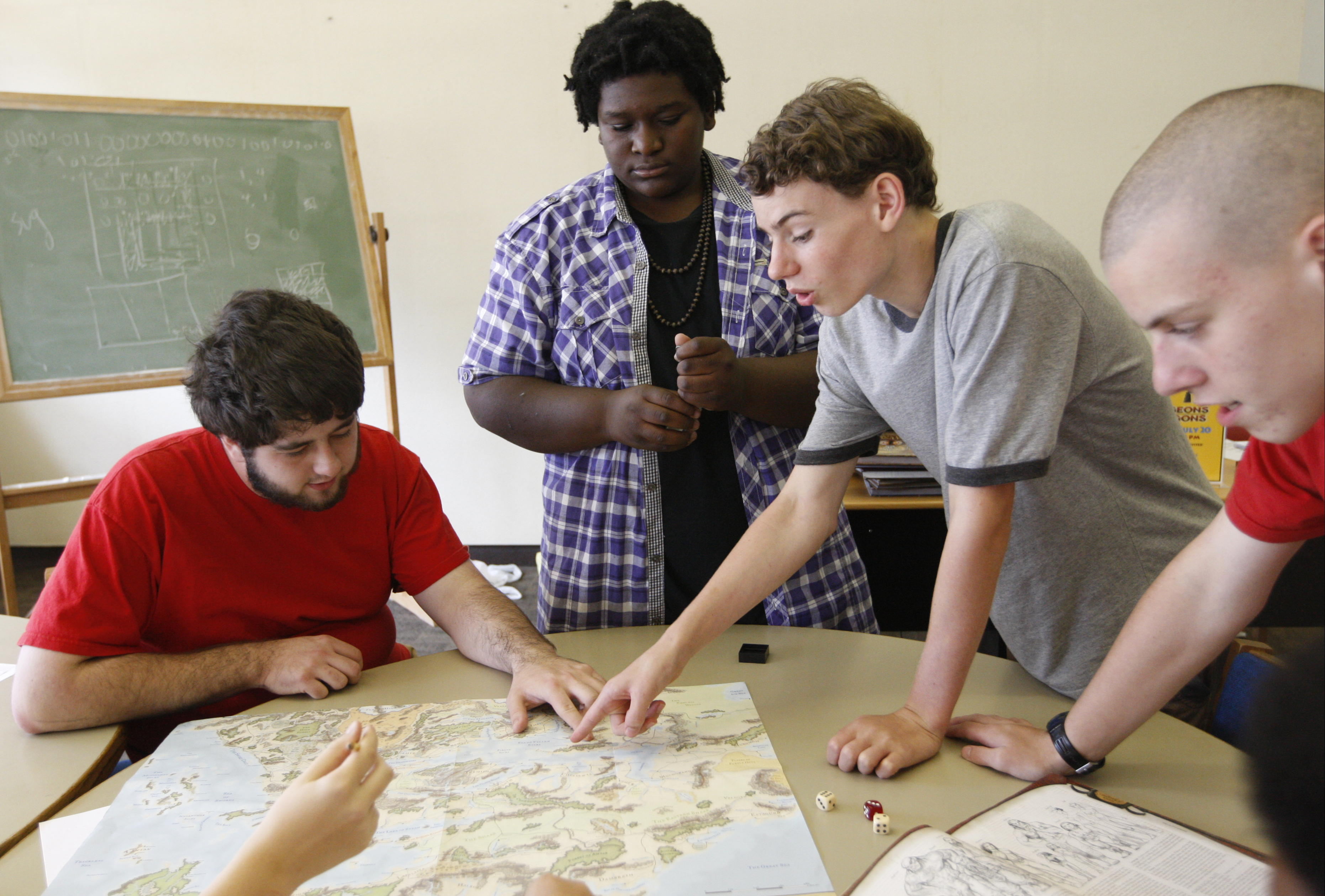
 Samuel Thompson, Caleb George, Caleb Kvale and game master Josh Kvale, from left, examine a map of Faerun, a fictional Dungeons & Dragonsthe Chattanooga Public Library.
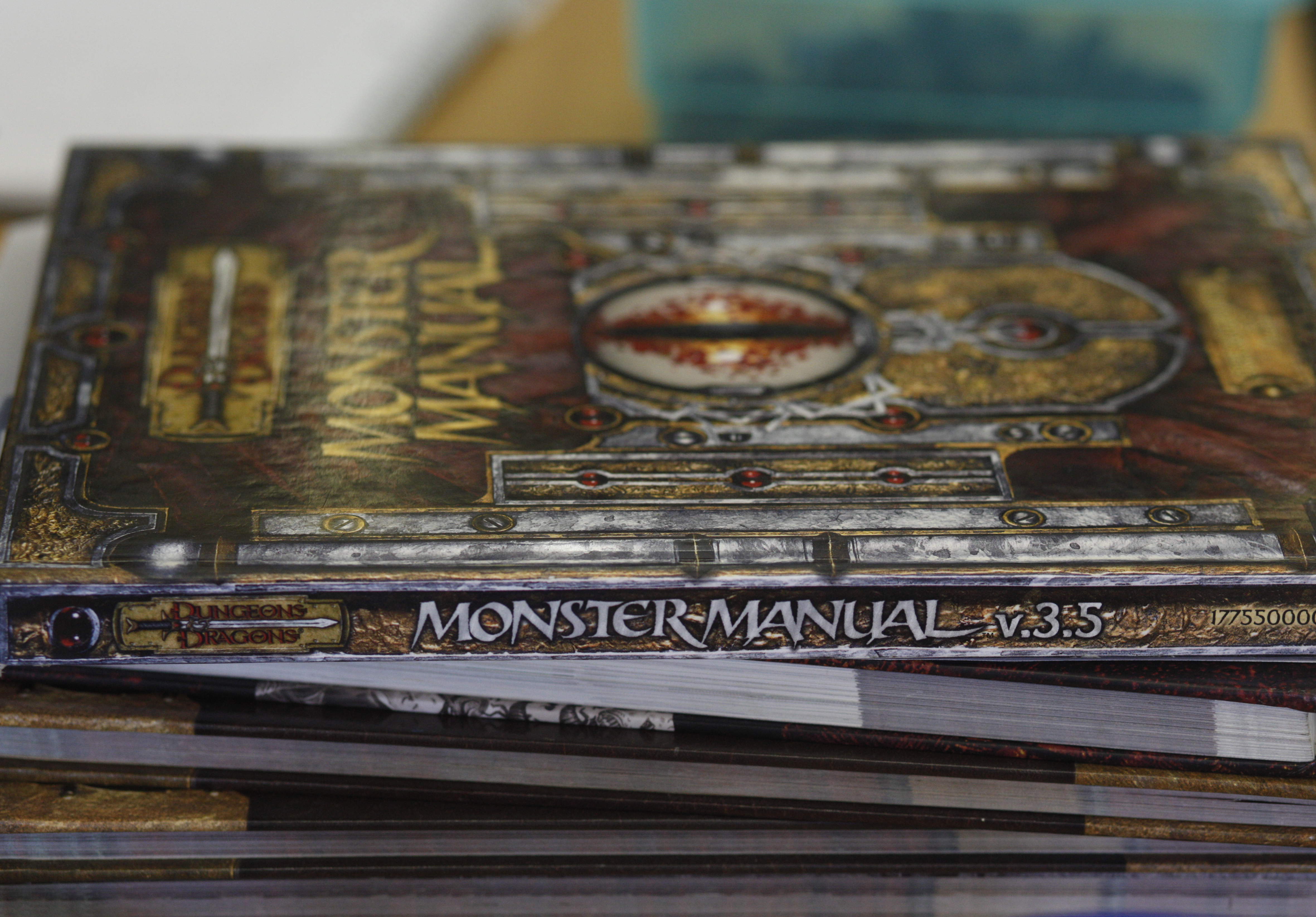 The “Monster Manual” is a supplemental reference book for Dungeons & Dragons that details monsters and beasts.
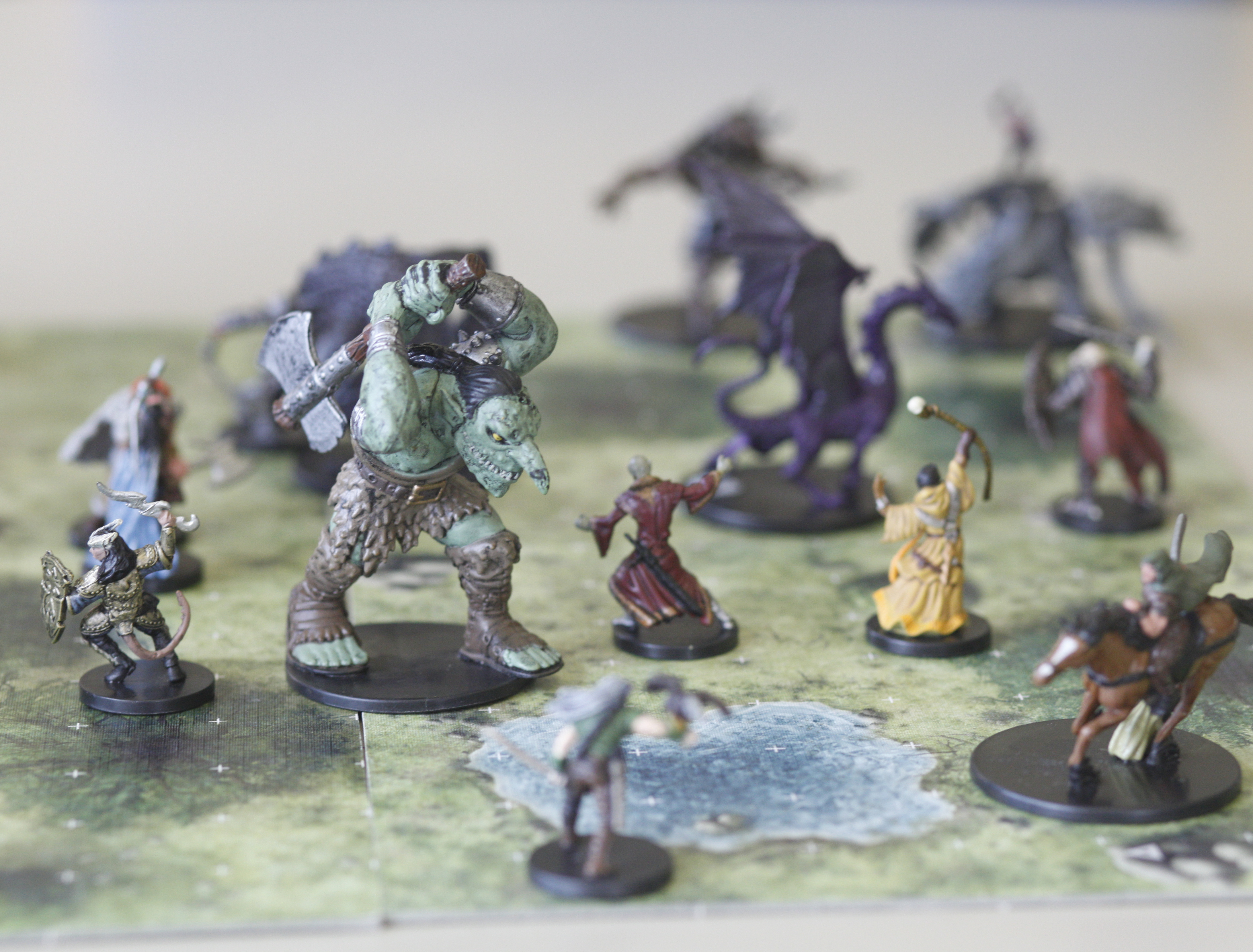 Miniatures placed on a map of the Dungeons & Dragons setting can help players visualize where their characters are in relation to other players and monsters in the game.
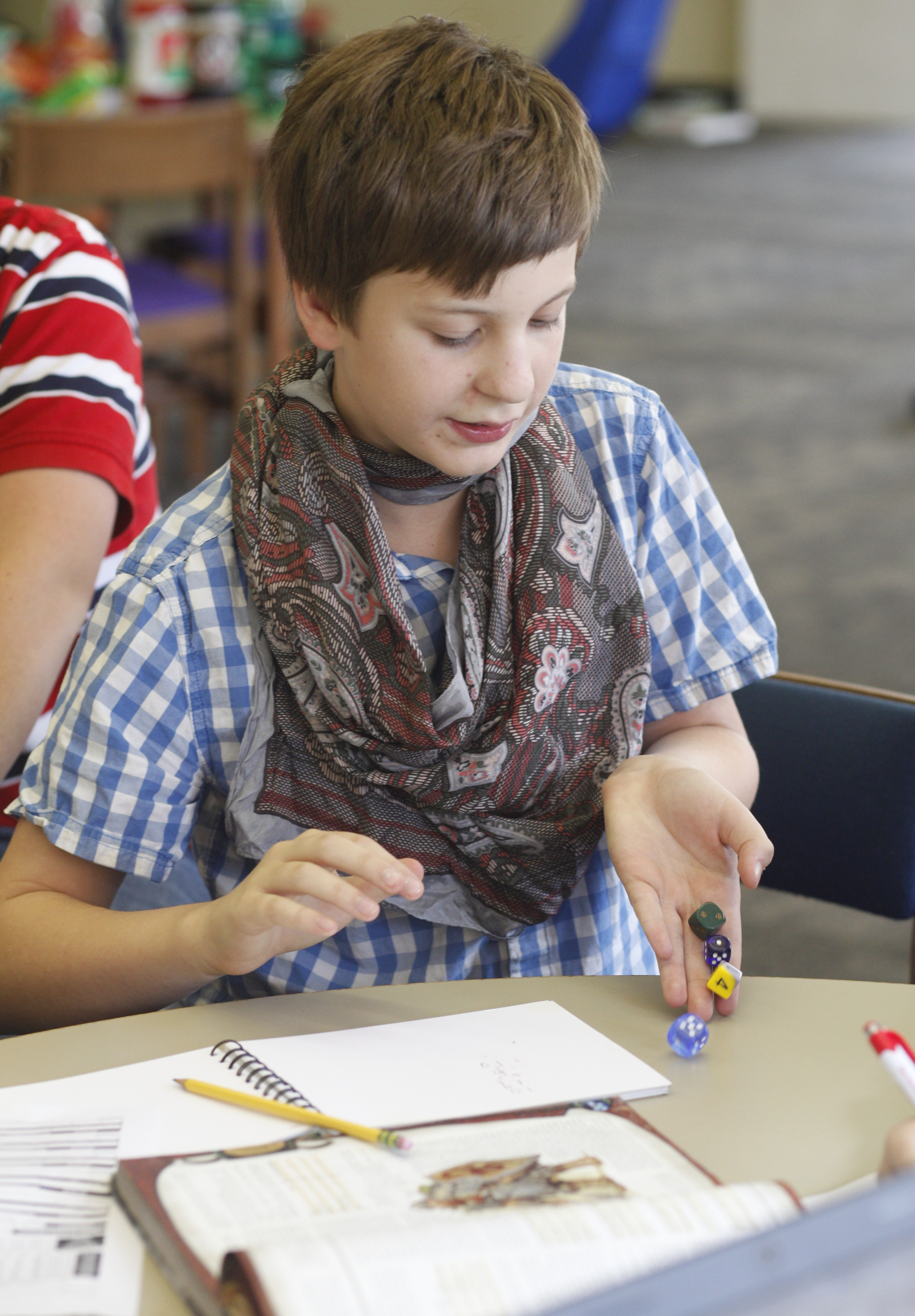 Sam Kertay rolls dice to determine statistics such as strength or intelligence as he creates a character for the tabletop role-playing game Dungeons & Dragons during a program at the Chattanooga Public Library.
ROLE-PLAYING RHETORICWant to sound like you know what you’re doing in a role-playing game session? You had better understand the following terms:Game master: The person who serves as the game’s referee/narrator. He or she describes the setting and directs the actions of the monsters and other entities the players encounter.Campaign: The world in which the players’ adventures take place. Can be in a published campaign or a setting created by the game master.Race: A character’s species, e.g.. human, elf, orc, dwarf, gnome, halfling.Class: A character’s occupation or specialization, e.g. fighter, rogue, wizard, bard, cleric.Alignment: The character’s moral and ethical disposition, e.g., lawful good, chaotic evil, true neutral. This reflects what motivates his or her interacts with other characters or their reactions to different situations.Ability scores: A measurement of a character’s physical and mental attributes, e.g., strength, dexterity, intelligence, constitution, charisma and wisdom.Hit points: A measurement of a character’s vitality. Character injury, death or incapacitation will result as hit points are reduced through combat or other sources of harm.Experience points: Awarded to players for various actions, from combat and quest completion to overcoming a difficult task. Characters become more advanced by accumulating experience points.PC/NPC: Acronyms for characters controlled by players (player characters) and the monsters and people controlled by the game master (non-player characters).Miniature: A small model used to represent players’ characters and monsters on a game map to determine position and movement during combat. Players typically personalize their miniatures by painting them.D20/D12/D10/D8/D6/D4: Dice with various numbers of sides that are rolled by players to determine the success or failure of everything from swinging a sword to the effectiveness of a bribe or remaining hidden.Saving roll: A dice roll, usually with a 20-sided dice, to determine whether a player avoids various attacks or damage.Natural 20: Rolling a 20 on a 20-sided dice. Usually results in automatic success of an action, such as a supremely nimble dodge or an extremely damaging attack.Botch: Rolling a 1 on a 20-sided dice. Usually results in absolute failure of an action, sometimes with horrific consequences, such as an attack injuring a friend or causing a spell to backfire.Loot: Rewards, usually in the form of items or money, that players receive for completing quests, slaying monsters and through exploration.START AN ADVENTUREInterested in joining a local role-playing session? Here are a few options for assembling a fellowship:• Create a free account to game online in your web browser through Roll20.net.• Connect with fans of games in different settings by joining the Chattanooga D&D Meetup group at Meetup.com/Chattanooga-D-D.• Gamers regularly post open sessions on sites such as NearbyGamer.com, RPGGameFind.com and Forum.RPG.net.• Dicehead Games (200 Paul Huff Parkway, Cleveland, Tenn.) hosts weekly RPG nights. View a schedule at Dicehead.com/events.htm.
On a blue-sky summer afternoon, 10 teens are gathered on the second floor of the Chattanooga Public Library, sitting around a pair of tables littered with books, sheets of paper and pencils. The big-screen TV behind them is dark, and the video game consoles connected to it as lifeless as the unplugged “Ms. Pac-man” arcade cabinet a little farther down the wall.
The atmosphere is relatively quiet and their expressions are studious, but these teens aren’t participants in a “Breakfast Club”-like summer detention for delinquents. They’re preparing for their first adventure into the tabletop role-playing universe of Dungeons & Dragons.
But first, they have to decide who they want to be.
In Kyndall Trickett’s case, her chosen alter ego is Allora, an elven wizard with a dark streak and a penchant for “killing stuff.”