
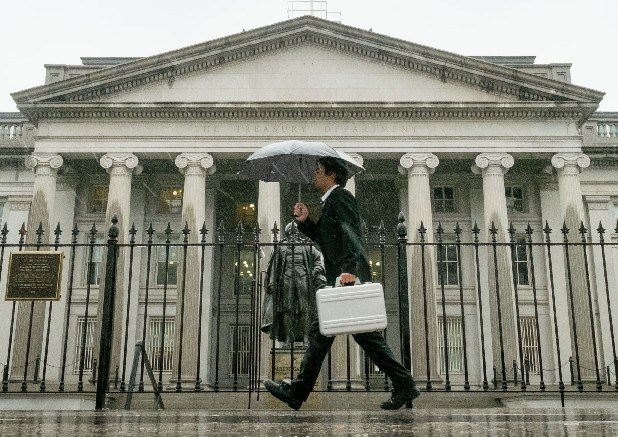
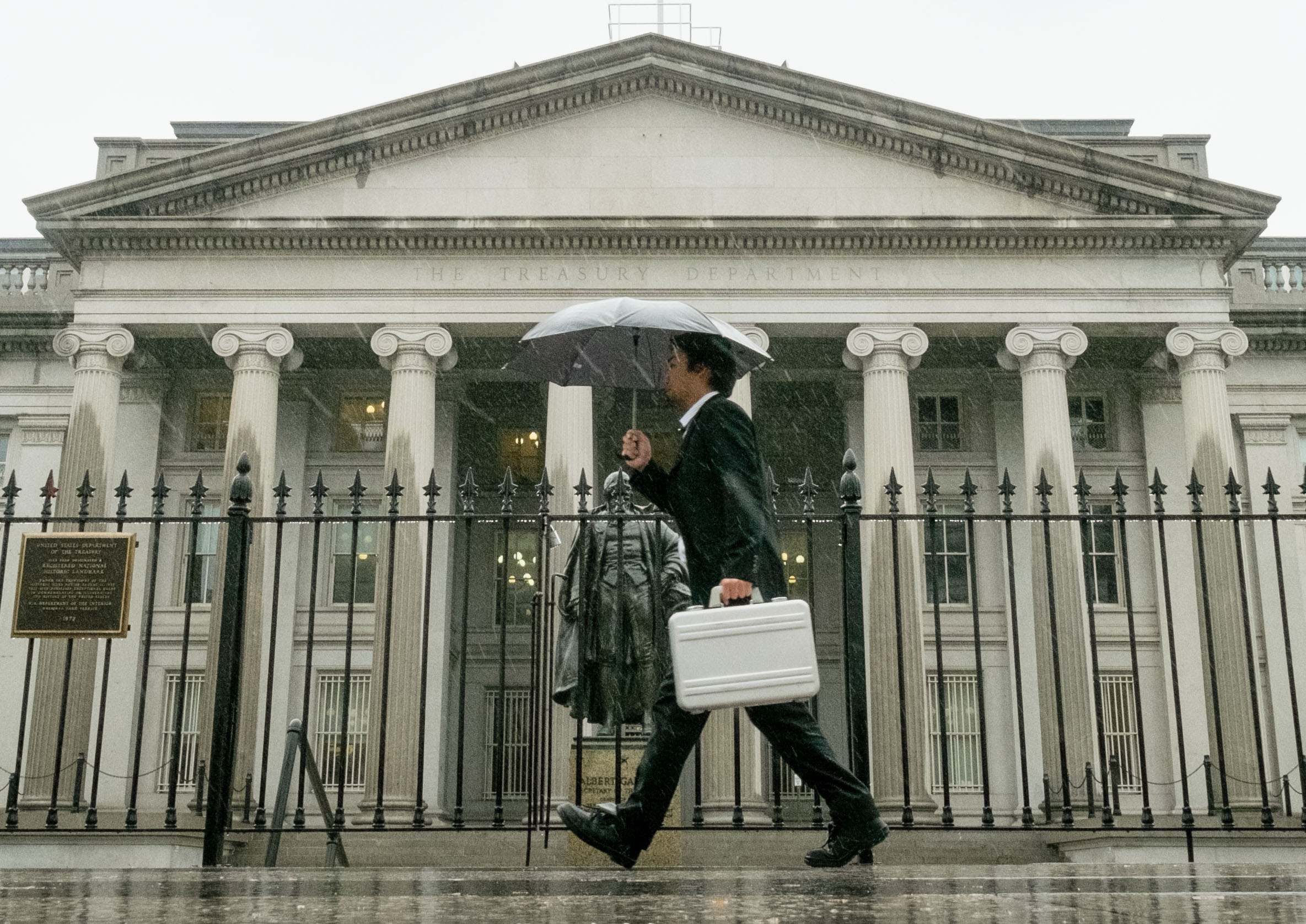
 A pedestrian walks past the U.S. Treasury Building in Washingtony. The national debt actually reached the limit in May 2013. Since then, Treasury Secretary Jacob Lew has made accounting moves to continue financing the government without further borrowing. But Lew says those measures will be exhausted by Thursday. The government will then have to pay its bills from its cash on hand – an estimated $30 billion – and tax revenue.
WASHINGTON – Negotiations in Congress to raise the nation’s borrowing limit are up against a deadline of Thursday. If the limit isn’t raised by then, the government will no longer have authority to borrow to pay its bills.
So what happens if Thursday comes and goes and the limit isn’t raised?
The scary thing is, no one really knows. Going past the deadline would be unprecedented.
The possible consequences are complex. But none are good. The gravest threat is that the government would soon fail to make interest payments on its debt. Any missed payment would trigger a default.
Financial markets would sink. Social Security checks would be delayed. Eventually, the economy would almost surely slip into another financial crisis and recession.