
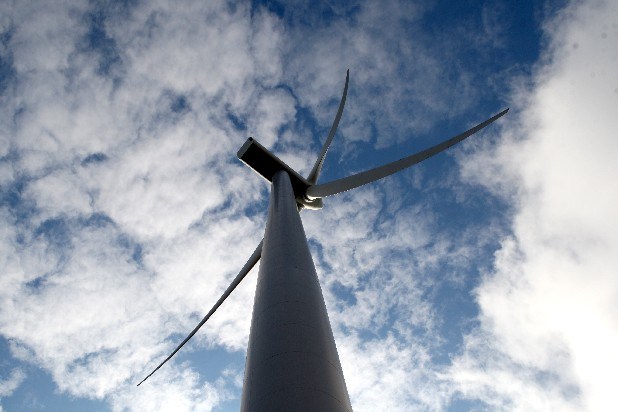
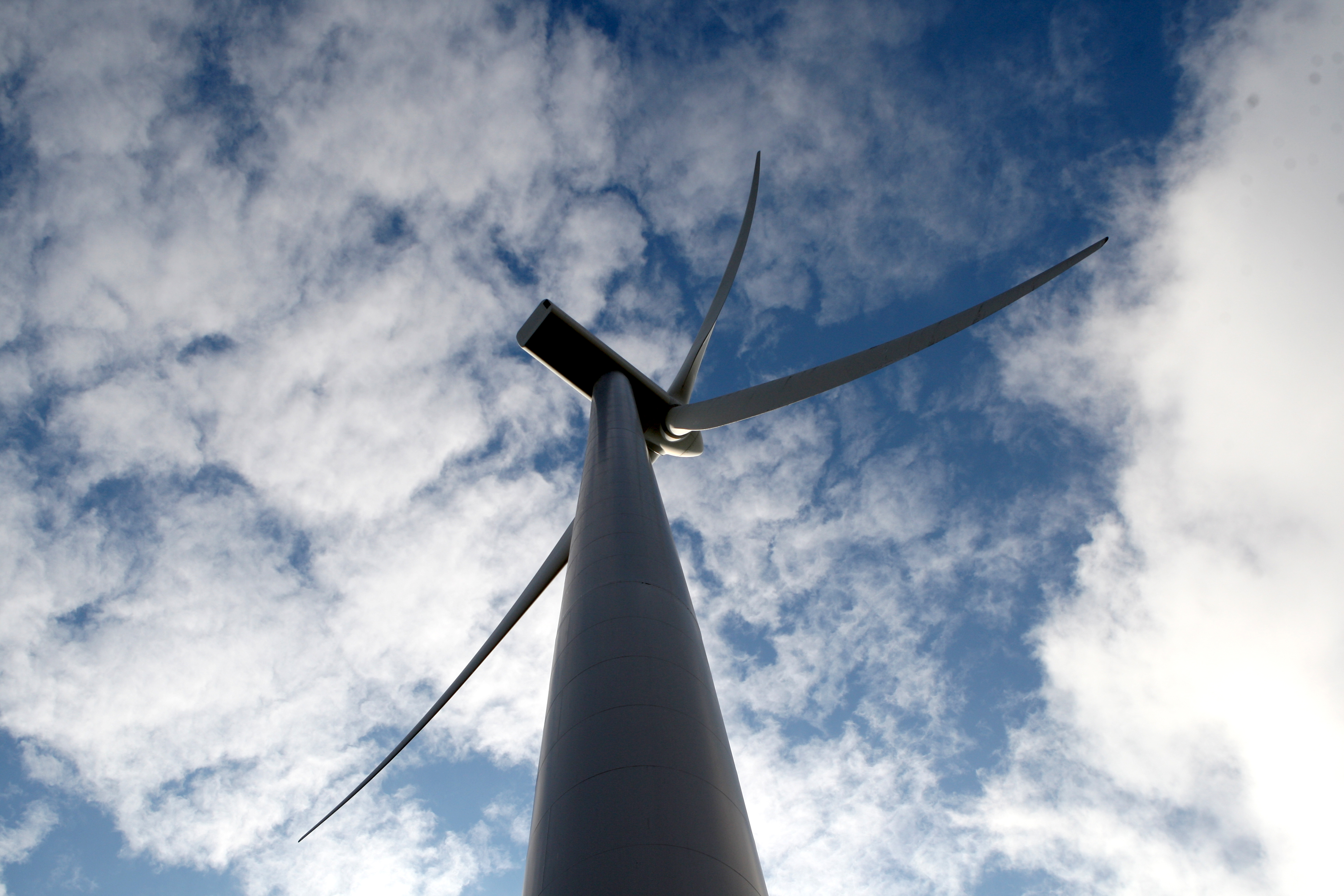
 Turbine 1, a Vestas V80 model, is seen at the Buffalo Mountain Wind Farm, in Oliver Springs, Tenn., on Monday. The V80s reach 265 feet in height, with 139-foot-long blades.
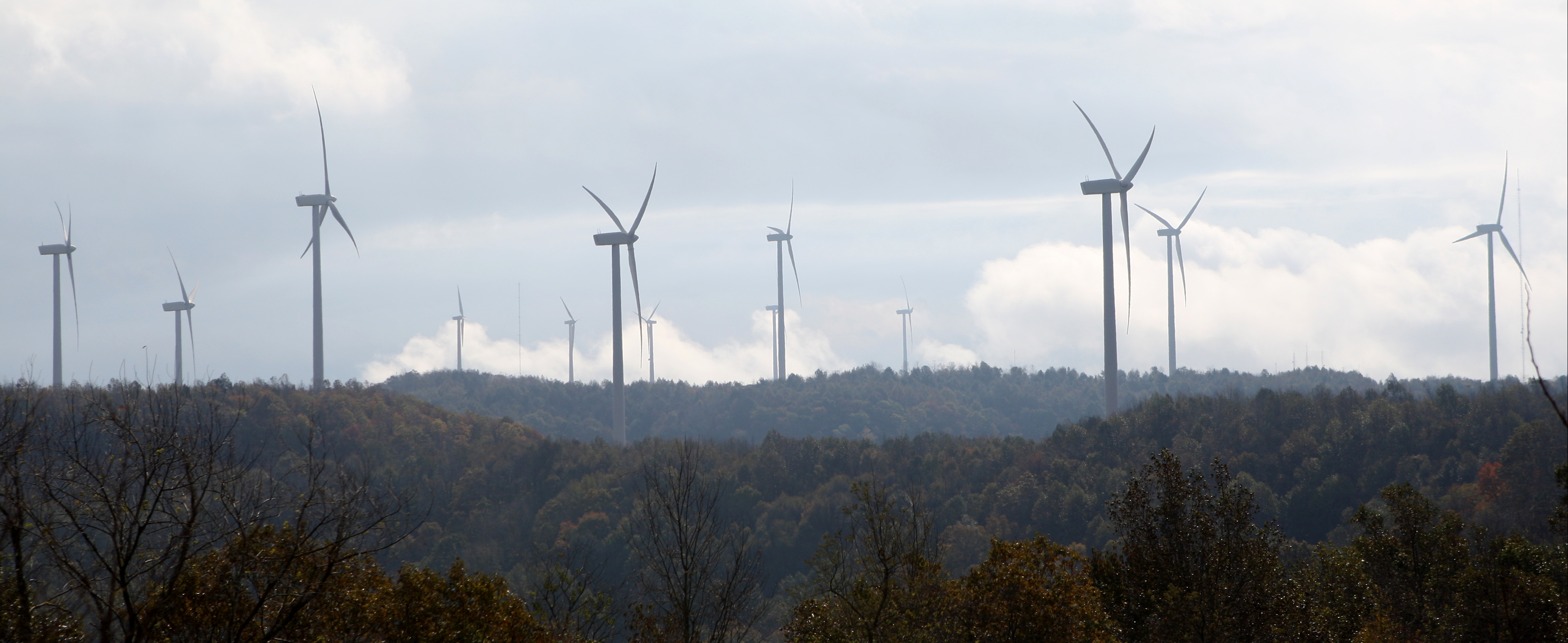 Several turbines are seen at the Buffalo Mountain Wind Farm in Oliver Springs, Tenn., on Monday. The Buffalo Mountain Wind Farm houses eighteen turbines.
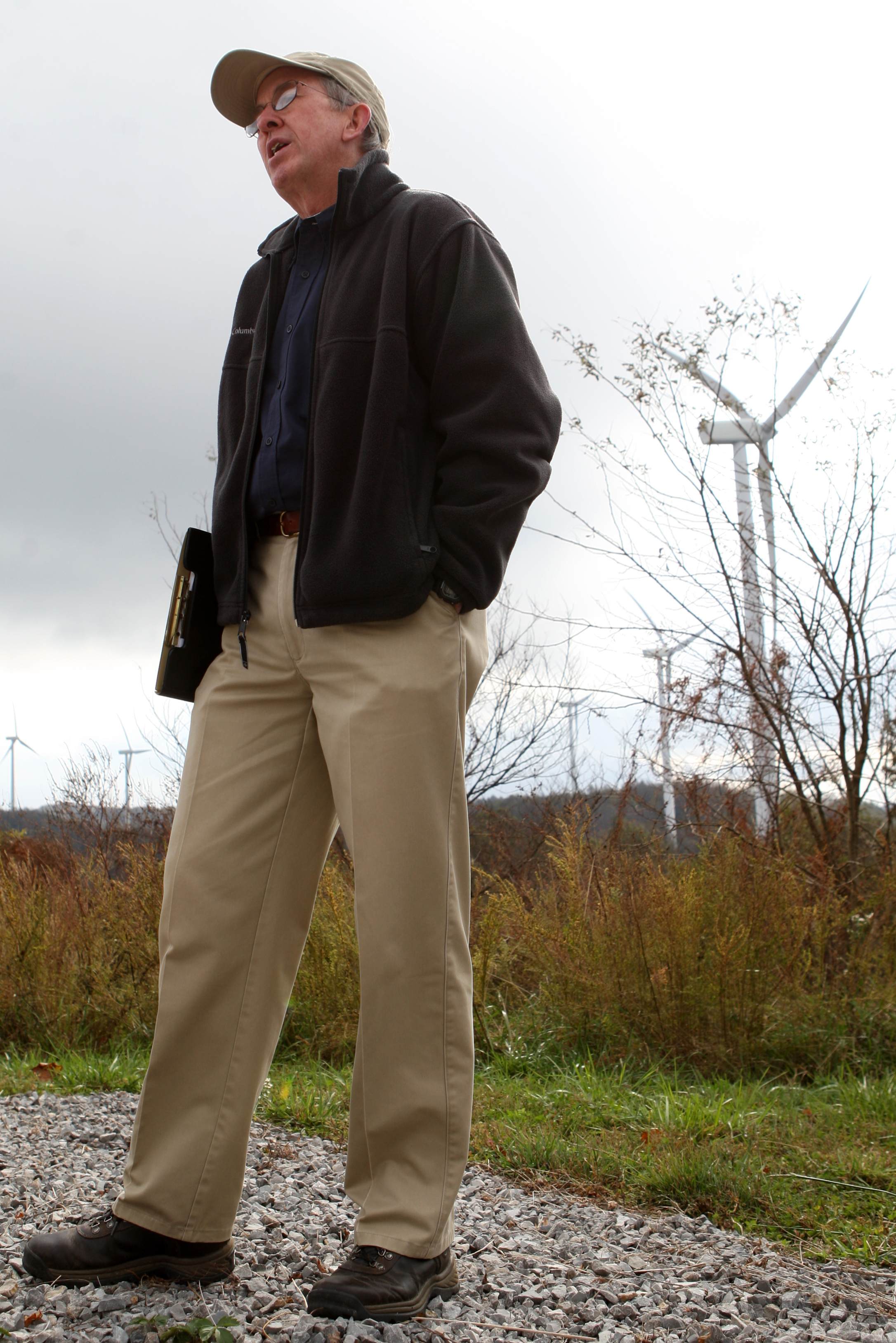 Ed Stephens, program director for the renewable energy program, speaks with members of the media at the Buffalo Mountain Wind Farm, in Oliver Springs, Tenn., on Monday.
As the Tennessee Valley Authority cranks up the 18-month processes to decide how it will generate power for the next 20 years, officials say renewable energy — namely wind — will play a big role.
Environmental groups say renewables are a great move, but the utility also needs to use energy more efficiently before it tries generating more.
TVA spokesman Mike Bradley said Monday at the authority’s Buffalo Mountain Wind Farm in Oliver Springs, Tenn., that after buying more than 1,500 megawatts of energy from wind farms in the Midwest — and once construction at Watt’s Bar nuclear plant is complete — more than half of the authority’s power production will come from noncarbon-producing sources.
“That is significant for TVA. With concerns about carbon levels and climate change, noncarbon power is a big factor,” he said.
The authority signed nine contracts this month with wind farms in Iowa, Kansas and Illinois, which will bring 1,542 megawatts of energy in the Tennessee Valley. It also buys 27 megawatts from Buffalo Mountain, the first and only commercial, utility-scale wind farm in the Southeast. All that wind power accounts for about half of the power the authority pulls from renewables, not including energy made from hydroelectric dams, he said.