
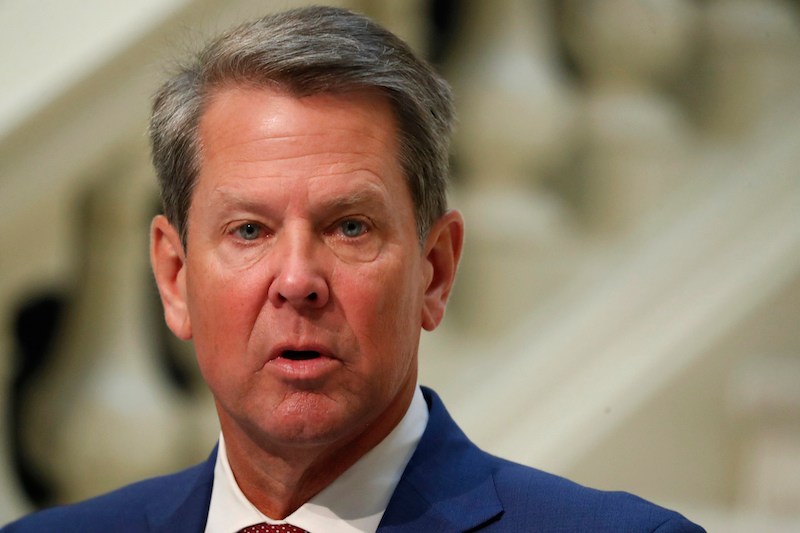
ATLANTA (AP) – Georgia Gov. Brian Kemp announced new spending plans for federal COVID-19 aid to schools Tuesday as the state’s newly confirmed infection numbers continue to fall but remain the highest per capita in the nation.
Kemp, a Republican, said he would allocate more than $65 million of the remaining $105 million in discretionary money he has to aid schools, pending expected approval by the U.S. Department of Education.
Of that money, at least $17 million will go to the state’s Department of Early Care and Learning to subsidize programs to help private child care centers provide daytime supervision for students whose school systems are providing all-virtual instruction.
“One of the biggest problems that we’re having right now is schools that are going virtual,” Kemp said Tuesday. “The parents can’t go back to work because they’re stuck home with the kids. So we’re trying to get some more child care.”
Families with incomes of 85% or below of the statewide median would be eligible for subsidized slots if parents are working, or attending college or job training. Students whose school systems are offering any in-person classes would not eligible for the program, which could start as early as next month.