
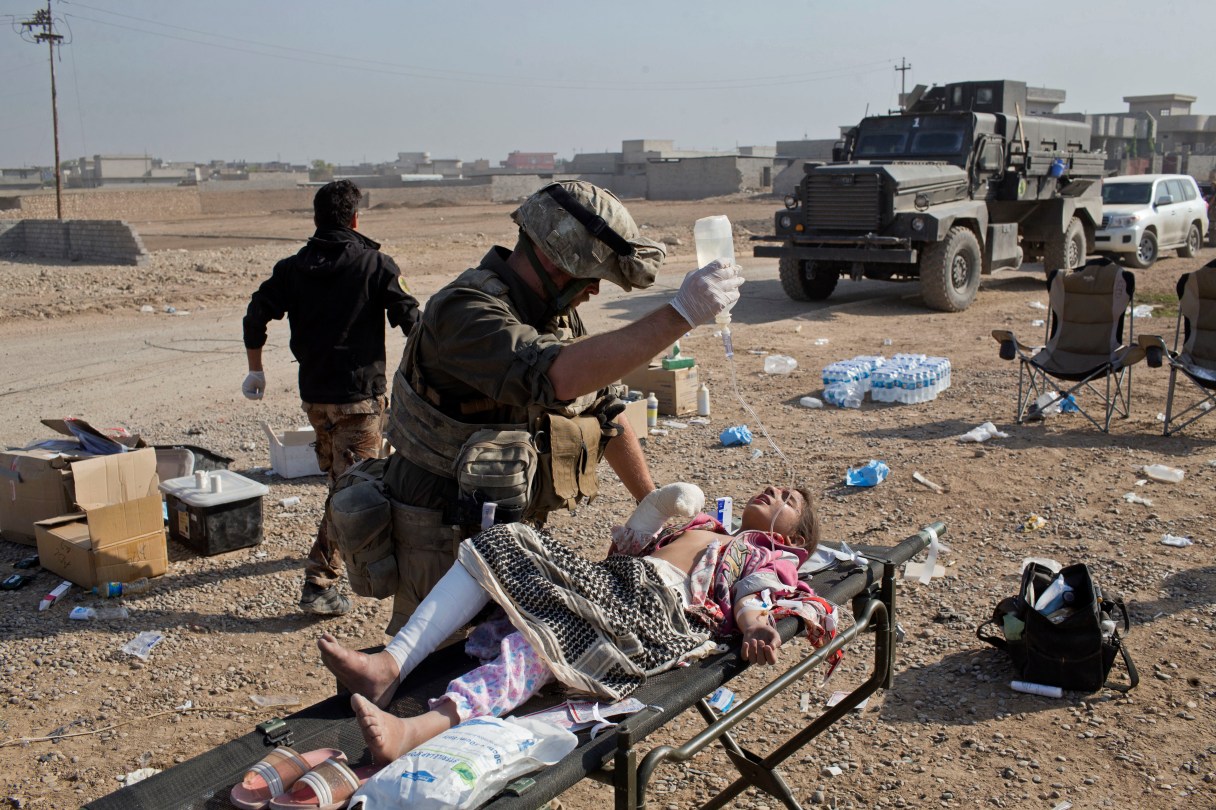
MOSUL, Iraq (AP) – When Iraqi forces pushed into Mosul’s urban center last week, Derek Coleman, an American volunteer medic, was among those treating the wounded at a front-line field clinic.
He said he helped treat 44 casualties before he lost count.
“I think the Iraqi (military) got an awakening when they pushed too far forward,” Coleman said, flipping through a notebook he uses to keep records of his cases. In all, 12 soldiers died at the clinic on Friday, he said. “We had two Humvees just loaded with dead bodies.”
As Iraqi forces struggle to secure the gains they made on Mosul’s eastern edge, the fight against Islamic State militants has quickly transformed into close-quarters urban combat. With it, casualties among Iraq’s troops and civilians are spiking, though Iraq’s military has not released official death tolls.
As Coleman spoke, hundreds of civilians could be seen in the distance pouring out of Mosul on foot, many holding white flags made of scraps of dishtowels, torn clothing and pillowcases. Iraqi soldiers gathered them on street corners and loaded them on trucks to be taken to camps for the displaced.