
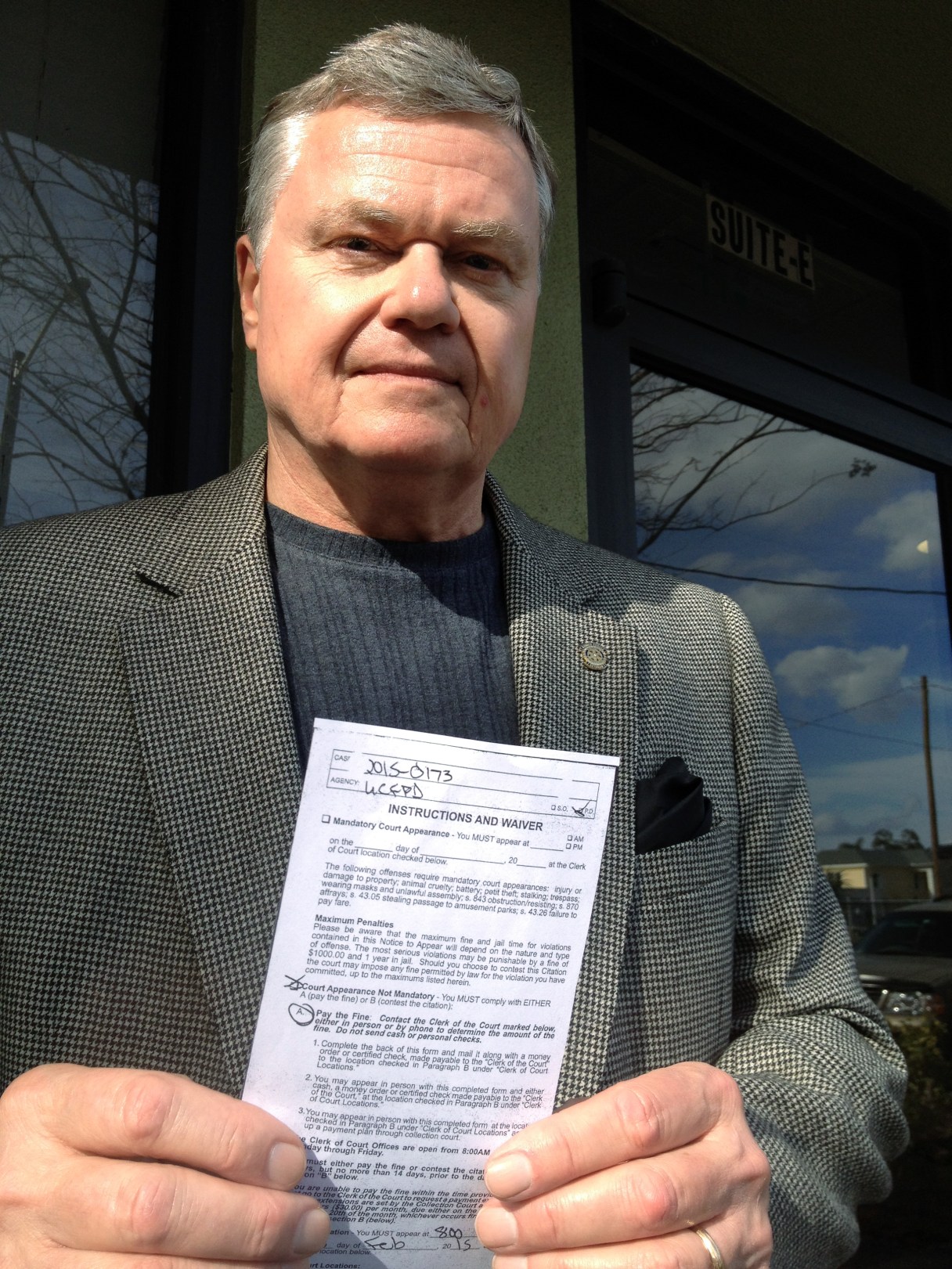
ORLANDO, Fla. (AP) – A University of Central Florida police officer found a small amount of marijuana in a car last year, and he gave passenger Jared Boler the typical paperwork: a notice to appear in court that resembled a traffic ticket. It gave the 19-year-old engineering student two choices: simply pay a fine at the clerk of court’s office or contest it by appearing in court. Boler didn’t want his parents to find out, so he paid the $428 even though he refused to acknowledge that the marijuana was his, according to his attorney.
Boler thought that was the end of it. But almost a year later, his application for an apartment was rejected, and it was only then that Boler discovered he had a conviction for the case on his record.
In a typical month, the judicial circuit that covers the Orlando area has at least four dozen of these cases, in which defendants with misdemeanor charges pay fines and can end up with convictions without their realizing it. A majority of the charges are for underage drinking or possessing small amounts of marijuana. Experts say they know of no other place where such a practice occurs in criminal cases, and several defense attorneys say it’s unconstitutional because it sidesteps defendants’ rights to an attorney and to due process in open court.
Now, after three decades in place, the surprise-conviction practice is ending. On Monday, the chief judge for the court reversed course and said he would stop the procedure, one week after The Associated Press questioned him about it.
“We don’t want to trick someone into entering a plea for a crime,” said Frederick Lauten, chief judge of Florida’s Ninth Judicial Circuit Court.