
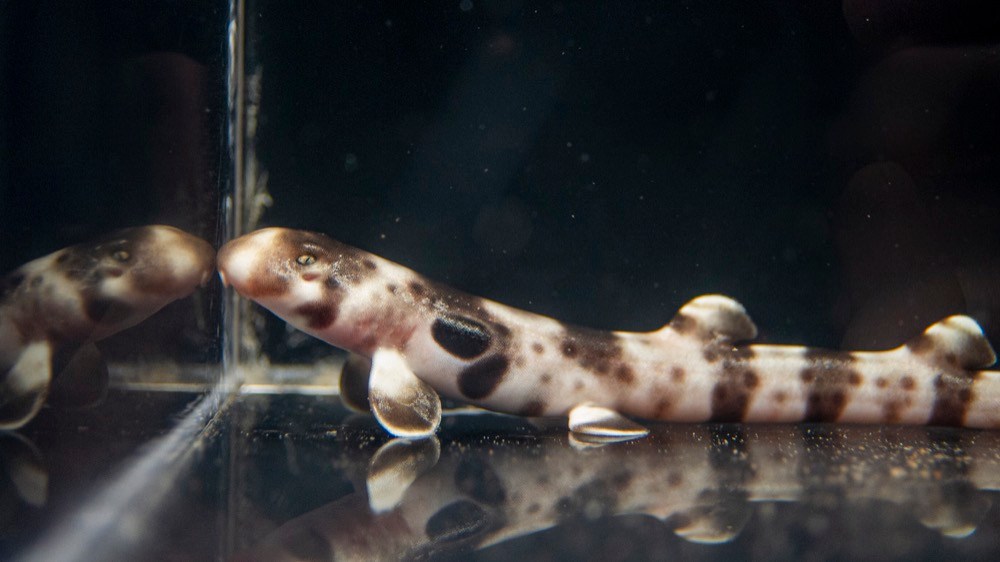
A baby shark has hatched at the Tennessee Aquarium…right in the middle of the annual Shark Week celebration, according to a news release.
The tiny, striped female epaulette shark measures just a few inches long and emerged sometime between Monday evening and Tuesday morning from a leathery egg pouch laid earlier this spring by one of the Aquarium’s six adult epaulette sharks.
Epaulette sharks are also known as “walking sharks” for their ability to “stroll” along the seabed or overland between shallow pools by wriggling their body and perching on the tips of their pectoral fins. Soon after its emergence from the egg pouch – also known as a “mermaid’s purse” – the baby shark began living up to its species nickname by walking, and occasionally gliding, along the bottom of the acrylic holding tank, the release states.
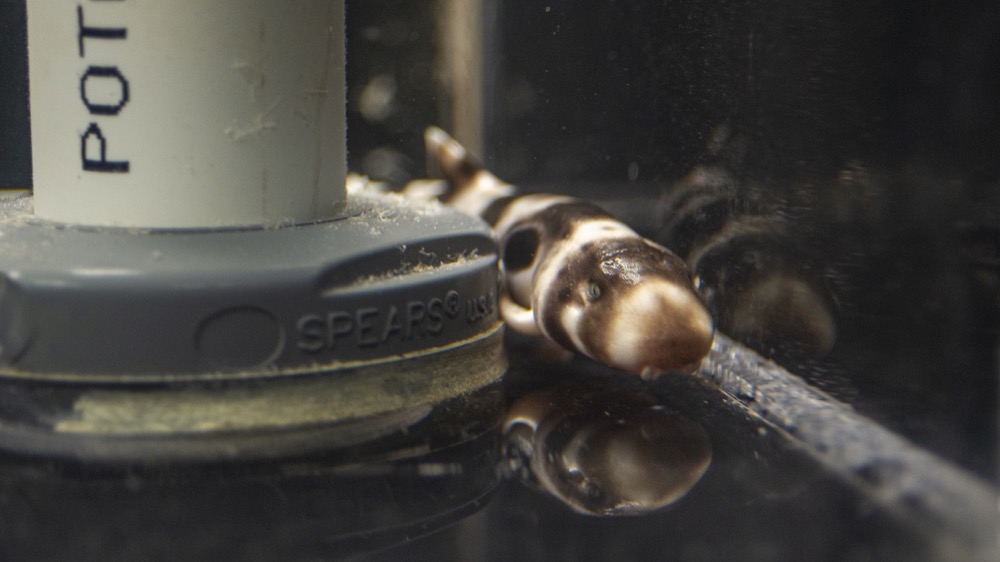 A baby epaulette shark hatched sometime between Monday evening and Tuesday morning at the Tennessee Aquarium, right in the middle of Shark Week. / Photo by Casey Phillips/Tennessee Aquarium
“Epaulette Sharks are way cool,” Senior Aquarist Kyle McPheeters said in the release. “They’re what got me excited about raising baby sharks to begin with. It’s nice to have one again, and we’ll be able to send it to another aquarium pretty easily when it’s older.”
The Aquarium has had a successful history of raising epaulette sharks, with McPheeters raising about 90, most of which were sent to other aquariums around the country that expressed interest in exhibiting them. The species is a abundant breeder and egg layer, with females producing an average of two eggs every two weeks, according to the release.