
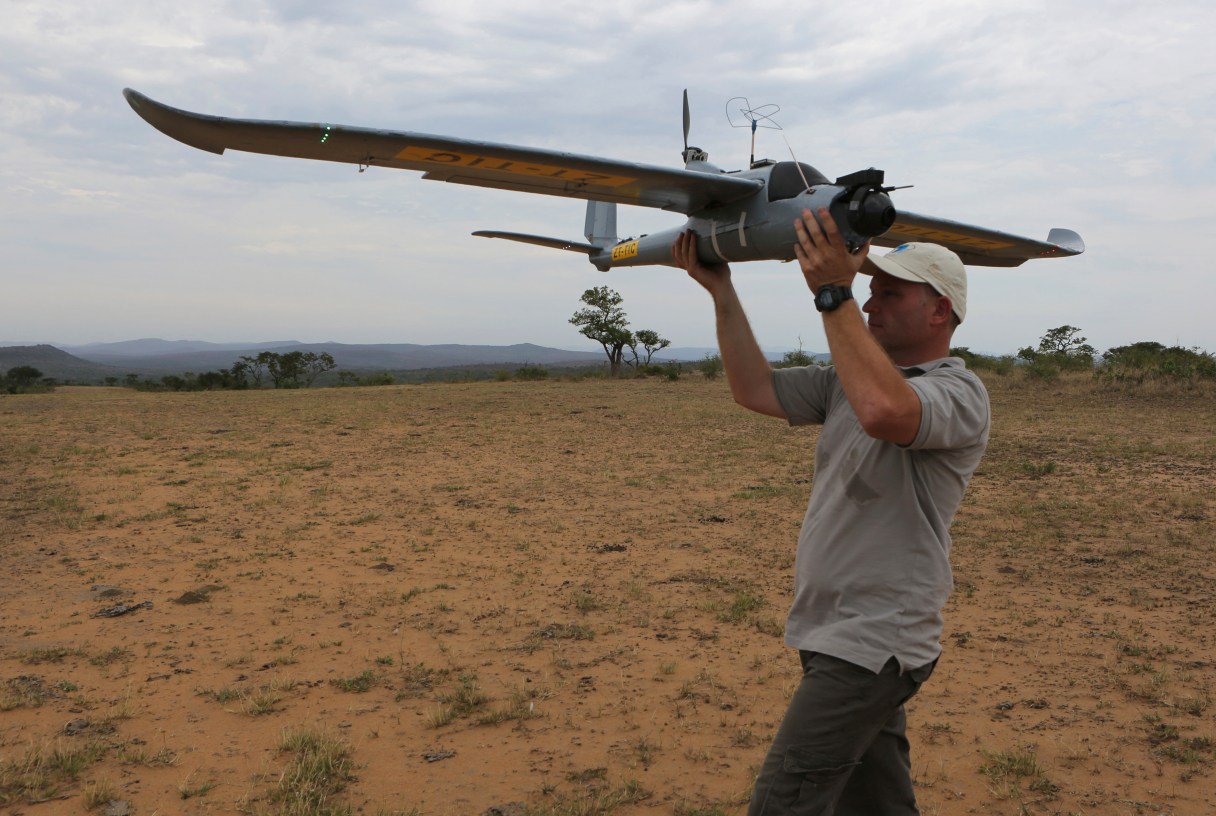
HLUHLUWE-IMFOLOZI GAME RESERVE, South Africa (AP) – In hills where Zulu royalty once hunted wildlife, South African conservationists now scan live video from a thermal-imaging camera attached to a drone, looking for heat signatures of poachers stalking through the bush to kill rhinos.
The unarmed drone, which resembles a model airplane, flies several miles (kilometers) from a van where an operator toggles a customized video-gaming control, zooming and swiveling the craft’s camera. The nocturnal surveillance in Hluhluwe-iMfolozi Game Reserve comes amid international discussion about whether technology, particularly drones, will make a real difference in anti-poaching efforts that often rely on the “boots on the ground” of rangers on patrol.
Several years ago, drones were touted by some as a silver bullet for conservation, but some experiments have foundered. Even so, drone technology is developing quickly and the aircraft have been used around the world, including:
– In Belize, where the Wildlife Conservation Society helped deploy drones to successfully monitor a protected reef area for illegal fishing, according to David Wilkie, director of conservation measures for the group.
– In Indonesia, where drones have surveyed threatened orangutan habitats.