
Thursday, November 12, 2026Nov 12

Sudan swears in President al-Bashir as he shifts alliances

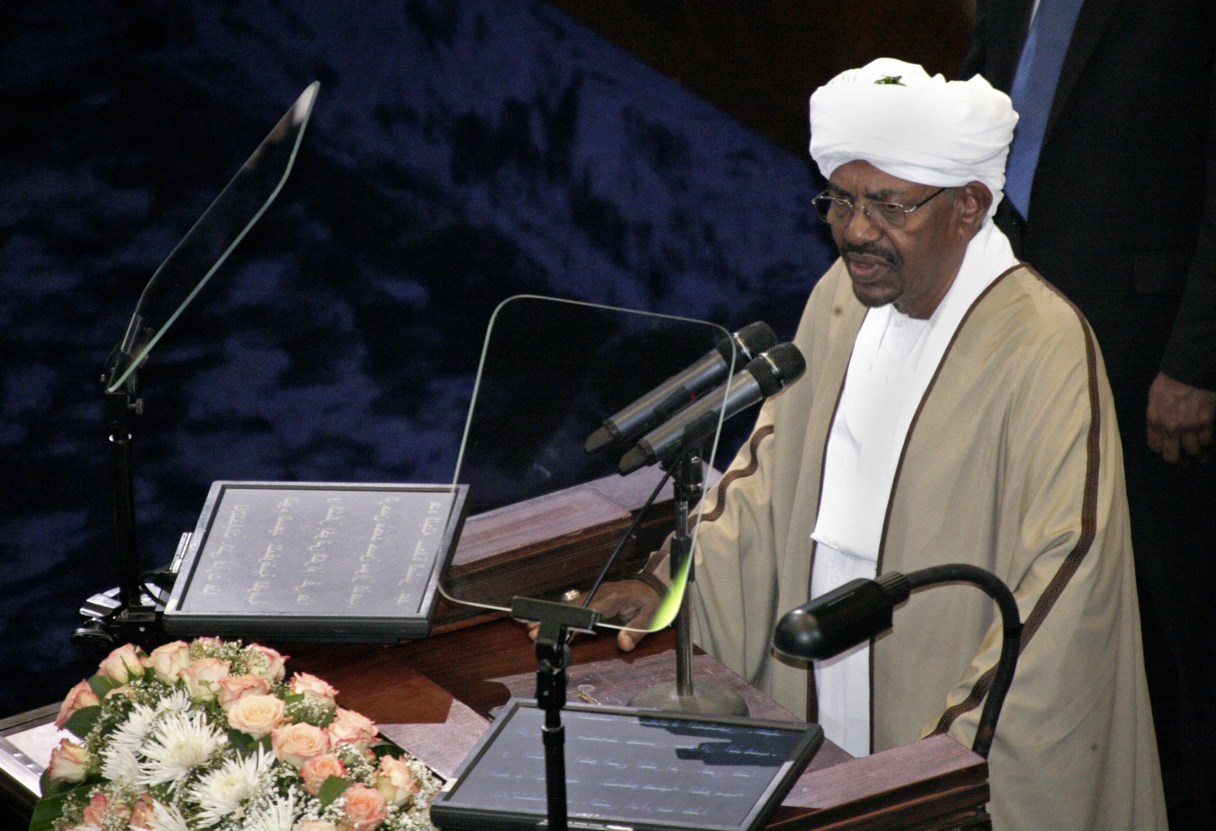
Incumbent President Omar al-Bashir, who was recently re-elected in a landslide that extended his 25-year-old rule, speaks after being sworn in at the Sudanese National Assembly in Khartoum, Sudan, Tuesday, June 2, 2015. Al-Bashir, who took power in a bloodless Islamist coup in 1989, is the only sitting head of state facing genocide charges at the International Criminal Court. The charges stem from the conflict in Darfur, where 300,000 people were killed and 2 million displaced during the government's brutal response to an armed rebellion. (AP Photo/Abd Raouf)
Incumbent President Omar al-Bashir, who was recently re-elected in a landslide that extended his 25-year-old rule, speaks after being sworn in at the Sudanese National Assembly in Khartoum, Sudan, Tuesday, June 2, 2015. Al-Bashir, who took power in a bloodless Islamist coup in 1989, is the only sitting head of state facing genocide charges at the International Criminal Court. The charges stem from the conflict in Darfur, where 300,000 people were killed and 2 million displaced during the government's brutal response to an armed rebellion. (AP Photo/Abd Raouf) Incumbent President Omar al-Bashir, who was recently re-elected in a landslide that extended his 25-year-old rule, speaks after being sworn in at the Sudanese National Assembly in Khartoum, Sudan, Tuesday, June 2, 2015. Al-Bashir, who took power in a bloodless Islamist coup in 1989, is the only sitting head of state facing genocide charges at the International Criminal Court. The charges stem from the conflict in Darfur, where 300,000 people were killed and 2 million displaced during the government's brutal response to an armed rebellion. (AP Photo/Abd Raouf)

CAIRO (AP) – Sudanese President Omar al-Bashir on Tuesday was sworn in for another five-year term extending his 25-year autocratic rule, a testament to his ability to survive civil wars, sanctions and an international war crimes indictment.

In his latest maneuver to survive, al-Bashir has switched alliances, joining ranks with Saudi Arabia, the region’s biggest bankroller, after nearly two decades of strained ties. That means moving away from close relations with the kingdom’s rival Iran, which has long used Sudan as a transit route for weapons shipments to armed groups in the region, particularly Hamas.

Shortly before his re-election, al-Bashir threw his support to the Saudi-led coalition waging an air campaign against Shiite rebels in Yemen who are allied to Iran. The Sudanese contribution to the campaign is largely symbolic – but al-Bashir is likely hoping for Gulf financial support that could keep his beleaguered economy afloat.

“Our relations with Arab brothers have witnessed very positive developments lately, by the grace of God,” al-Bashir declared Tuesday in a speech in Omdurman, neighboring the capital Khartoum, after his swearing-in. By building on the Arab ties, he expressed hopes of eventually normalizing relations with Western nations as well.

Al-Bashir won re-election in April, though opposition parties boycotted the vote. After his victory with an official landslide of 94 percent of the vote, the opposition said in a joint statement that it will not recognize the results and called on the people to join ranks to “topple” al-Bashir.