
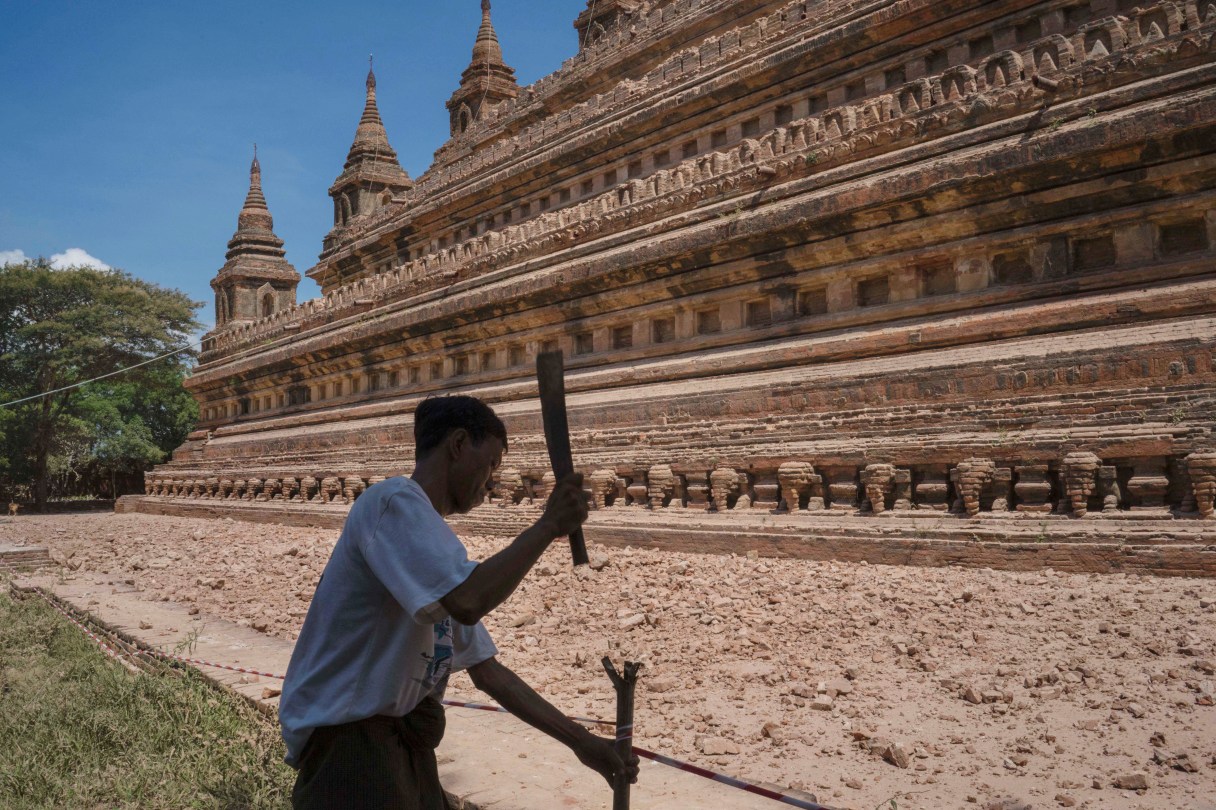
BAGAN, Myanmar (AP) – It was a time of conquest and conversions. Above all, it was a time of construction, on a scale never seen before. Over 250 years, from the 11th century onwards, the rulers of Bagan built more than 10,000 magnificent religious monuments.
The stupas, temples and monasteries became the defining emblems of Bagan, the capital of the Pagan (pronounced PUH’-gahn) empire that ruled Myanmar from roughly 1044 to 1287.
On Wednesday, scores of the monuments – of which only about 2,200 remain – were damaged in a powerful 6.8 magnitude earthquake. Yet much of what fell was modern material, sanctioned by Myanmar’s former army rulers who had put top priority on restoring the temples with little regard for the original architectural styles.
King Anawratha, who unified the country formerly known as Burma, and his successors built the temples in a frenzy, believing they would gain spiritual merit. Still, piety didn’t stop them from making war or killing to gain power.
One king, Narathu, slew his father, elder brother, and one of his wives. He also killed the architect of the magnificent Dhammayangi temple so he couldn’t repeat the feat, and chopped off the hands of sloppy workmen.