
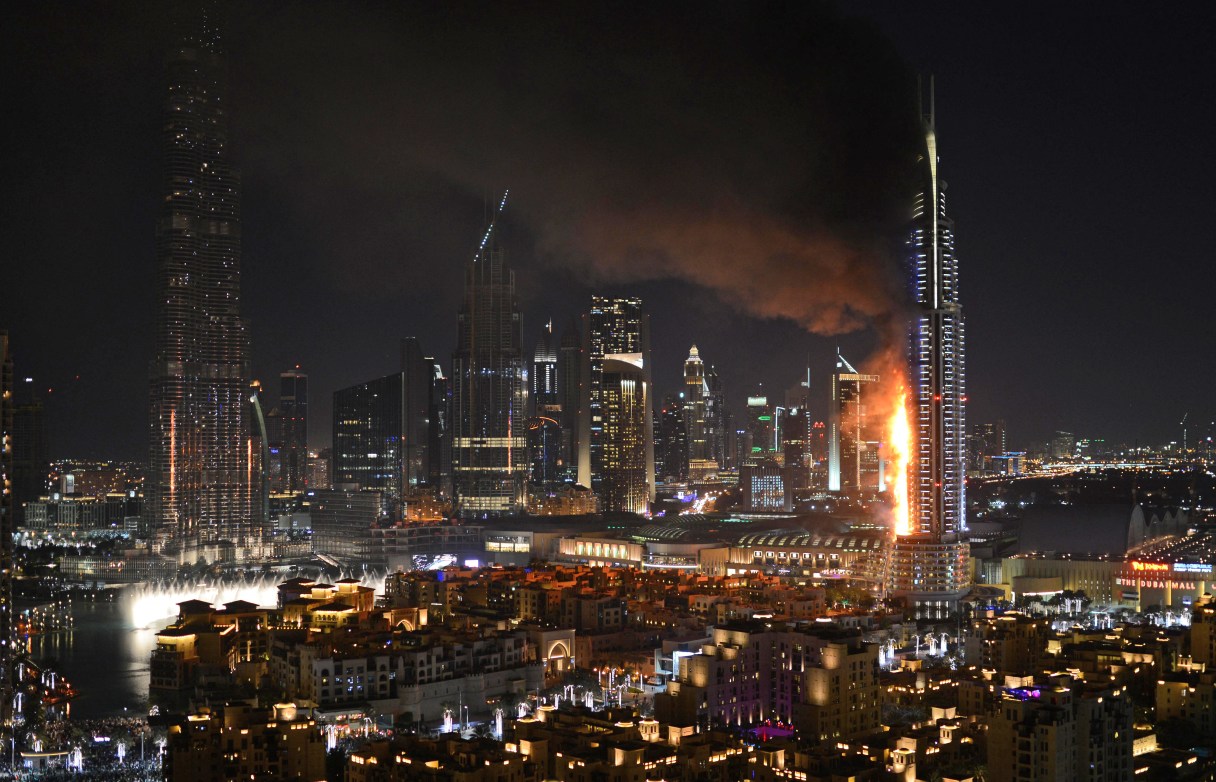
DUBAI, United Arab Emirates (AP) – Dubai will supervise construction crews more strictly and monitor the material they use after a series of skyscraper fires, including a New Year’s Eve blaze that made headlines around the world, a top civil defense official said Wednesday.
Speaking to The Associated Press, the director-general of Dubai Civil Defense said authorities in the United Arab Emirates have been working on new fire safety regulations following the Dec. 31 inferno at the 63-story The Address Downtown Dubai.
While trying to downplay the danger, Maj. Gen. Rashid Thani al-Matrooshi acknowledged that at least 30,000 buildings across the nation have cladding or paneling similar to the kind that safety and construction experts have blamed for the rapid spread of the fires.
“There won’t be any radical changes, but instead we’ll come up with simple solutions that won’t affect the owners or traders,” al-Matrooshi said, speaking outside a fire safety technology seminar. “We’re finding solutions with the lowest costs on people, so that everyone benefits.”
While some types of cladding can be made with fire-resistant material, experts say those that have caught fire in Dubai and elsewhere around the world weren’t designed to meet stricter safety standards and often were put onto buildings without any breaks to slow or halt a possible blaze.