
Sunday, November 8, 2026Nov 8

This story is free to read.

Anthem has been a channel for protests since song’s origins

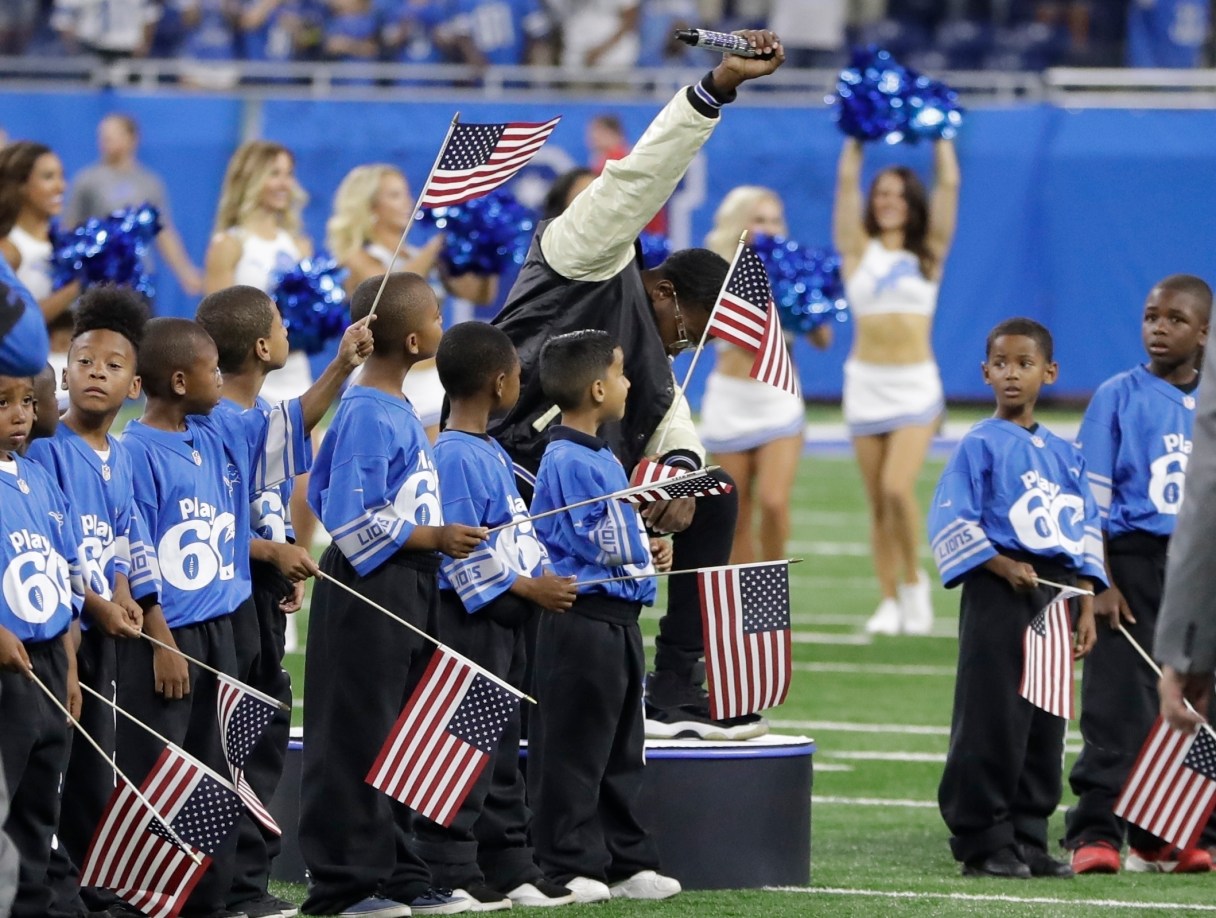
FILE- In a file photo from Sept. 24, 2017, National anthem singer Rico Lavelle bends to his knee, bows his head and raises his fist after singing the anthem before the first half of an NFL football game between the Detroit Lions and the Atlanta Falcons in Detroit. The sight of football players kneeling during the national anthem is the continuation of a tradition nearly as old the song itself. University of Michigan musicology professor Mark Clague says "The Star-Spangled Banner" has been a channel for protest since at least the 1840s. The lyrics were recast as an anti-slavery song and it's been used or reworked to push for racial equality, women's suffrage, prohibition and labor rights. (AP Photo/Carlos Osorio, File)
FILE- In a file photo from Sept. 24, 2017, National anthem singer Rico Lavelle bends to his knee, bows his head and raises his fist after singing the anthem before the first half of an NFL football game between the Detroit Lions and the Atlanta Falcons in Detroit. The sight of football players kneeling during the national anthem is the continuation of a tradition nearly as old the song itself. University of Michigan musicology professor Mark Clague says "The Star-Spangled Banner" has been a channel for protest since at least the 1840s. The lyrics were recast as an anti-slavery song and it's been used or reworked to push for racial equality, women's suffrage, prohibition and labor rights. (AP Photo/Carlos Osorio, File) FILE- In a file photo from Sept. 24, 2017, National anthem singer Rico Lavelle bends to his knee, bows his head and raises his fist after singing the anthem before the first half of an NFL football game between the Detroit Lions and the Atlanta Falcons in Detroit. The sight of football players kneeling during the national anthem is the continuation of a tradition nearly as old the song itself. University of Michigan musicology professor Mark Clague says "The Star-Spangled Banner" has been a channel for protest since at least the 1840s. The lyrics were recast as an anti-slavery song and it's been used or reworked to push for racial equality, women's suffrage, prohibition and labor rights. (AP Photo/Carlos Osorio, File)

DETROIT (AP) – The sight of football players kneeling during the national anthem is the continuation of a tradition as old as the song itself.

That’s according to University of Michigan musicology professor Mark Clague. He says “The Star-Spangled Banner” has been a channel for protest since at least the 1840s.

The lyrics have been recast repeatedly over many years to push for an end to slavery, racial equality, women’s suffrage and labor rights.

Former San Francisco 49ers quarterback Colin Kaepernick began taking a knee during the anthem last year to make a statement about social inequality and police treatment of blacks.

After President Donald Trump suggested that the NFL should fire athletes who protest during the song, more than 200 players knelt or took other action during last weekend’s games.