
Monday, November 16, 2026Nov 16

Lava flowing toward homes on Hawaii’s Big Island

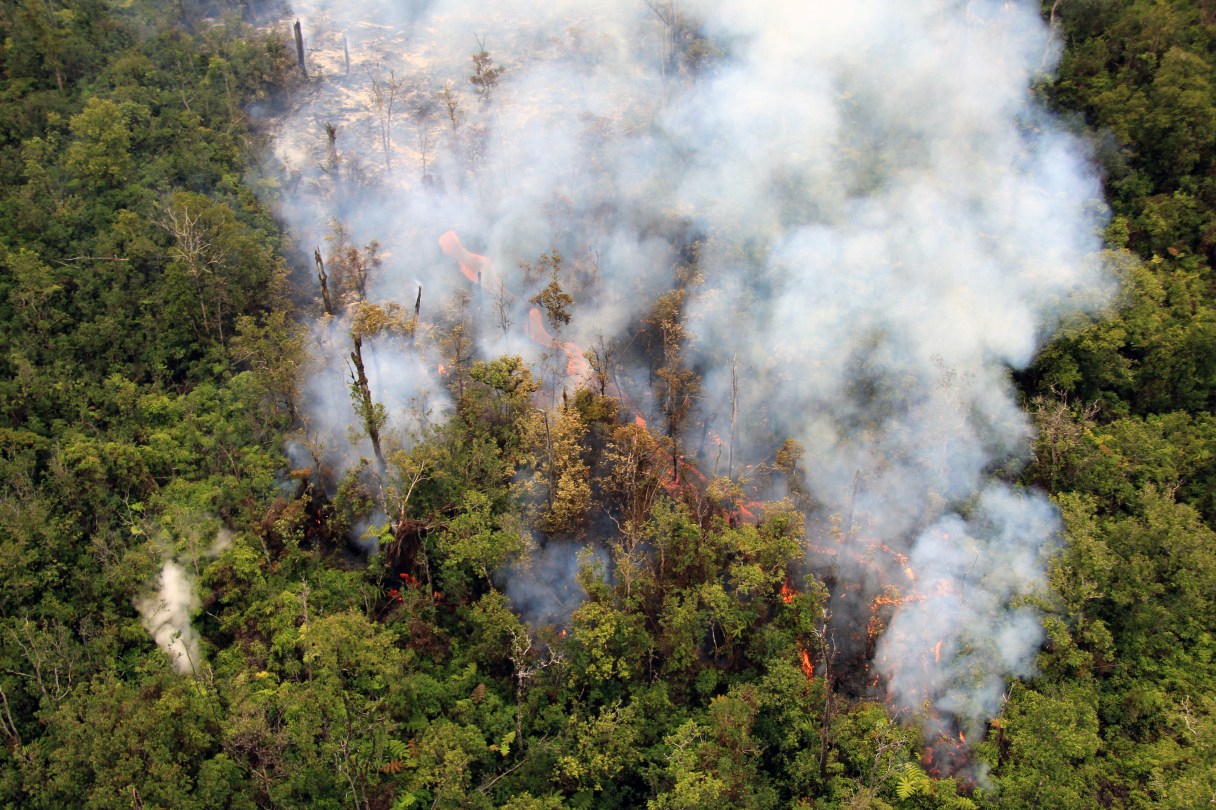
In this Sept. 3, 2014 photo released by the U.S. Geological Survey, fluid lava streams from the June 27 lava flow from the Kilauea volcano in Pahoa, Hawaii. The June 27 lava flow is named for the date it began erupting from a new vent. The Hawaiian Volcano Observatory issued a warning Thursday, Sept. 4, 2014 to a rural community in the path of a lava flow on Hawaii's Big Island, as the molten rock moved to within a mile of homes.  Observatory scientists said lava from the Kilauea volcano could reach the Kaohe Homesteads in five to seven days if it continues advancing through cracks in the earth. (AP Photo/U.S. Geological Survey)
In this Sept. 3, 2014 photo released by the U.S. Geological Survey, fluid lava streams from the June 27 lava flow from the Kilauea volcano in Pahoa, Hawaii. The June 27 lava flow is named for the date it began erupting from a new vent. The Hawaiian Volcano Observatory issued a warning Thursday, Sept. 4, 2014 to a rural community in the path of a lava flow on Hawaii's Big Island, as the molten rock moved to within a mile of homes. Observatory scientists said lava from the Kilauea volcano could reach the Kaohe Homesteads in five to seven days if it continues advancing through cracks in the earth. (AP Photo/U.S. Geological Survey)

HONOLULU (AP) – Residents in a rural, isolated region of Hawaii’s Big Island still reeling from a recent tropical storm turned their attention to a potential new disaster Thursday as scientists warned that a lava flow from a nearby volcano had moved to within a mile of some homes.

The Hawaiian Volcano Observatory said lava from the Kilauea volcano could reach the Kaohe Homesteads in five to seven days if it continues its steady advance through cracks in the earth.

The sparsely populated subdivision is part of the Puna region, where Tropical Storm Iselle made landfall about a month ago, toppling trees onto homes and wiping out electricity.

Observatory scientists said the lava has been advancing about 800 feet per day since July 10. They’ve been closely monitoring the flow and on Thursday raised the alert level from “watch” to “warning.”

However, the observatory said predicting a flow’s exact path can be difficult because of subtle variations in topography, changes in lava volume and where and how lava enters or exits ground cracks.