
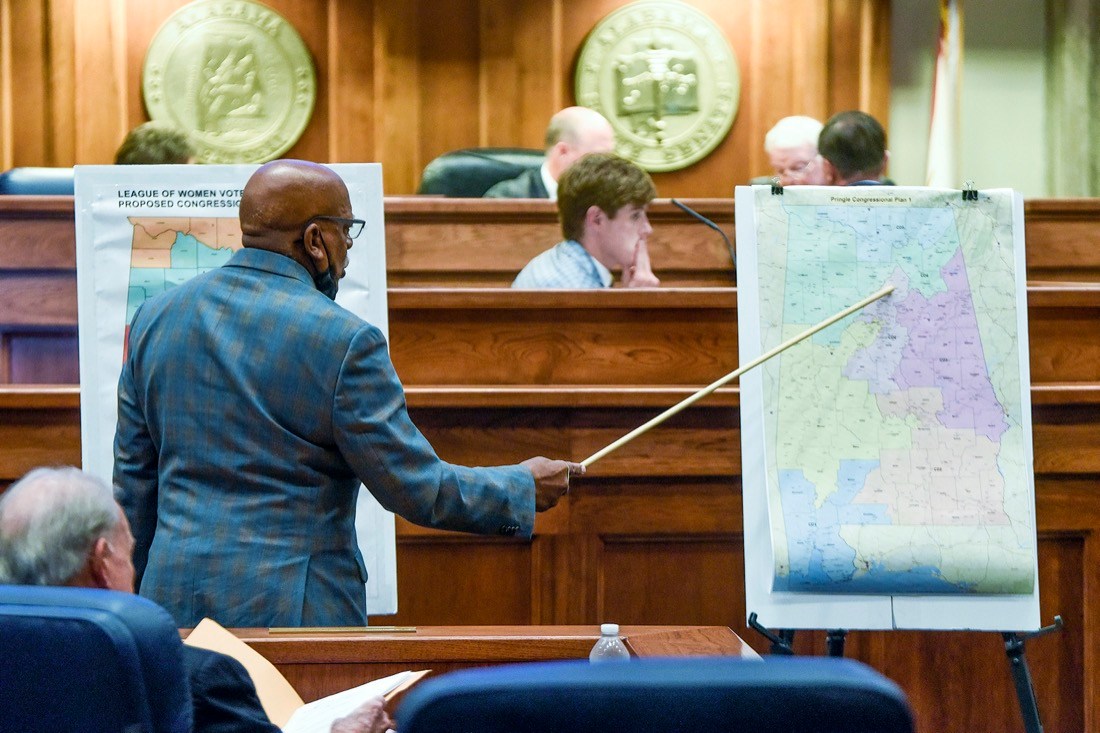
North Carolina Republicans are well positioned to pick up at least two House seats in next year’s election – but it’s not because the state is getting redder.
The state remains a perennial battleground, closely split between Democrats and Republicans in elections. In the last presidential race, Republican Donald Trump won by just over 1 percentage point – the narrowest margin since Barack Obama barely won the state in 2008.
But, last week, the GOP-controlled legislature finalized maps that redraw congressional district boundaries, dividing up Democratic voters in cities to dilute their votes. The new plan took the number of GOP-leaning districts from eight to 10 in the state. Republicans even have a shot at winning an eleventh.
North Carolina’s plan drew instant criticism for its aggressive approach, but it’s hardly alone. Experts and lawmakers tracking the once-a-decade redistricting process see a cycle of supercharged gerrymandering. With fewer legal restraints and amped up political stakes, both Democrats and Republicans are pushing the bounds of the tactic long used to draw districts for maximum partisan advantage, often at the expense of community unity or racial representation.
“In the absence of reforms, the gerrymandering in general has gotten even worse than 2010, than in the last round” of redistricting, said Chris Warshaw, a political scientist at George Washington University who has analyzed decades of redistricting maps in U.S. states.