
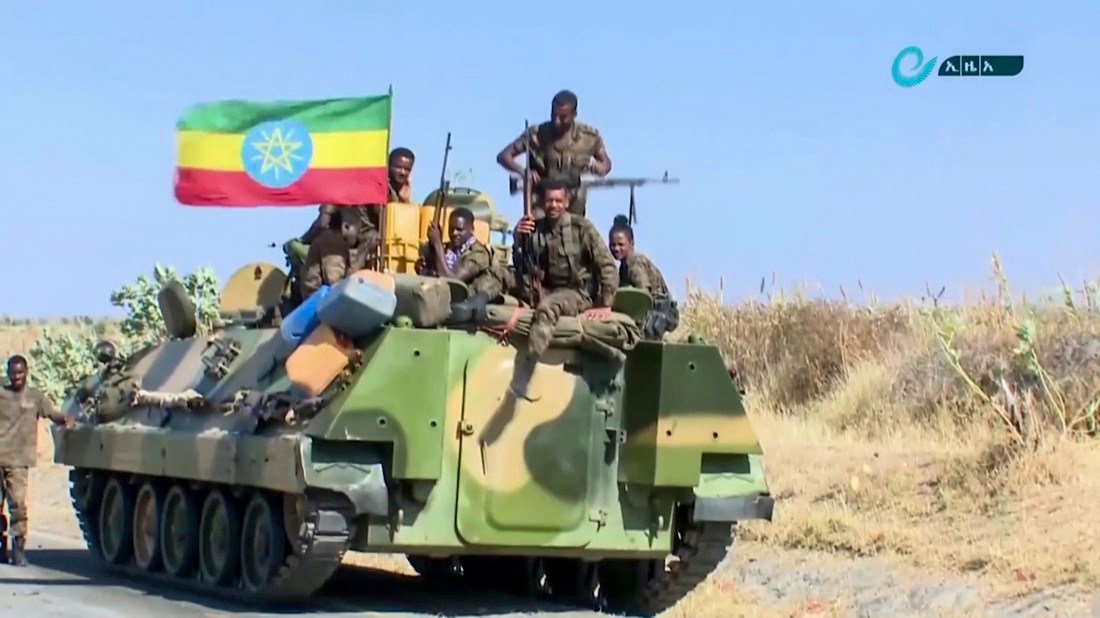
NAIROBI, Kenya (AP) – People are going hungry in Ethiopia’s rebellious northern Tigray region as roads are blocked, airports are closed and the federal government marches on its capital in a final push to win a two-week war. But residents are afraid to leave for fear of being killed, an internal assessment says.
Trucks laden with food, fuel and medical supplies have been stuck outside the region’s borders since the Nov. 4 announcement by Ethiopia’s Nobel Peace Prize-winning Prime Minister Abiy Ahmed that a military offensive had begun in response to an attack by Tigray regional forces on a military base.
“At this stage there is simply very little left, even if you have money,” according to the internal assessment by one humanitarian group, seen by The Associated Press. The assessment, based on a colleague who managed to get out, said people “will stay where they are, there is no place in Tigray where the situation is any different and they cannot cross over into the other regions of Ethiopia because of fear of what would be done to them.”
Banks in Tigray were closed for days, cutting off humanitarian cash transfers to some 1 million people, or one-sixth of the Tigray population. And even before the fighting, a locust outbreak was destroying crops.
Close to 30,000 Ethiopians have fled into neighboring Sudan, burdening villages that have been praised for their generosity, though they have little to give.