
Sunday, November 15, 2026Nov 15

Sweet’N Low to end Brooklyn production after nearly 60 years

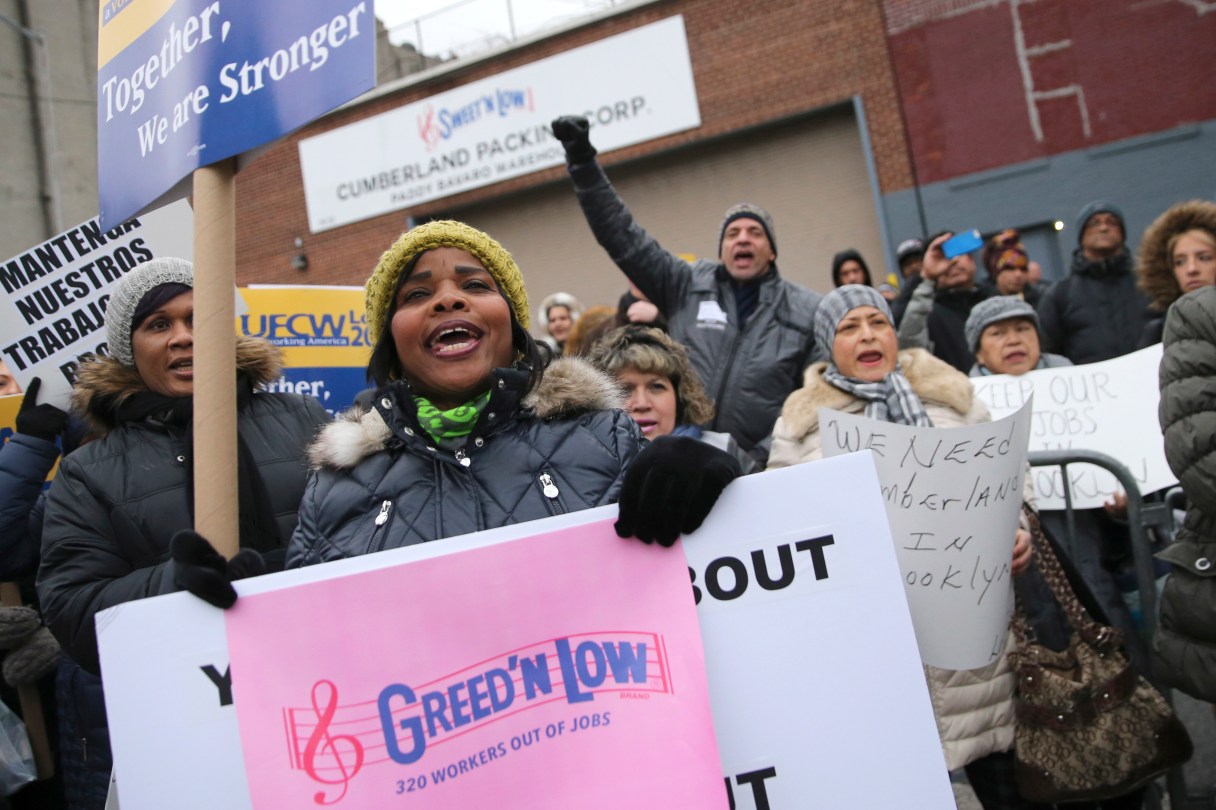
In this Tuesday, Jan. 12, 2016 photo, Cumberland Packing Corp. employees and union representatives chant slogans during a protest of Cumberland's closure in New York. After nearly 60 years, the New York City factory that makes the sugar substitute Sweet’N Low will soon be stopping local production. The family-owned company told workers that production would stop in Brooklyn over the year and shift entirely to other parts of the country, leaving only headquarters in the borough. (AP Photo/Mary Altaffer)

NEW YORK (AP) – For almost 60 years, tiny pink packets of Sweet’N Low have flowed, millions upon millions, from Cumberland Packing Corp., the Brooklyn company where the sugar substitute was first created.

But the family-owned company told workers just over a week ago that manufacturing and packing work would stop in Brooklyn over the course of the year and shift entirely to other parts of the country, leaving only its headquarters in the borough.

It’s the latest chapter in a familiar tale. New York City hasn’t been a manufacturing contender in decades, with global competition and the high costs of labor and real estate taking their toll.

“It’s a miracle they were here this long,” said Adam Friedman, executive director of the Pratt Center for Community Development. “They make a very standardized, commodity, low-value-added product, and that is not what New York is today, nor has it been for 10, 15, even 20 years.”

News of the shutdown came as a shock to the 300 or so employees when they were told at a meeting.