
(Editor’s note: first in a series)
Chattanooga today encompasses diverse communities including Hill City, St. Elmo, Southside, Wauhatchie and East Brainerd, but early 20th century maps indicated that the eastern boundary of the city reached only to East End Avenue, now Central Avenue. Most of the areas further east remained residential and often had agricultural uses.
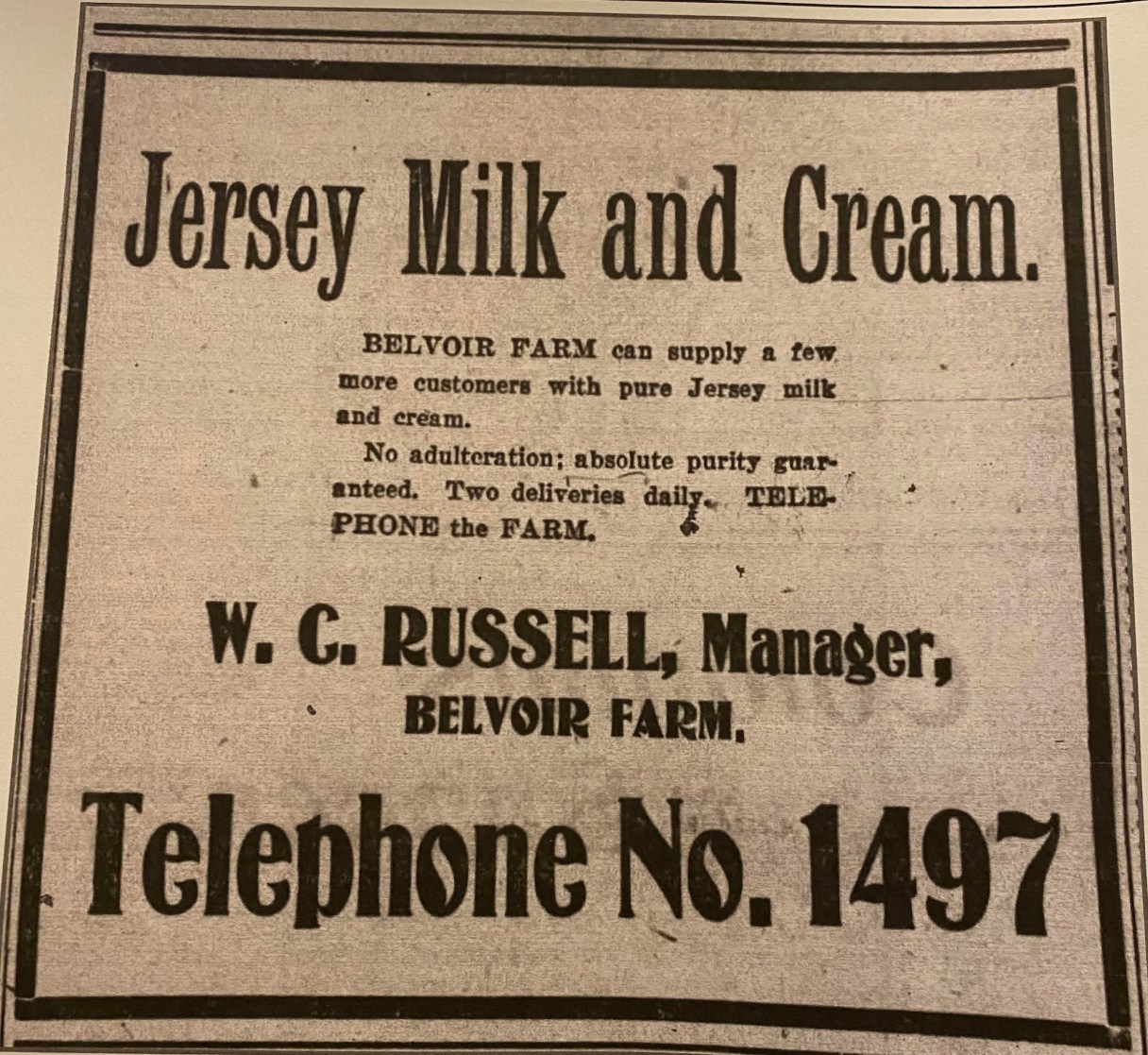
In 1902, one of the most profitable agricultural endeavors east of the city was Belvoir, a productive dairy farm owned by William Riley Crabtree and managed by W.C. Russell. Early Belvoir Farm ads offered “Jersey Milk and Cream” of “absolute purity” for sale and delivery by calling telephone number 1497. Belvoir Farm, the country estate so named by the future Mayor Crabtree’s wife, the former Virginia Isbester, meant “beautiful view.”
Chattanoogans visiting the Crabtrees’ beautiful home, the site of today’s Grace Episcopal Church, saw an enviable vista of rolling hills and mountains without the business and manufacturing sites that now dot the landscape. While the Crabtrees, married in September 1900, maintained a city home on Lindsay Street, both reportedly preferred their tranquil, if busy, life at Belvoir.
A Chattanooga News reporter in 1908 covered an event at the farm and provided readers with a description of the home as “an ideal country retreat that reminds one of the Old South.” Not only was the home described as architecturally pleasing, but the “browsing of the gentle herd of blooded Jerseys, the orchard, the neat servant houses and the well-arranged stables, etc., for the care of the animals, presents a picture worthy of [French artist] Rosa Bonheur’s brush.”