
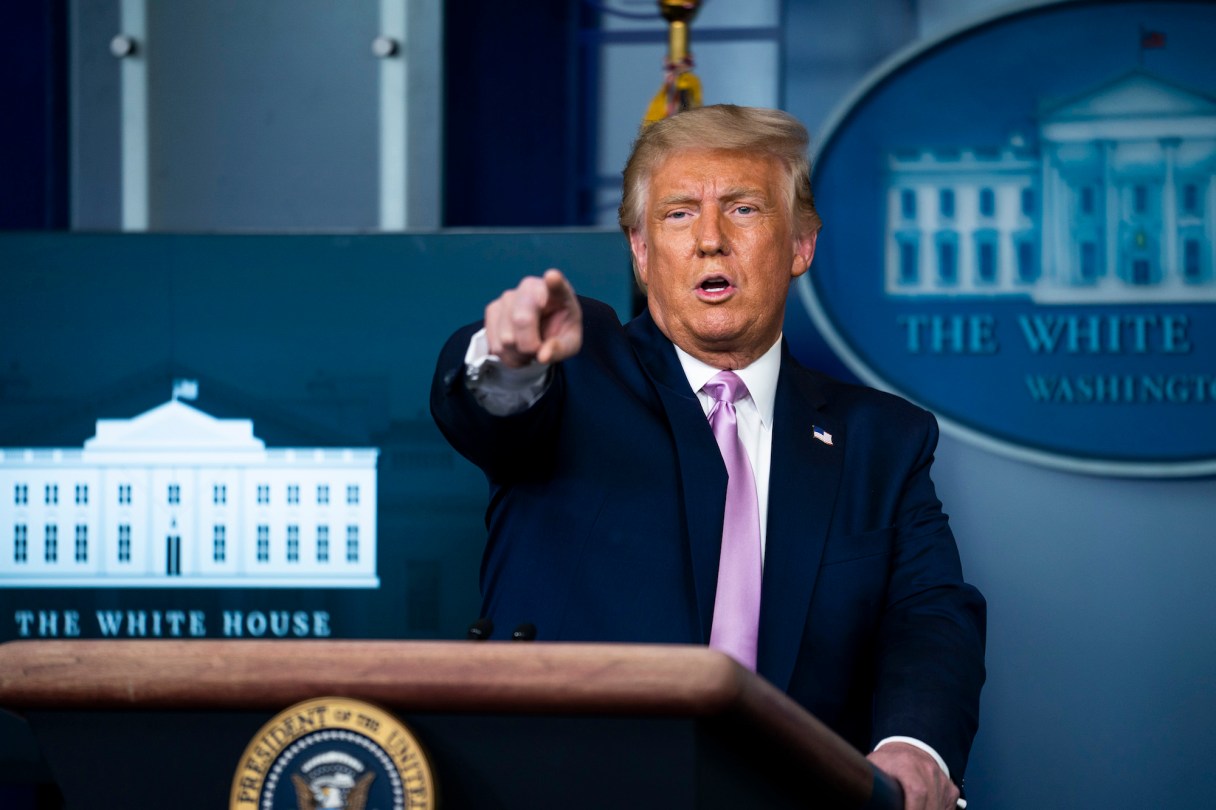
The one serious skill President Donald Trump has is his ability to draw attention from the news media.
He is giving every sign of attempting to maintain his TV ratings during the transition to President-elect Joe Biden. He’s pretending to contest an election that’s not particularly close, with plans to resume rallies to spread false, evidence-free claims of fraud. And he fired – “terminated,” as he described it on Twitter – Defense Secretary Mark Esper on Tuesday, with rumors swirling about other pointless executions to come.
It’s not clear what effect all of this will have on Biden’s new administration, or on the two important Senate runoff elections in Georgia coming up in January.
We know that most outgoing presidents experience at least a modest post-election improvement in their approval ratings measured by public opinion polls, including defeated presidents Gerald Ford and George H.W. Bush. It’s easy to imagine why that happens. For defeated presidents, months of attacks from the opposing party are usually replaced by efforts from the president-elect to talk about unity. That’s usually accompanied, for all outgoing presidents whether they were on the ballot or not, by pictures of the incoming president visiting the White House – strong visual evidence of that unifying theme.
Because he is remaining in campaign mode well after the campaign is over, Trump will be evaluated as a candidate, not as a president. That means few if any of those who marginally opposed him will now be prompted to remember what they liked about him. Nor will there be a round of Democrats saying conciliatory things. If he keeps this up, he’ll lose those White House unity photos. That kind of behavior is precisely what helped make Trump – the first president to explicitly begin campaigning for re-election on the day he took office four years ago – also one of the most unpopular presidents ever.