
Wednesday, November 4, 2026Nov 4

This story is free to read.

US Southwest faces threat of megadroughts with rising temps

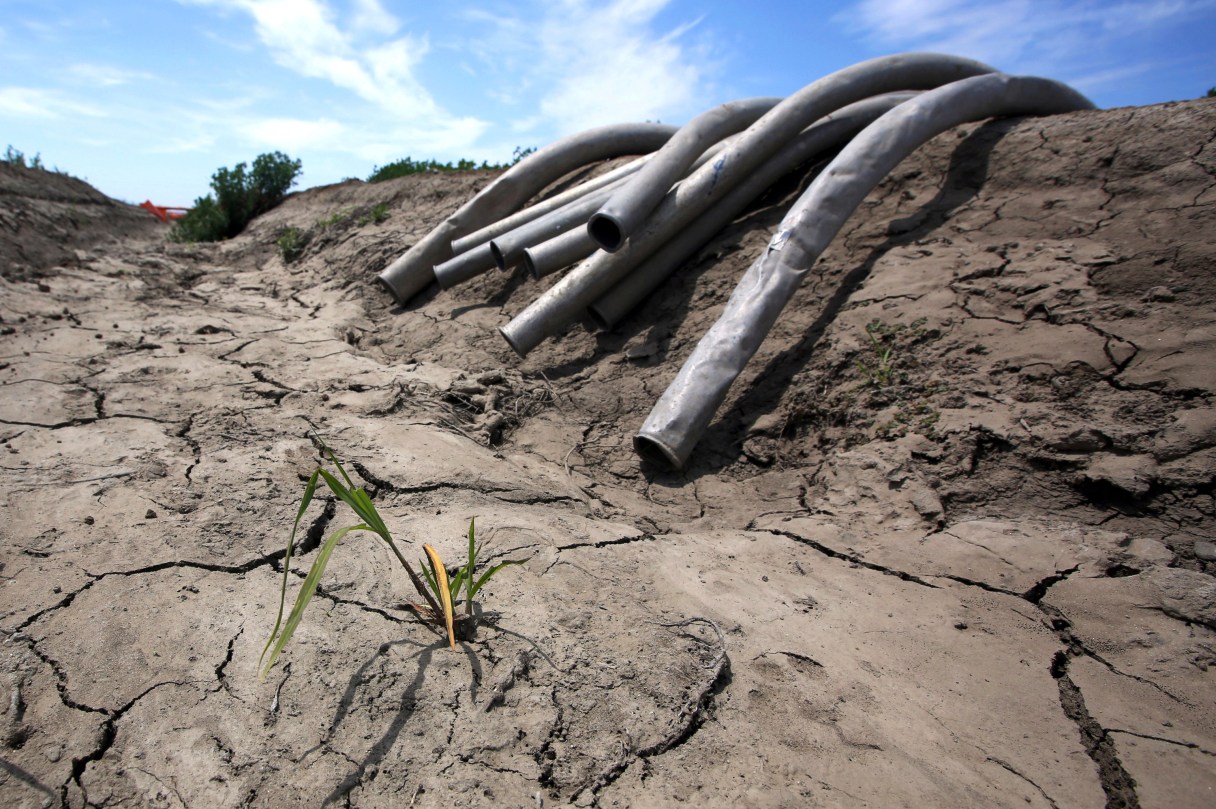
FILE - In this May 18, 2015 file photo, irrigation pipes sit along a dry irrigation canal on a field farmed by Gino Celli, who relies on senior water rights to water his crops, near Stockton, Calif. New research published on Wednesday, Oct. 5, 2016 found that increasing temperatures will greatly increase the risk of megadroughts in the Southwest region of the U.S. Oppressive dry spells lasting at least two decades have gripped the Southwest before, but scientists said future megadroughts would be hotter and more severe, putting a strain on water resources. (AP Photo/Rich Pedroncelli, File)
FILE - In this May 18, 2015 file photo, irrigation pipes sit along a dry irrigation canal on a field farmed by Gino Celli, who relies on senior water rights to water his crops, near Stockton, Calif. New research published on Wednesday, Oct. 5, 2016 found that increasing temperatures will greatly increase the risk of megadroughts in the Southwest region of the U.S. Oppressive dry spells lasting at least two decades have gripped the Southwest before, but scientists said future megadroughts would be hotter and more severe, putting a strain on water resources. (AP Photo/Rich Pedroncelli, File) FILE - In this May 18, 2015 file photo, irrigation pipes sit along a dry irrigation canal on a field farmed by Gino Celli, who relies on senior water rights to water his crops, near Stockton, Calif. New research published on Wednesday, Oct. 5, 2016 found that increasing temperatures will greatly increase the risk of megadroughts in the Southwest region of the U.S. Oppressive dry spells lasting at least two decades have gripped the Southwest before, but scientists said future megadroughts would be hotter and more severe, putting a strain on water resources. (AP Photo/Rich Pedroncelli, File)

LOS ANGELES (AP) – A new study says the Southwest region of the United States faces the threat of megadroughts this century as temperatures rise.

Researchers found the risk is reduced if heat-trapping gases are curbed.

Dry spells lasting at least two decades have gripped the Southwest before, but scientists said future megadroughts would be hotter and more severe.

The study was published Wednesday in the journal Science Advances.

The Colorado River basin, which spans parts of Arizona, California, Colorado, New Mexico, Nevada, Utah, Wyoming and Mexico, has been in the midst of a historic drought for the past 16 years.