

The Chattanooga utility that started the first Gig internet service in the Western Hemisphere using its fiber optic network is now using that same fiber backbone to pioneer a new method of cybersecurity that could literally be a quantum leap ahead of any other utility in North America.
EPB on Thursday hosted top researchers in quantum physics from both the Los Alamos National Laboratory and the Oak Ridge National Laboratory in a test of a new type of cybersecurity control network regarded as far safer and less vulnerable to cyberattacks than any existing controls. The new CEDS (Cybersecurity for Energy Delivery Systems) system uses quantum technology to encrypt messages sent along EPB’s smart grid and was tested along a 21-kilometer route on Thursday.
“This is probably the most advanced quantum network in the country, especially considering that this is in a real utility environment,” said Nicholas Peters, group leader for the Quantum Science Research Group at ORNL who first came to EPB four years ago as part of EPB’s Engineer Scholars program. “If something is secure without regard to computing (like with quantum technology) you don’t have to worry about advances in computer power breaking your algorithm and compromising security.”
Cybersecurity is a top priority of the U.S. Department of Energy, which is funding the research to help guard against hackers threatening to mess with America’s power grid. In 2018, the U.S. Department of Energy created the Office of Cybersecurity, Energy Security and Emergency Response with a $28 million annual budget to research technologies that help prevent, detect and mitigate cyberattacks, with an emphasis on communication and cloud-based operations.
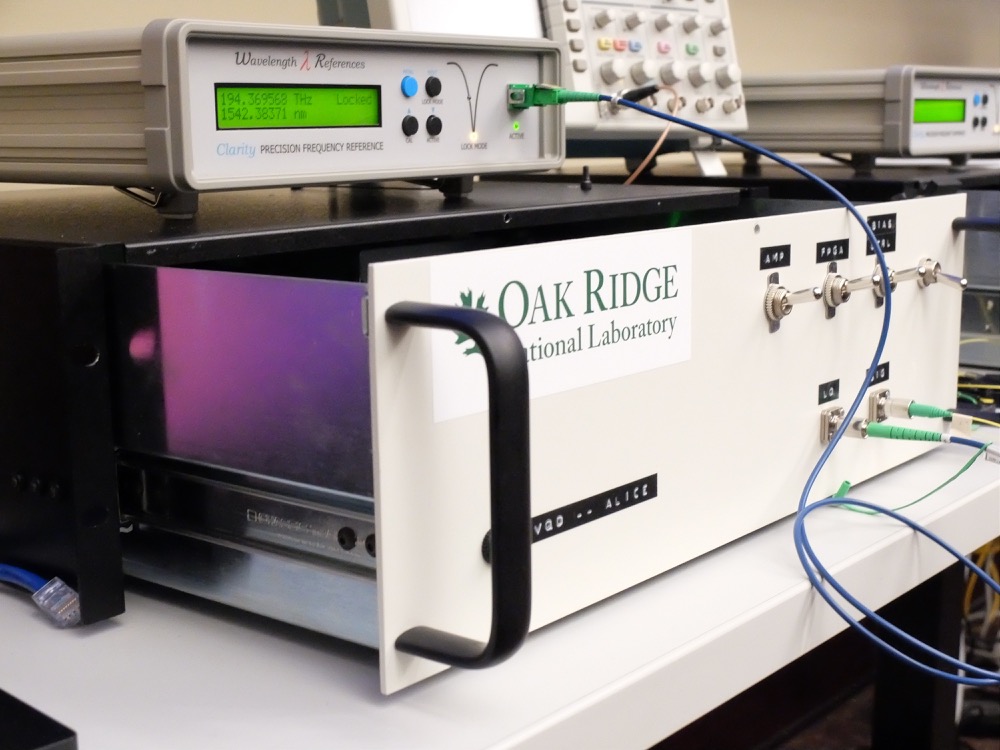 Staff photo by Tim Barber / A table displays equipment used for data field testing in the EPB Control Center Conference Room Thursday in Chattanooga, March 5, 2020.
At the Tennessee Valley Authority, a team of 60 cybersecurity experts in downtown Chattanooga monitor more than 1 billion potential cyberthreats every day.