
Friday, October 30, 2026Oct 30

This story is free to read.

Options shrink for Haitian migrants straddling Texas border

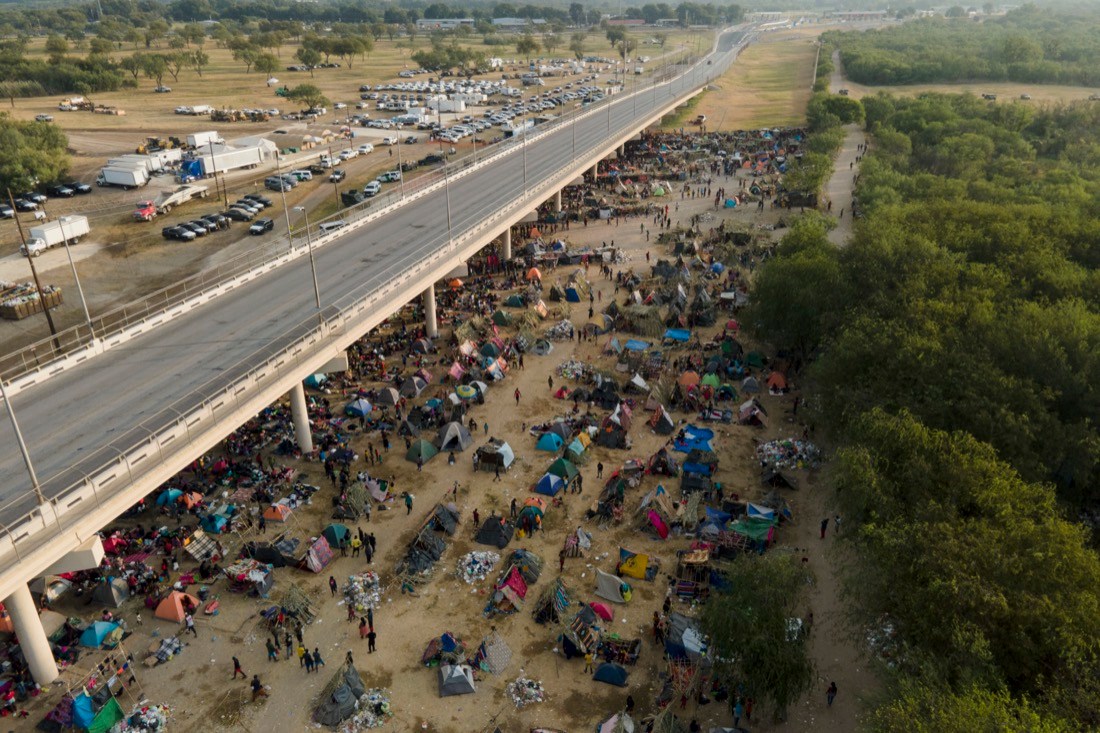
Migrants, many from Haiti, are seen at an encampment along the Del Rio International Bridge near the Rio Grande, Tuesday, Sept. 21, 2021, in Del Rio, Texas. The options remaining for thousands of Haitian migrants straddling the Mexico-Texas border are narrowing as the United States government ramps up to an expected six expulsion flights to Haiti and Mexico began busing some away from the border. (AP Photo/Julio Cortez)
Migrants, many from Haiti, are seen at an encampment along the Del Rio International Bridge near the Rio Grande, Tuesday, Sept. 21, 2021, in Del Rio, Texas. The options remaining for thousands of Haitian migrants straddling the Mexico-Texas border are narrowing as the United States government ramps up to an expected six expulsion flights to Haiti and Mexico began busing some away from the border. (AP Photo/Julio Cortez) Migrants, many from Haiti, are seen at an encampment along the Del Rio International Bridge near the Rio Grande, Tuesday, Sept. 21, 2021, in Del Rio, Texas. The options remaining for thousands of Haitian migrants straddling the Mexico-Texas border are narrowing as the United States government ramps up to an expected six expulsion flights to Haiti and Mexico began busing some away from the border. (AP Photo/Julio Cortez)

DEL RIO, Texas (AP) – Options were narrowing for thousands of Haitian migrants straddling the Mexico-Texas border as the United States government ramped up expulsion flights to Haiti on Tuesday and Mexico began flying and busing some away from the border.

More than 6,000 Haitians and other migrants had been removed from an encampment at Del Rio, Texas, U.S. officials said Monday as they defended a strong response that included immediately expelling migrants to their impoverished Caribbean country and faced criticism for using horse patrols to stop them from entering the town.

That was enough for some Haitian migrants to return to Mexico, while others struggled to decide on which side of the border to take their chances.

Jean Claudio Charles, 34, his wife and their 1-year-old son were stretching at dawn on Tuesday after sleeping on cardboard in a park by the river with 300 others who chose to return to Mexico from the U.S. side, some for fear of being deported and others because of a lack of food.

Charles said he did not want to leave the area, which is gradually becoming a new camp on the Mexican side, for fear of arrests.