
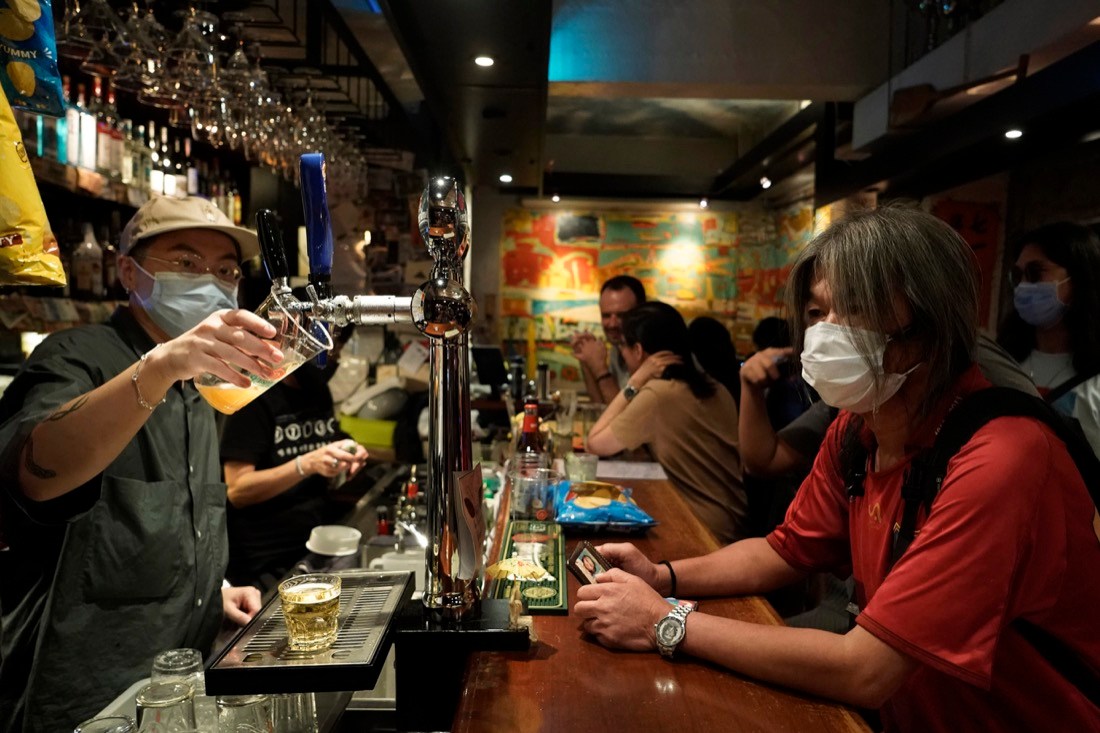
HONG KONG (AP) – Nearly 15 years ago, Grace Ma decided to name her bar Club 71, in commemoration of a July 1, 2003 rally where hundreds of thousands of Hong Kongers protested a proposed national security law for the semi-autonomous Chinese city.
“I took the name Club 71, because somehow it is more hopeful, with half a million Hong Kong people having a demonstration, a rally, to stand for themselves, not to ignore what’s going on in Hong Kong,” said Ma.
For years, the storied bar has served as a watering hole for the city’s pro-democracy activists and intellectuals, who could freely engage in discussions over a round of beer or two.
Then the coronavirus pandemic hit and, in a blow to the city’s Western-style freedoms, the central government in Beijing in June imposed sweeping national security legislation targeting political expression in response to massive anti-government protests last year. For Ma, the troubles meant it was time to shutter the business for good.
Months of government-mandated bar closures as part of coronavirus restrictions had pushed Club 71’s finances deeper into the red, and operating the bar no longer made financial sense, she said. The bar will close at the end of October.