
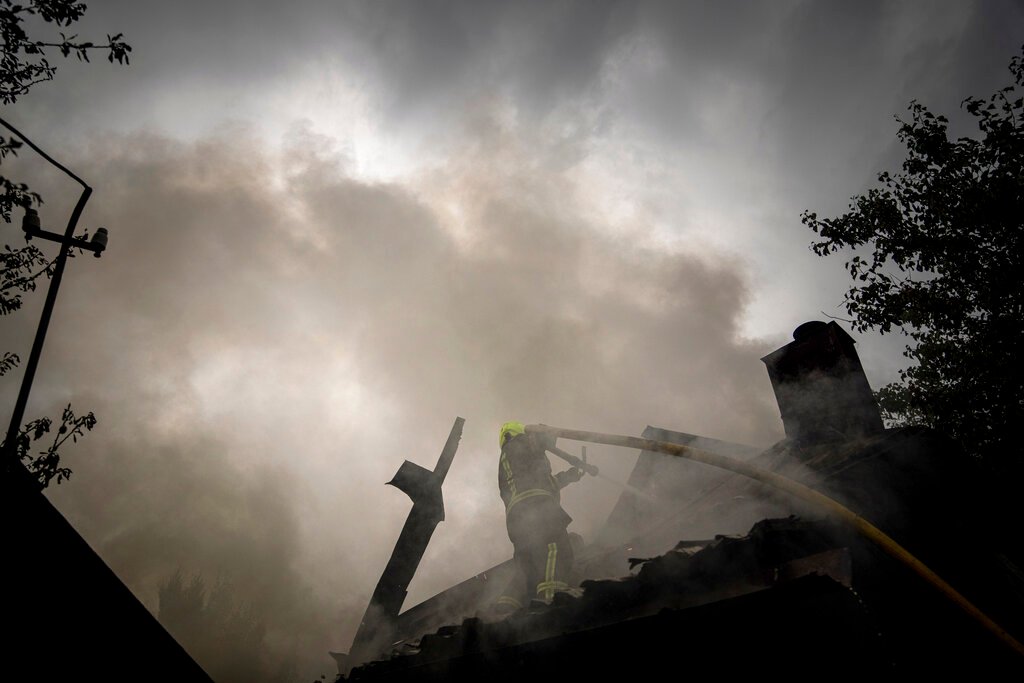
KHARKIV, Ukraine (AP) – As Russian missiles struck a key Ukrainian city, Russian President Vladimir Putin expanded a fast-track procedure for obtaining Russian citizenship to all Ukrainians on Monday, another effort to strengthen Moscow’s influence over war-torn Ukraine.
Until recently, only residents of Ukraine’s separatist eastern Donetsk and Luhansk regions, as well as residents of the southern Zaporizhzhia and the Kherson regions, large parts of which are now under Russian control, were eligible to apply for the simplified passport procedure.
Ukrainian Foreign Minister Dmytro Klueba said Putin’s signing of a passport decree, which also applies to stateless residents in Ukraine, was an example of his “predatory appetites.”
“Russia is using the simplified procedure for issuing passports to tighten the noose around the necks of residents of the temporarily occupied territories of our state, forcing them to participate in the criminal activities of the occupying administrations and the Russian army of aggression,” Ukraine’s Foreign Ministry added in a statement.
Between 2019, when the procedure was introduced for the residents of Donetsk and Luhansk, and this year, more than 720,000 people living in the rebel-held areas in the two regions – about 18% of the population – have received Russian passports.