
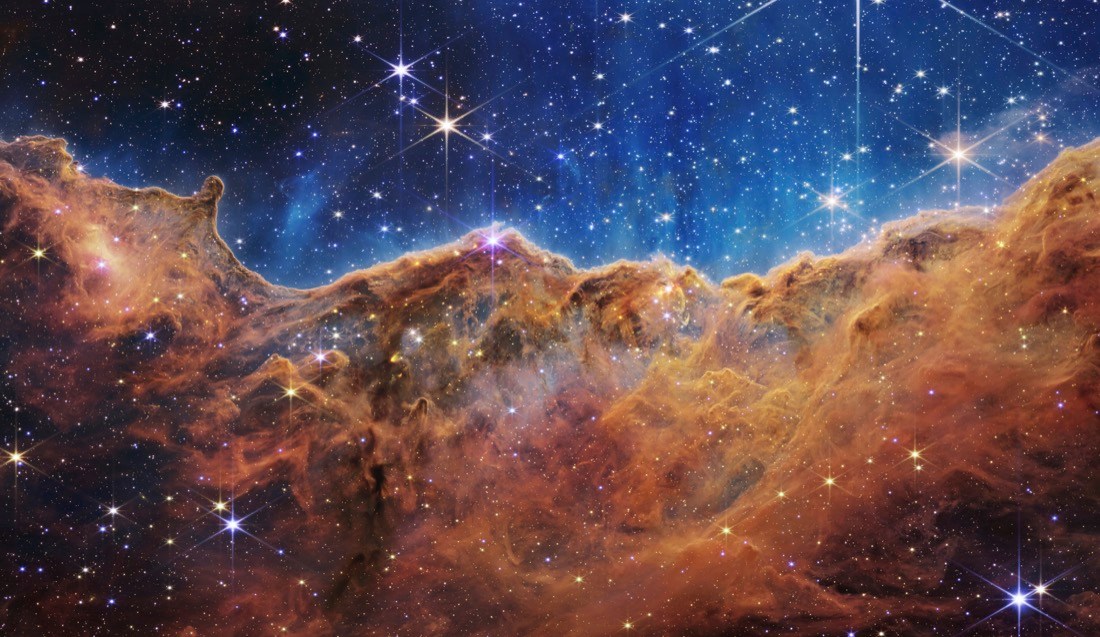
GREENBELT, Md. (AP) – A sparkling landscape of baby stars. A foamy blue and orange view of a dying star. Five galaxies in a cosmic dance. The splendors of the universe glowed in a new batch of images released Tuesday from NASA’s powerful new telescope.
The unveiling from the $10 billion James Webb Space Telescope began Monday at the White House with a sneak peek of the first shot – a jumble of distant galaxies that went deeper into the cosmos than humanity has ever seen.
Tuesday’s releases showed parts of the universe seen by other telescopes. But Webb’s sheer power, distant location from Earth and use of the infrared light spectrum showed them in a new light that scientists said was almost as much art as science.
“It’s the beauty but also the story,” NASA senior Webb scientist John Mather, a Nobel laureate, said after the reveal. “It’s the story of where did we come from.”
Photo Gallery
NASA’s new telescope shows star death, dancing galaxies
And, he said, the more he looked at the images, the more he became convinced that life exists elsewhere in those thousands of stars and hundreds of galaxies.