
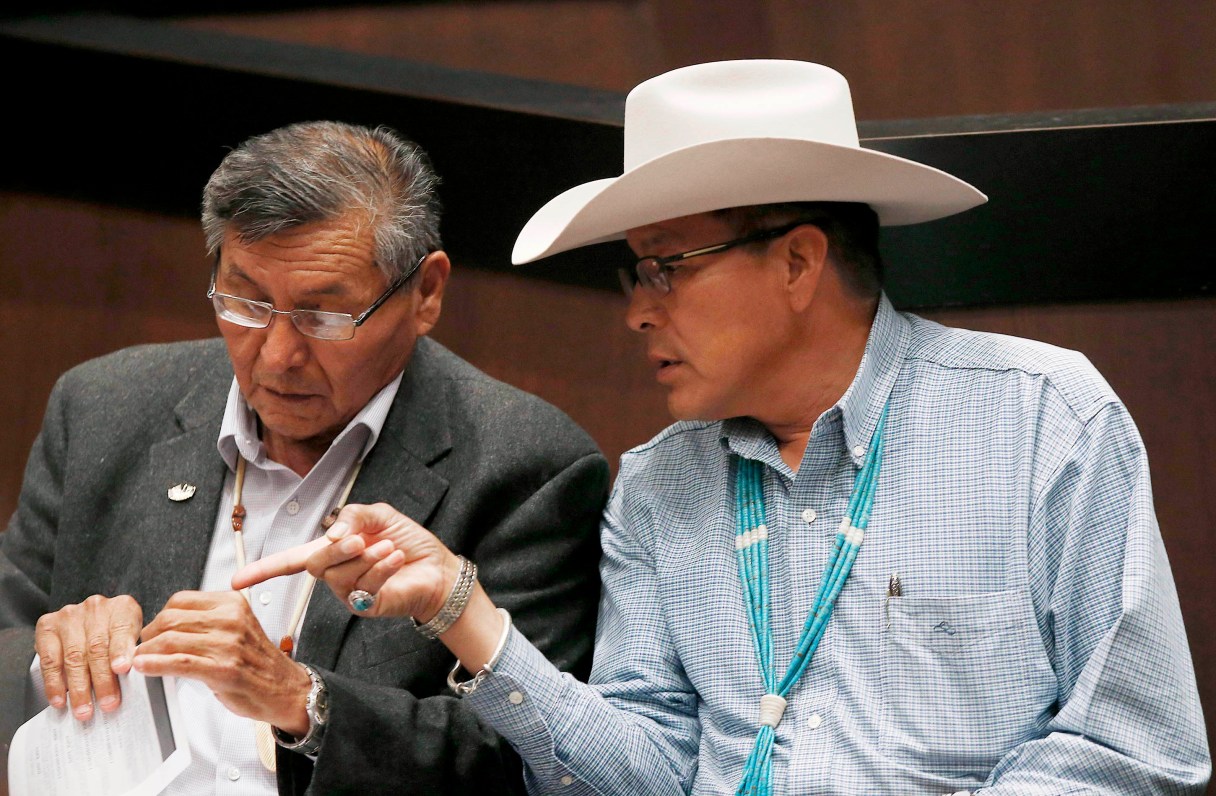
FLAGSTAFF, Ariz. (AP) – Seventeen candidates are running for president of the Navajo Nation, a post that wields important influence on the country’s largest American Indian reservation.
The top two vote-getters in Tuesday’s primary will advance to November’s general election. More than 114,000 Navajos are registered to vote.
The race features a mix of seasoned politicians, political newcomers and the sitting president. Their platforms include securing water rights, enticing business to an area with a more than 50 percent unemployment rate, involving Navajos in decisions on government structure, and promoting tribal culture and tradition.
At the most basic level, Navajos want better roads, and electricity and water at their homes, said tribal Attorney General Harrison Tsosie. About 70 percent of the roads on the reservation are unpaved, an estimated 16,000 families don’t have electricity and many more don’t have telephone service, water or natural gas services, according to the tribal utility provider.
While the president is the tribe’s top elected official, the post generally is seen as less powerful than the Navajo Nation Council. The president earns $55,000 a year and represents the tribe to outside agencies.