
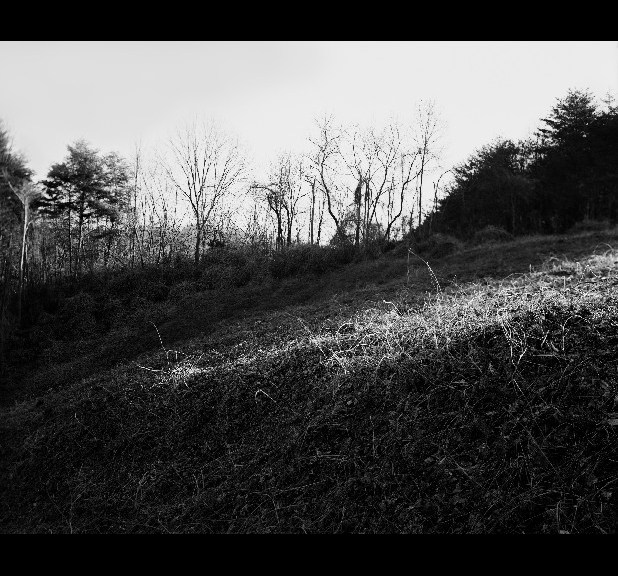
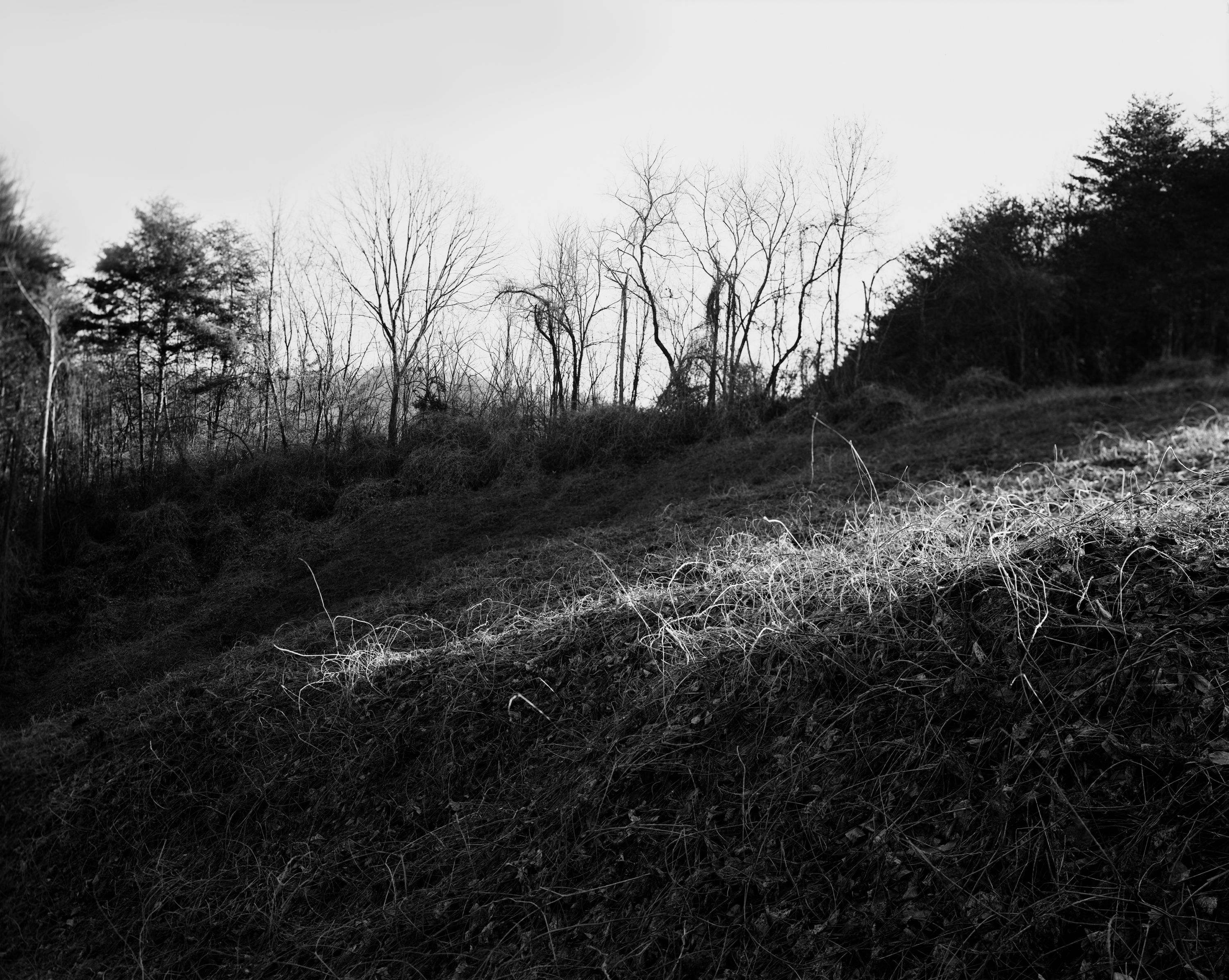
 “Wisteria” by Joe Reynolds
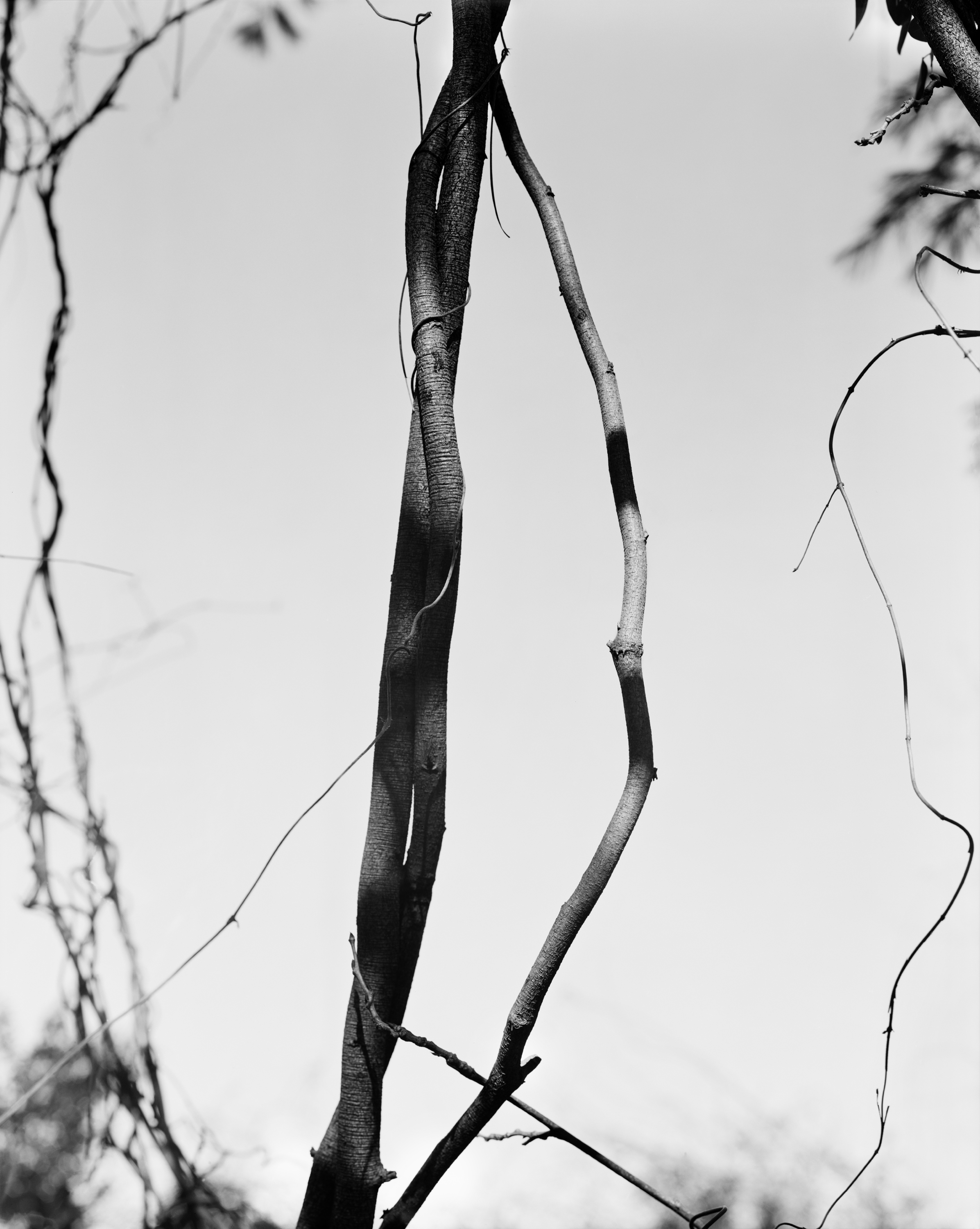 “Kudzu” by Joe Reynolds
ABOUT JOE REYNOLDSReynolds earned a Bachelor of Arts in journalism from the University of North Carolina at Chapel Hill, a Bachelor of Fine Arts in photography from East Tennessee State University and a Master of Fine Arts in photography from Massachusetts College of Art. He has exhibited works in galleries in the South, New England and Japan.FACTS ABOUT KUDZU• There are many, many nodes on a kudzu vine, showing up about every 10 to 16 inches.• Each node can root.• Large, rooted nodes are called crowns.• All vines grow from rooted nodes or crowns; no vines grow from roots• As many as 30 vines may grow from a single root crown.• Vines can grow as much as one foot per day.• Taproots from the crown have been known to grow to 7 inches or more in diameter, 6 feet or more in length, and weighing as much as 400 pounds.Source: dnr.sc.gov; eol.orgIF YOU GOWhat: Katakana:”Katakana: Photographs of Kudzu and Wisteria in My Back Yard.”When: 10 a.m.-4 p.m. Monday-Friday, through Aug. 25Where: Exum Gallery, St. Paul’s Episcopal Church, 305 W. Seventh St.When: 10 a.m.-4 p.m. Monday-Friday, through Aug. 25Admission: Free.Website: joereynoldsphotographs.com.
Say what you want about kudzu, the highly aggressive vine that’s been eating the South for more than a century, it is a distinctive plant that changes the landscape wherever it takes hold.
That’ engulfing attitude is part of what has intrigued photographer Joe Reynolds for years. So much so, he spent a year photographing kudzu and another climbing vine, wisteria, around his mother’s North Chattanooga home.
“I just like kudzu and wisteria,” he says. “They are non-native species and both have been here quite awhile. They stand apart from the rest of the landscape. Kudzu is kind of a conflicted vine that doesn’t blend in with other plants.”
Reynolds took about 5,700 shots during his project and whittled that down to 18 black-and-white photographs ranging in size from 8-by-10 inches to 30-by-40 inches. Titled “Katakana: Photographs of Kudzu and Wisteria in My Back Yard,” they are on display in the Exum Gallery at St. Paul’s Episcopal Church through Aug. 25. “Katakana” is a type of Japanese writing.