
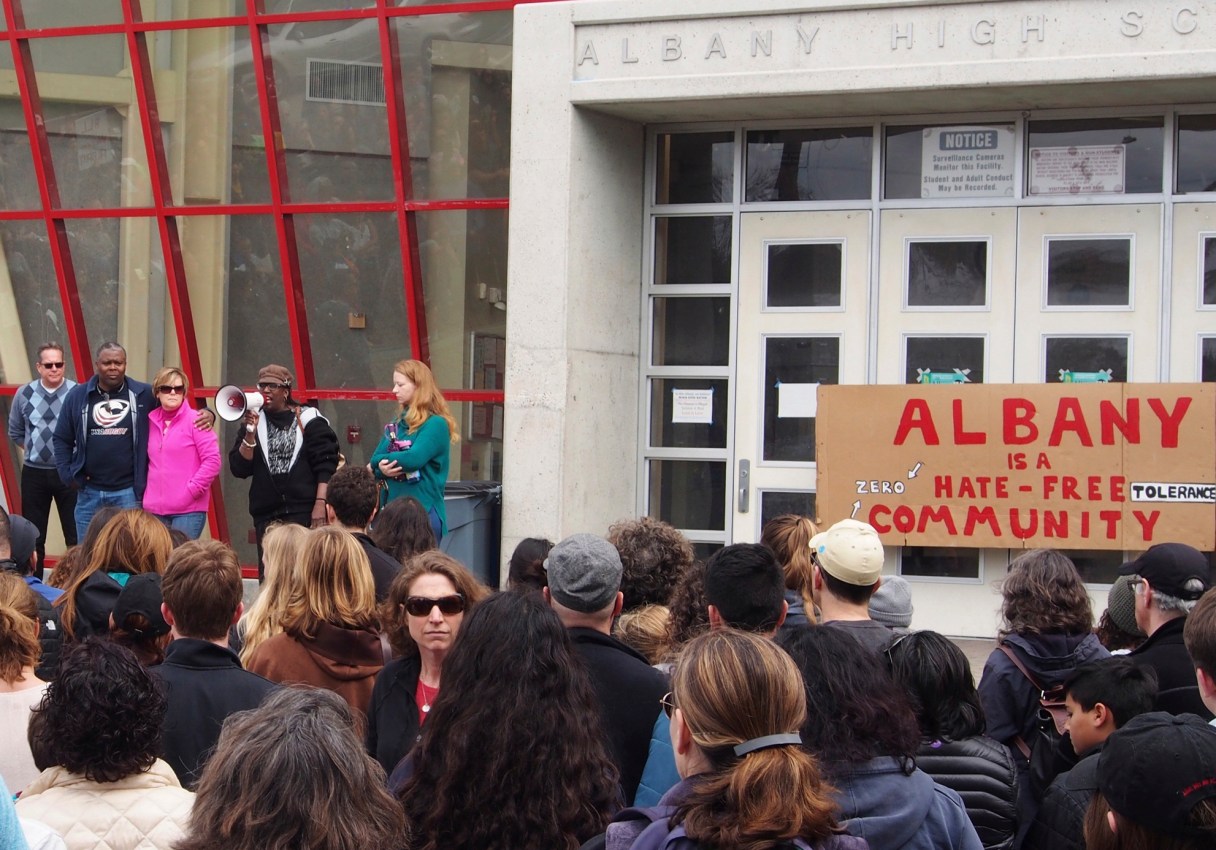
SAN FRANCISCO (AP) – A California school district suspended a high school student after racist images that included nooses drawn around the necks of a black student and coach appeared on his social media site.
But a federal lawsuit says the district went too far when it also disciplined students who indicated they “liked” the posts on the Instagram account. The suit – filed Monday in San Francisco on behalf of four students- accuses the Albany Unified School District of violating students’ free speech rights and says the district did not have the authority to suspend the students because the offensive posts were on a private account that had no connection with any official school activity or school account.
“This to me is no different than having a private drawing book and making some offensive drawings at home and sharing them with a couple of friends,” said Alan Beck, an attorney for four students who “liked” or commented on the offensive Instagram account. “Does the school have the right to ruin my life over something I was doing at my house?”
Legal experts say the lawsuit will present federal courts with another opportunity to decide how strictly schools can regulate student speech. And it raises thorny questions about whether “likes” on social media should be treated similarly to the original posts.
“‘Likes’ are ambiguous in that they could be saying, ‘This is funny,’ ‘I agree with it,’ or ‘I don’t agree, but I want to stand up for your right to say it,'” said Eugene Volokh, who teaches free speech law at the University of California, Los Angeles.