
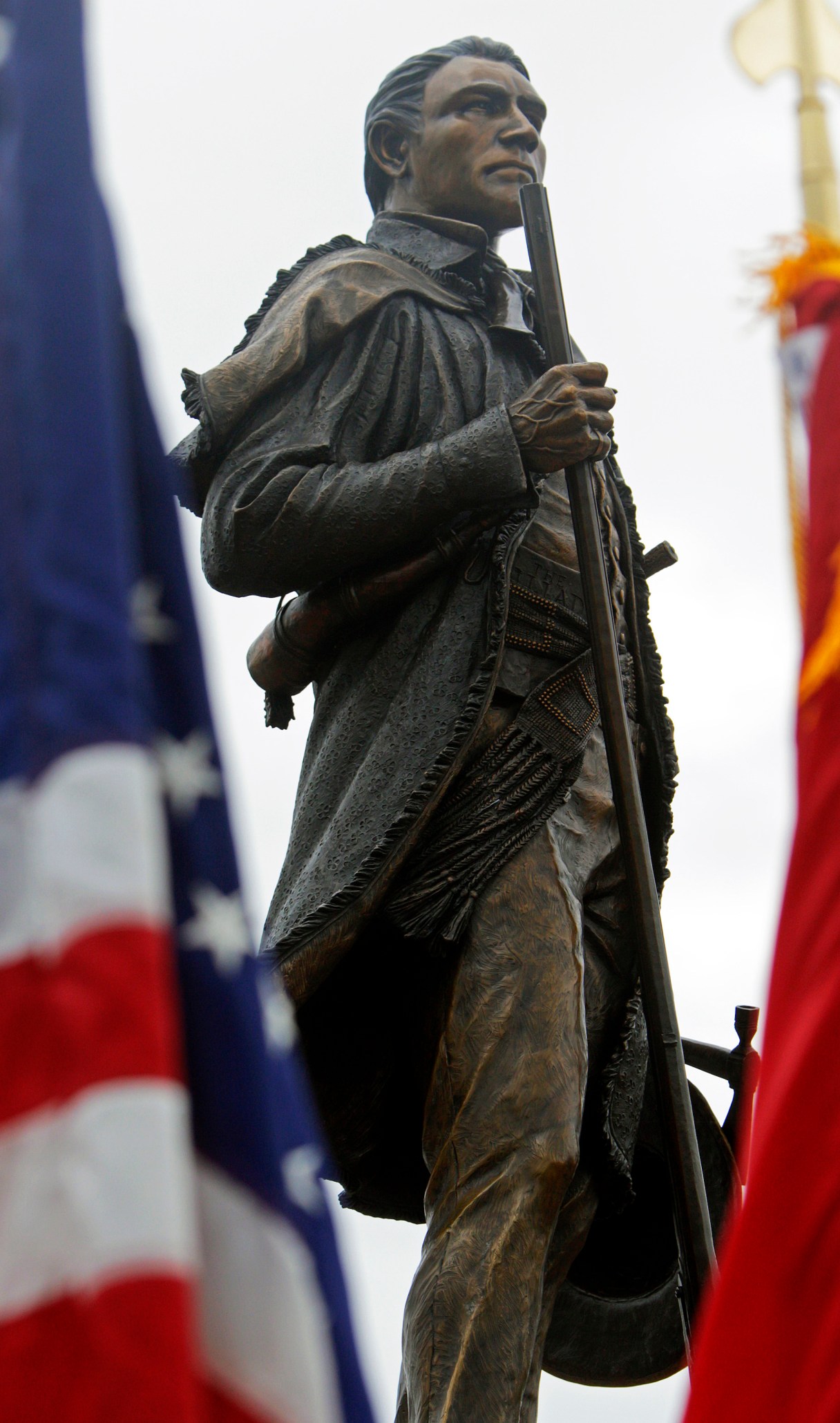
Gov. Sam Houston’s resignation on April 16, 1829, was the scandal of the century in Tennessee. Houston is the only governor in Tennessee’s 224-year history to resign for personal reasons. The other three governors did so to ascend to higher political office. (Andrew Johnson is the only governor in America to resign that office twice.)
The collapse of Houston’s Tennessee political career began on April 11 when the then-35-year-old returned to the Nashville Inn, where he had been living with his bride of just 11 weeks, Mrs. Eliza Allen Houston. The 19-year-old bride had returned to her father’s home in Gallatin.
Earlier in the day Houston opened his re-election campaign for governor near Cockrell’s Spring. He and his challenger, ex-Gov. William Carroll, met there before a large crowd to give their stump speeches. Davidson County Sheriff William Willoughby, who was a childhood friend of Houston from Maryville, assured him that the crowd was with him for the upcoming August election. But all the political good news of the day turned into a nightmare when the governor came home to find the teenaged first lady had left him.
Houston sequestered himself in the Nashville Inn for 12 days with very few visitors. As the news of the split broke across the state like a thunderclap, people demanded to know what happened. If an answer was not offered, the masses would create their own. Imagination has no restraint in situations like these.
Eliza was protected by her family back in Gallatin, and Houston remained silent. He was burned in effigy at the Sumter County Courthouse. He was “posted” as a coward in Nashville. Willoughby warned Houston that the crowd was growing restless. He needed to speak or else he would “sacrifice” his friends and himself.