
Friday, November 6, 2026Nov 6

This story is free to read.

More delays in executions as some states find lethal drugs

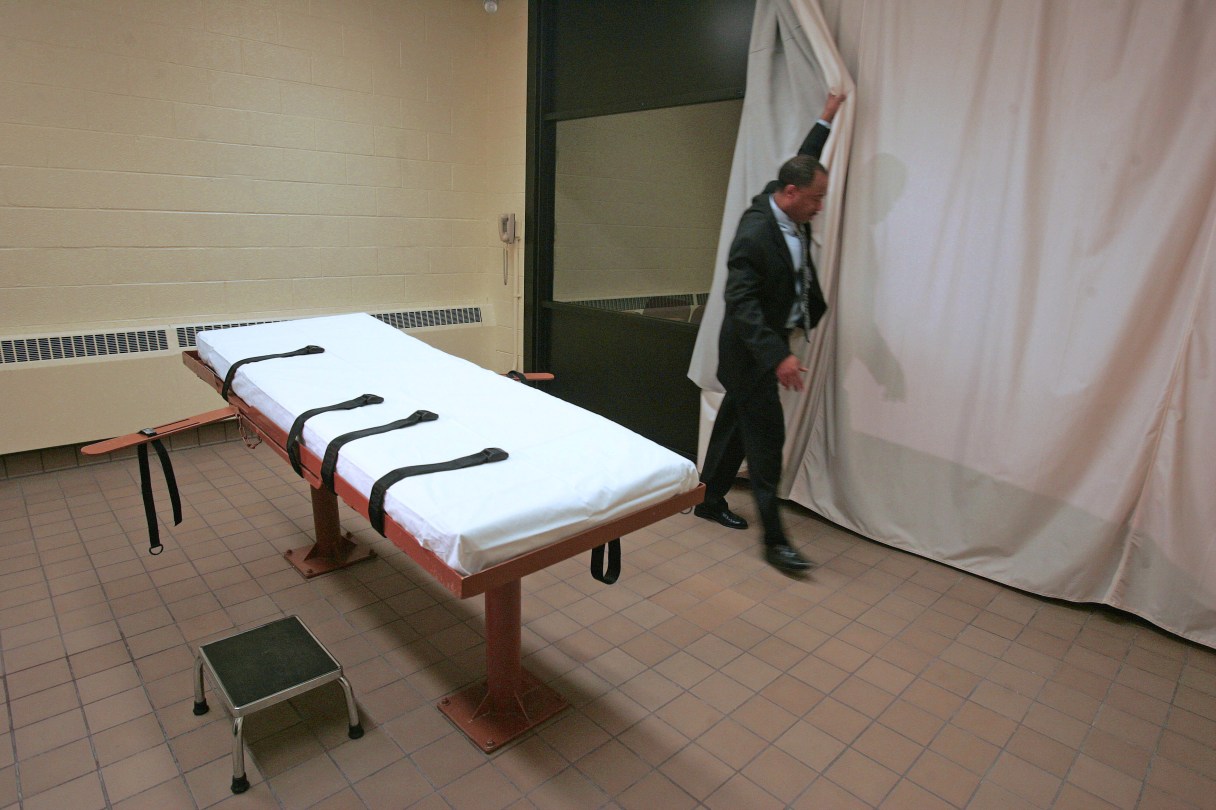
FILE – In this November 2005 file photo, Larry Greene, public information director of the Southern Ohio Correctional Facility, demonstrates how a curtain is pulled between the death chamber and witness room at the prison in Lucasville, Ohio. Magistrate Judge Michael Merz in Dayton, Ohio, declared Ohio's new three-drug lethal injection process unconstitutional on Thursday, Jan. 26, 2017, and delayed three executions, including the execution of Ronald Phillips that had been scheduled Feb. 15, 2017. (AP Photo/Kiichiro Sato, File)
FILE – In this November 2005 file photo, Larry Greene, public information director of the Southern Ohio Correctional Facility, demonstrates how a curtain is pulled between the death chamber and witness room at the prison in Lucasville, Ohio. Magistrate Judge Michael Merz in Dayton, Ohio, declared Ohio's new three-drug lethal injection process unconstitutional on Thursday, Jan. 26, 2017, and delayed three executions, including the execution of Ronald Phillips that had been scheduled Feb. 15, 2017. (AP Photo/Kiichiro Sato, File) FILE – In this November 2005 file photo, Larry Greene, public information director of the Southern Ohio Correctional Facility, demonstrates how a curtain is pulled between the death chamber and witness room at the prison in Lucasville, Ohio. Magistrate Judge Michael Merz in Dayton, Ohio, declared Ohio's new three-drug lethal injection process unconstitutional on Thursday, Jan. 26, 2017, and delayed three executions, including the execution of Ronald Phillips that had been scheduled Feb. 15, 2017. (AP Photo/Kiichiro Sato, File)

COLUMBUS, Ohio (AP) – The stop-and-start nature of U.S. executions in recent years hit another road bump this week as a federal judge found Ohio’s latest lethal injection procedure unconstitutional.

The ruling by Magistrate Judge Michael Merz went far beyond nitpicking the state’s procedures, and on one point raised potential problems for three other states that use a disputed sedative called midazolam (mih-DAY’-zoh-lam).

States have struggled for years now to find lethal drugs that pass constitutional muster after pharmaceutical companies and distributors banned their use in executions.

Some states turned to midazolam to replace anesthetics and barbiturates used more successfully in the past.

But that led to problematic executions and numerous court challenges.

Only 30 people were sentenced to death in the United States last year, the lowest number since the early 1970s.