
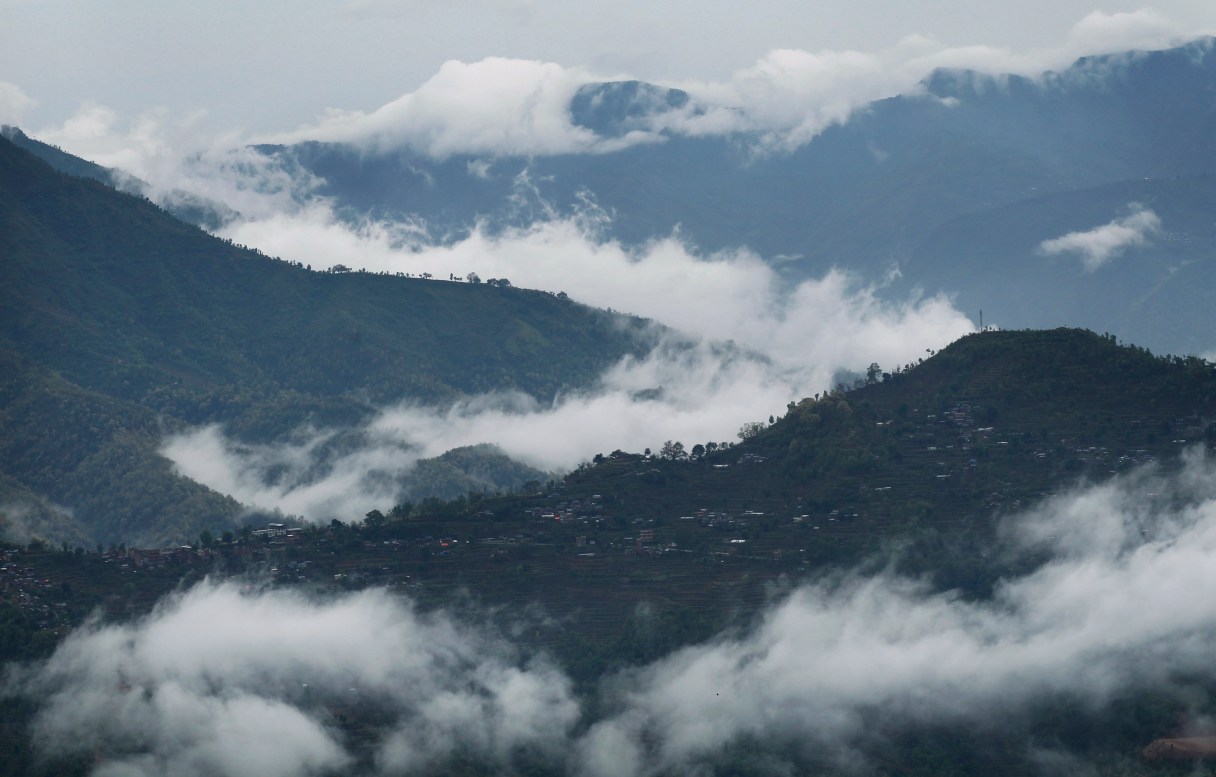
KATHMANDU, Nepal (AP) – Even amid the misery, with entire neighborhoods sleeping on sidewalks for fear of a massive earthquake’s aftershocks, even with no running water, no electricity, and anger and frustration boiling over – even with all this, you can still find hints of the picture-postcard image of Nepal many foreigners hold in their imaginations.
There, perhaps, is Shangri-la, off in the Himalayan foothills that loom up above the tiled roofs and arched gates of the colonial-era buildings that made it through Saturday’s earthquake. There’s the squeak of the rickshaw, the gentle calls of “Namaste,” the blissed-out backpacker stumbling down tree-lined boulevards.
It was almost always more mirage than truth, and never more so than after the country’s worst disaster in decades.
People here have long seen their struggles with crushing poverty, corruption and infrastructure failures, and with a political fecklessness almost Shakespearean in scale, overshadowed by the beauty of the land and its firm place in the collective popular romantic imagination.
As Nepalese now dig out from a quake that has killed 5,500 and counting, there’s widespread pessimism that these ugly truths will become any clearer to an outside world smitten with an image that doesn’t match the reality. There is even less faith that a government that many feel has consistently failed its people will rise to the occasion.