
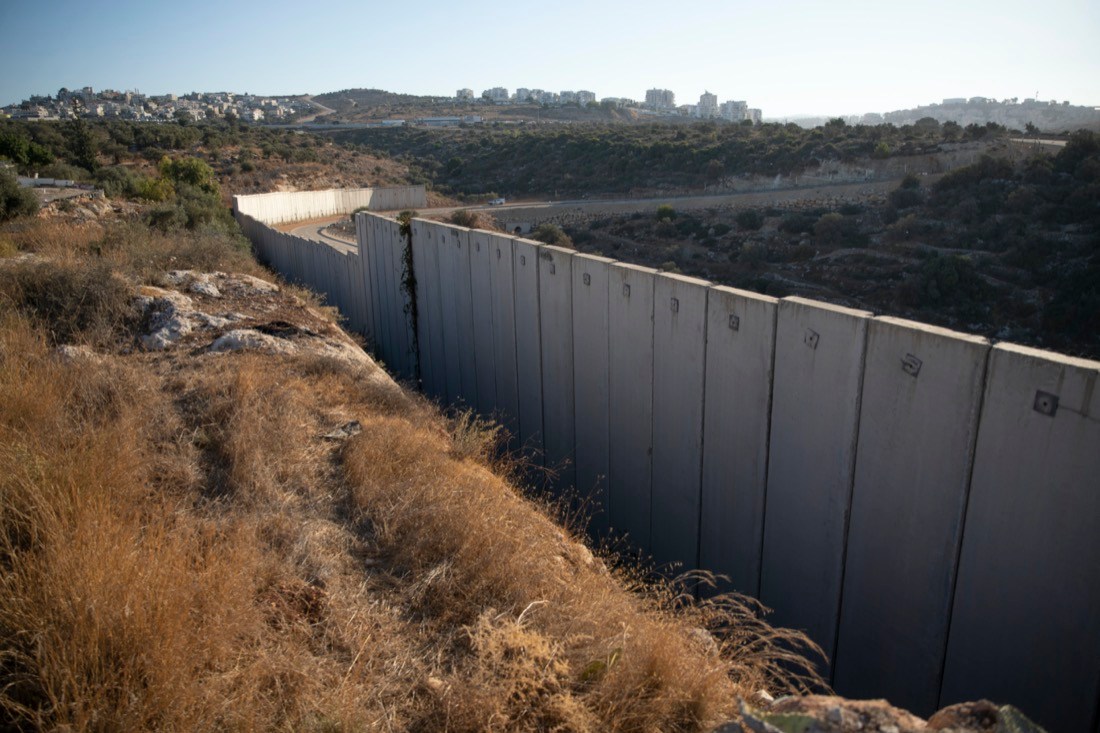
QAFFIN, West Bank (AP) – Three days a week, Palestinian farmers in the occupied West Bank village of Qaffin line up at a yellow gate and show military permits to soldiers in order to tend their crops on the other side of Israel’s separation barrier.
The farmers say that because of increasingly onerous Israeli restrictions they can no longer live off their land, which is suffering without proper cultivation. The olive groves just beyond the gate are scorched from a recent blaze – firefighters also need permission to enter.
Nearly two decades after Israel sparked controversy worldwide by building the barrier during a Palestinian uprising, it has become a seemingly permanent feature of the landscape – even as Israel encourages its citizens to settle on both sides.
Tens of thousands of Palestinians navigate its checkpoints every morning as they line up in cramped terminals to enter Israel for jobs in construction and agriculture. Farmers in Qaffin and dozens of other villages need permits to access their own private property.
Israel says the barrier helped stop a wave of suicide bombings and other attacks by Palestinians who slipped into the country during the 2000-2005 uprising and is still needed to prevent deadly violence.