
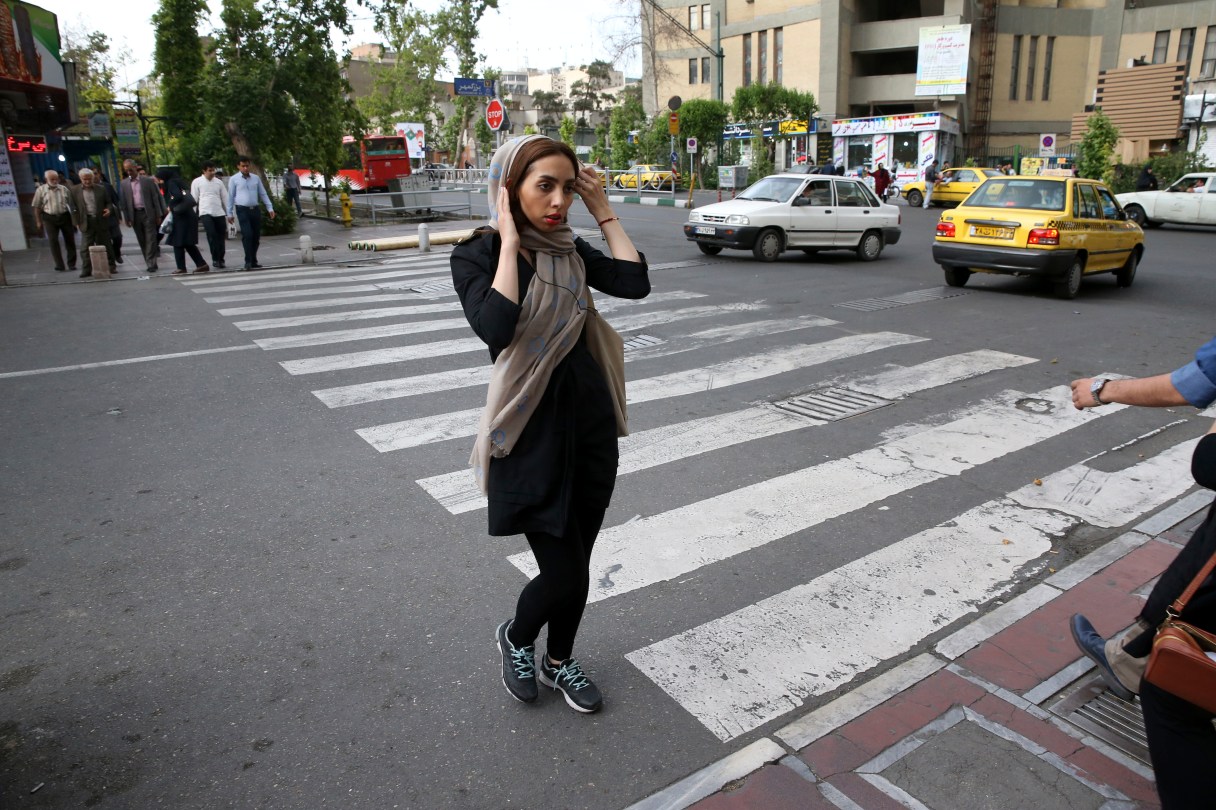
TEHRAN, Iran (AP) – Tehran resident Sousan Heidari has stopped letting her headscarf slip casually down over her neck and shoulders while driving in the Iranian capital. These days, the 22-year-old with a taste for bold makeup makes sure to pull it tightly over her dark hair, fearful of running afoul of a newly established undercover division of the morality police.
“Every single man or woman could be a member of the unit,” she cautioned. “I don’t know. Maybe some plainclothes have already reported me because of heavy makeup.”
Tehran police chief Gen. Hossein Sajedinia recently announced his department had deployed 7,000 male and female officers for a new plainclothes division – the largest such undercover assignment in memory. Authorities say the division, which started work last week, will patrol major Tehran streets and intersections, policing transgressions including harassment against women and excessive car honking and engine noise.
Critics fear the unit’s main focus, however, will be enforcing the government-mandated Islamic dress code, which requires women be modestly covered from head to toe. They see it as the latest flashpoint in the struggle between relative moderates such as President Hassan Rouhani and establishment hard-liners who fear looser social norms will weaken the Islamic Republic’s values and priciples.
Iranian women these days, particularly younger ones, often forego the traditional long black long veil known as the chador and opt instead for trendy dresses and fashionable headscarves. More and more, they are daring to let their scarves slip down to their shoulders while driving.