
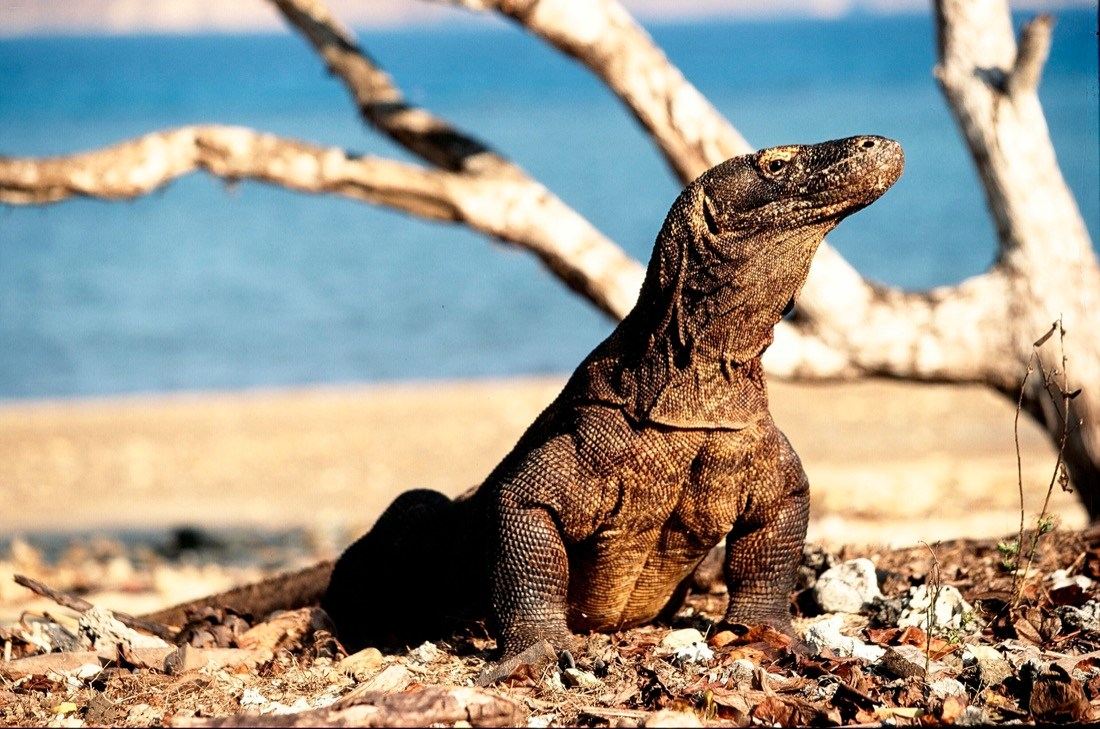
JAKARTA, Indonesia (AP) – On a dirt path, forked yellow tongue darting from its mouth, a member of the world’s largest lizard species lazes on an island in eastern Indonesia’s Komodo National Park as tourists snap photos. And about 18 miles (30 kilometers) away on another park island that harbors Komodo dragons, trees have been removed and concrete poured for new tourist facilities that have aroused the ire of residents and environmental activists.
The construction is part of an ambitious Indonesian initiative that has generated tensions between a government that wants to develop natural attractions for luxury tourism and conservationists who fear habitat for the endangered Komodo dragon will be irreparably harmed. United Nations officials have also voiced concerns about potential tourism impacts on this unique wildlife-rich park.
Encompassing about 850 square miles (2,200 square kilometers) of land and marine area, Komodo National Park was established in 1980 to help protect the famed dragons. Indonesia’s Ministry of Environment and Forestry estimates around 3,000 of the reptiles live there today, along with manatee-like dugongs, sea turtles, whales and more than a thousand species of tropical fish.
Because of its biodiversity and beauty, the park became a United Nations Educational, Scientific and Cultural Organization World Heritage Site in 1991. And it’s one of Indonesia’s crown jewels for tourism, typically drawing hundreds of thousands of visitors from around the world each year.
For years the government has been trying to figure out how to best capitalize on the park, most recently designating it part of the country’s “10 New Balis” initiative – an effort to draw more tourists, as the island of Bali did before border restrictions during the COVID-19 pandemic.