
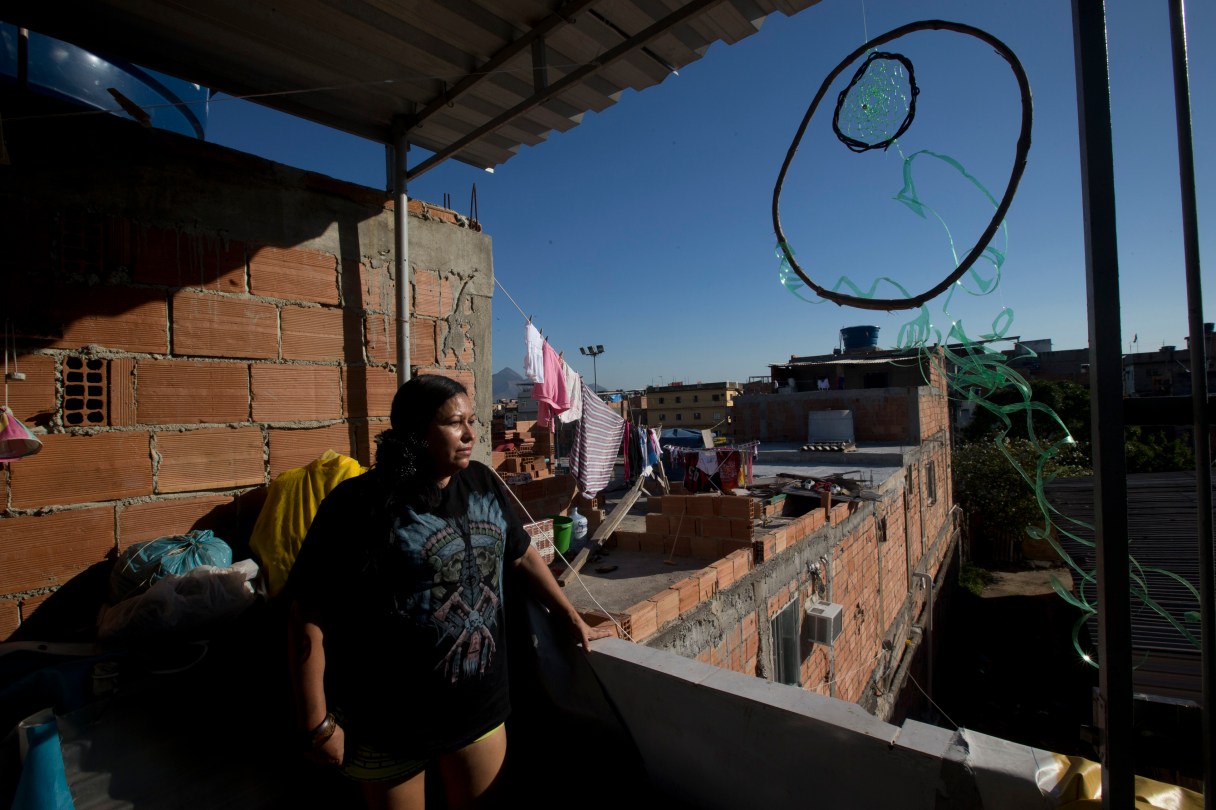
RIO DE JANEIRO (AP) – They huddle in a tight circle, shaking seed-filled maracas and shuffling in time to a rhythm that has pulsed through their tribes for generations. The dancers raise their voices in song, conjuring an ancient spirit that vibrates above the traffic roaring from a nearby expressway and the beat of funk music blasting from a neighbor’s loudspeaker.
In this Brazilian favela, a dense hodgepodge of humble cinderblock homes filled with some of Rio de Janeiro’s poorest residents, the indigenous people whose cultures predate recorded history are struggling to keep their traditions alive in the face of modernity. Seeking jobs and forced out of their native lands by loggers, miners and farmers, an estimated 22,000 Brazilian Indians now call the crowded favelas their home.
Deforestation continues to reshape the Amazon rain forest region that is home to a third of Brazil’s indigenous people. The rate of deforestation rose 29 percent last year, compared with a year earlier, the Brazilian government reported last week.
“There are no more forests, no more fish. We’ve got to survive so we go to the cities. But they’re so expensive, where can we live but the favelas?” asked Sandra Benites, a Guarani tribeswoman who moved to Rio’s Complexo Sao Carlos slum in 2010 from the neighboring state of Espirito Santo. “Despite the problems, at least in the village you’re surrounded by a community. In the city, you’re alone.”
Benites, a 39-year-old teacher who also uses her tribal name Ara Rete, joined other indigenous urbanites recently to celebrate a traditional ritual in Rio de Janeiro’s Mare favela. The gatherings of about a dozen people, from as many tribes, provide a sense of community that helps them endure the “double discrimination” they face.