
Friday, November 13, 2026Nov 13

Russia reaches out to Europe’s far-right parties

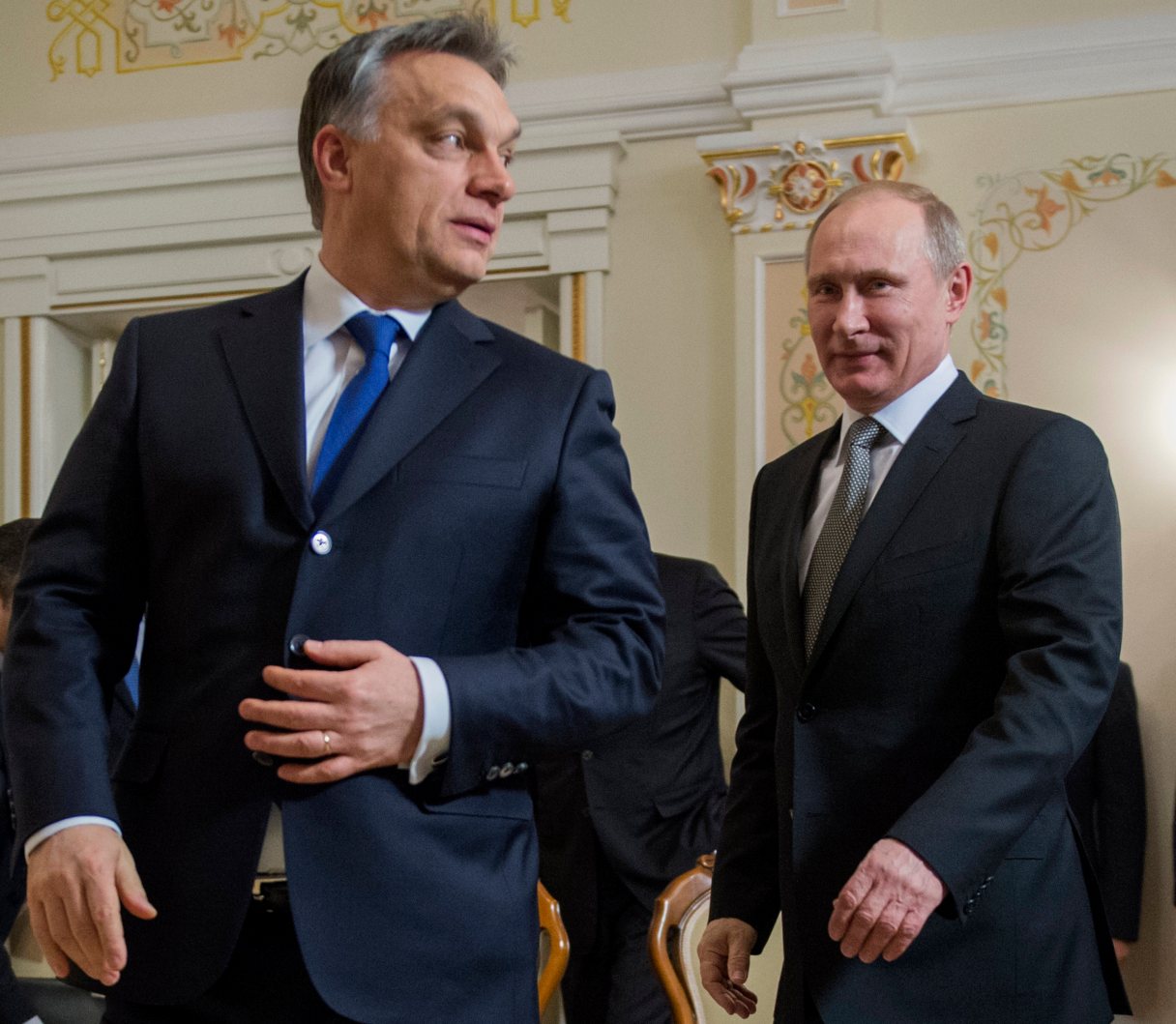
FILE - In this Tuesday, Jan. 14, 2014, file photo, Russian President Vladimir Putin, right, and Hungarian Prime Minister Viktor Orban walk during their meeting in the Novo-Ogaryovo residence outside Moscow. Nationalist Hungarian Prime Minister Viktor Orban perceives prevailing winds as “blowing from the East” and sees in Russia an ideal political model for his concept of an “illiberal state.”(AP Photo/RIA-Novosti, Sergei Guneyev, Presidential Press Service, File)
FILE - In this Tuesday, Jan. 14, 2014, file photo, Russian President Vladimir Putin, right, and Hungarian Prime Minister Viktor Orban walk during their meeting in the Novo-Ogaryovo residence outside Moscow. Nationalist Hungarian Prime Minister Viktor Orban perceives prevailing winds as “blowing from the East” and sees in Russia an ideal political model for his concept of an “illiberal state.”(AP Photo/RIA-Novosti, Sergei Guneyev, Presidential Press Service, File) FILE - In this Tuesday, Jan. 14, 2014, file photo, Russian President Vladimir Putin, right, and Hungarian Prime Minister Viktor Orban walk during their meeting in the Novo-Ogaryovo residence outside Moscow. Nationalist Hungarian Prime Minister Viktor Orban perceives prevailing winds as “blowing from the East” and sees in Russia an ideal political model for his concept of an “illiberal state.”(AP Photo/RIA-Novosti, Sergei Guneyev, Presidential Press Service, File)

VIENNA (AP) – A Russian loan to France’s National Front. Invitations to Moscow for leaders of Austria’s Freedom Party. Praise for Vladimir Putin from the head of Britain’s anti-European Union party.

As the diplomatic chill over Ukraine deepens, the Kremlin seems keener than ever to enlist Europe’s far-right parties in its campaign for influence in the West, seeking new relationships based largely on shared concern over the growing clout of the EU.

Russia fears that the EU and NATO could spread to countries it considers part of its sphere of influence. And it has repeatedly served notice that it will not tolerate that scenario, most recently with its Ukraine campaign.

Europe’s right-wing and populist parties, meanwhile, see a robust EU as contrary to their vision of Europe as a loose union of strong national states. And some regard the EU as a toady to America.

The fact that many of Moscow’s allies are right to far-right reflects the Kremlin’s full turn. Under communism, xenophobic nationalist parties were shunned.