
How do we ensure that the world has access to the COVID-19 vaccines needed to prevent more variants like the latest omicron strain from emerging?
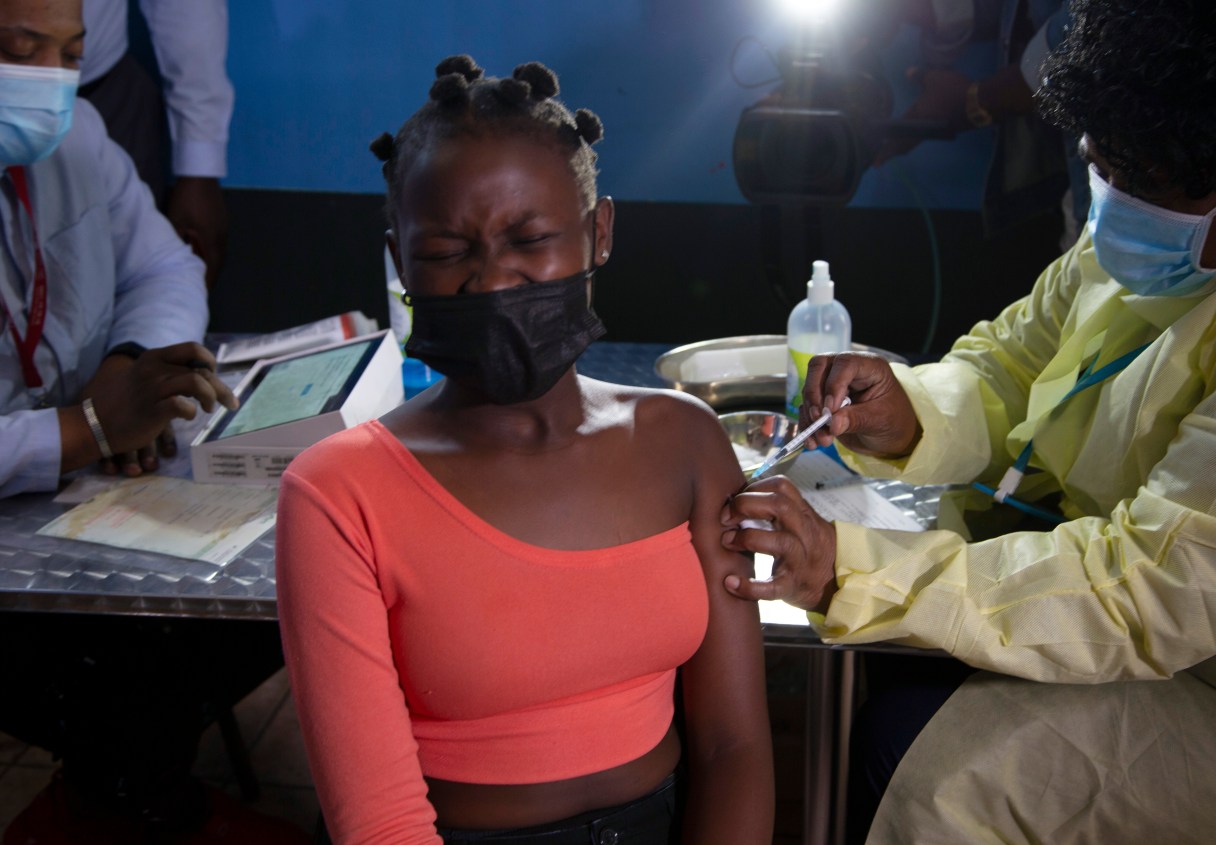
One disturbingly common response to calls from the World Health Organization and others to increase the availability of doses in emerging economies is to suggest supply isn’t really the problem, but demand. South Africa, where omicron was first identified, provides one data point in favor of this hypothesis. Despite the fact that barely 24% of the population has been fully vaccinated, the Department of Health last week asked Johnson & Johnson and Pfizer Inc. to suspend delivery of vaccines because its existing stockpile was more than enough at current lackluster rates of uptake.
To be clear, outside of the rich world demand is clearly not the main constraining factor on inoculations. All but 14 of the 51 nations with supply agreements sufficient to cover their entire populations are high-income countries, according to data collected by Unicef.
Vaccine manufacturing capacity, which a database kept by Duke University puts at 11.435 billion doses this year, is simply insufficient to double-dose everyone on the planet. The rich nations where most shots have been developed have managed to hog the lion’s share of both first, second and third boosters so far.
Next year, though, that’s likely to change. UNICEF’s figures suggest that we’ll have capacity to produce about 23.53 billion doses, more than enough to put a needle in every person on the planet three times over. At that point, hesitancy in the unvaccinated world may become a real problem – and everything we’re doing now is likely to make it worse.