
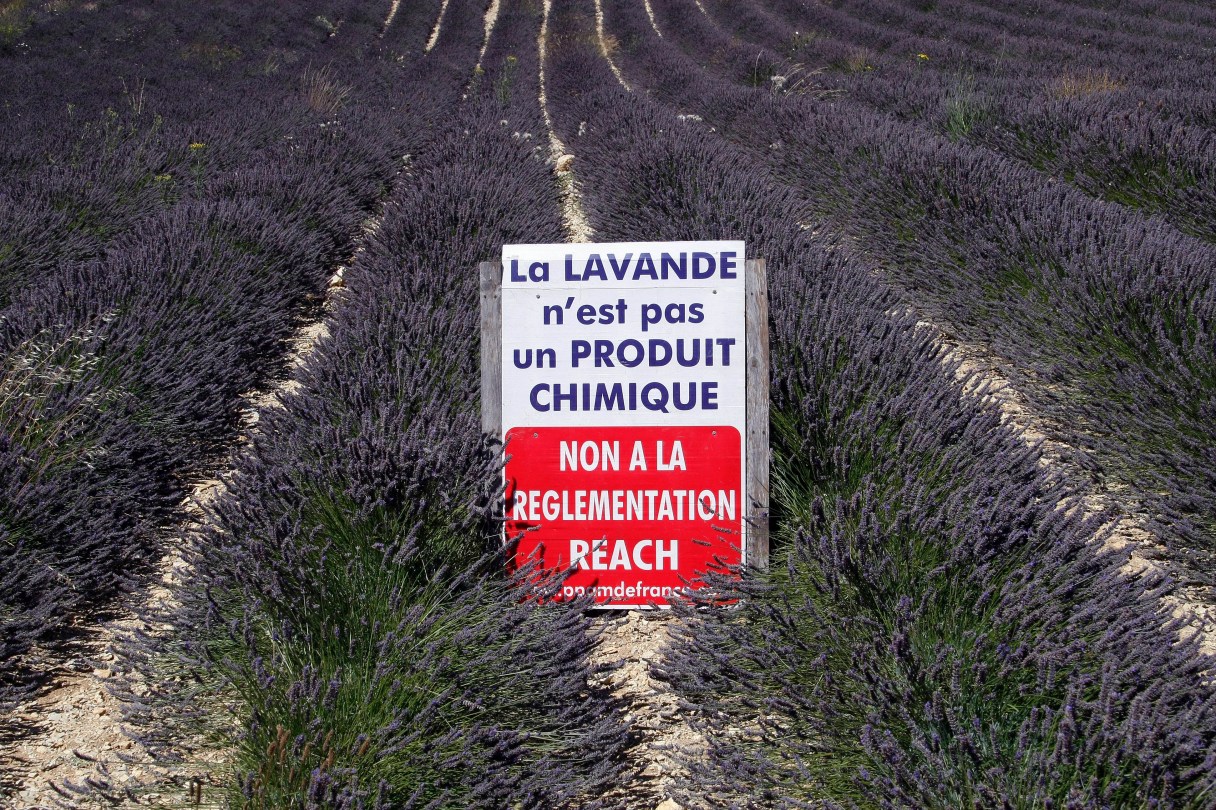
PARIS (AP) – The sweet smell of lavender is tinged with bitterness this year in the south of France, as farmers who harvest the flower protest European regulations linking the plant to chemical toxins.
Billboards proclaiming “Lavender is not a chemical” dot fields that yield what in Provence is known as blue gold – lavender oil, worth over 100 euros a kilogram ($60 a pound). The plant is cultivated by around 1,500 producers, representing 30,000 full-time jobs that include catering to the millions of tourists in the south of France who come for the panoramic views of purple fields.
For many, Provence is synonymous with lavender, both fine lavender – used for perfumes, cosmetics and aromatherapy – and hybrid lavender, called lavandin. Lavandin is cheapest and used to scent soaps, detergents and air fresheners.
And they fear European Union rules adopted last year and due to come in force by 2018 will threaten that. According to regulators, lavender oil’s potential to produce allergies places it firmly within regulations on chemical toxins. That means lavender products will have to bear labels involving bold black and red warning labels with messages such as “CAN BE FATAL IF SWALLOWED OR INHALED.”
Producers say the rules are too extreme – they note that lavender oil allergies usually produce only rashes – and too expensive for small farmers.