
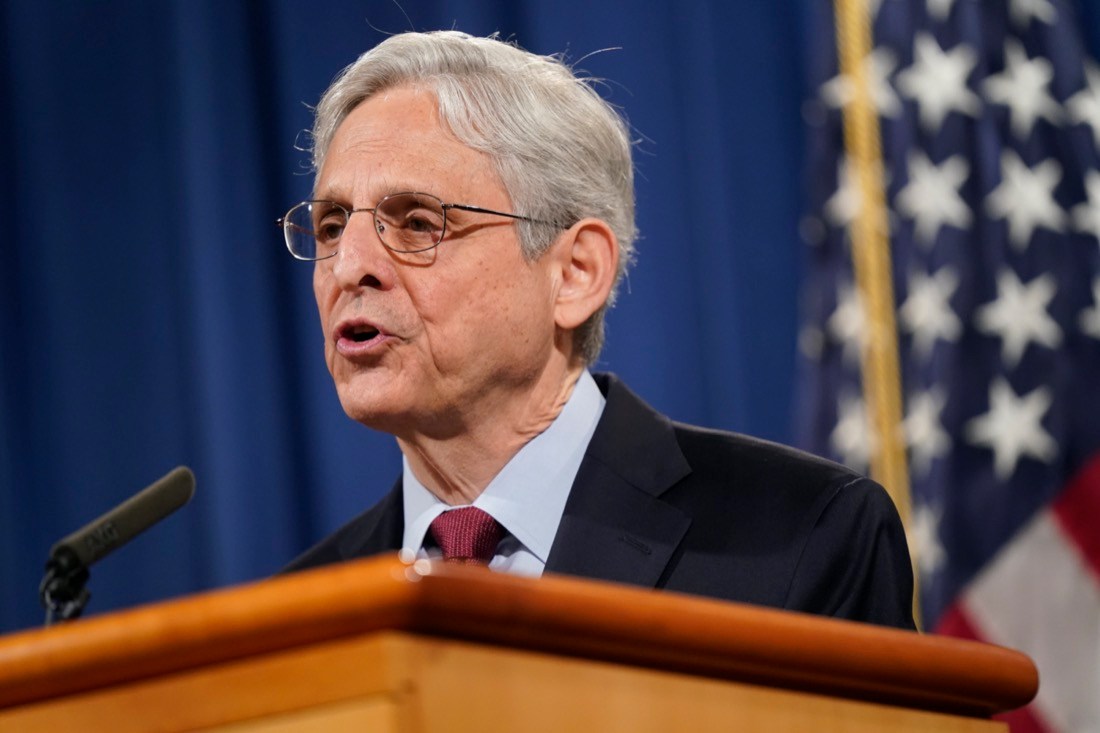
WASHINGTON (AP) – Attorney General Merrick Garland on Monday formally prohibited federal prosecutors from seizing the records of journalists in leak investigations, with limited exceptions, reversing years of department policy.
The new policy largely codifies the commitment Garland made in June, when he said the Justice Department would abandon the practice of seizing reporters’ records in leak investigations. It aims to resolve a politically thorny issue that has long vexed Justice Department prosecutors trying to weigh the media’s First Amendment rights against government’s desire to protect classified information.
But the memo makes clear that federal prosecutors can, in some cases, seize journalists’ records, including if the reporters are suspected of working for agents of a foreign power or terrorist organizations. There is also an exception for situations with imminent risks, like kidnappings or crimes against children.
Garland was moved to act following an outcry over revelations that the department during the Trump administration had obtained records belonging to journalists at The Washington Post, CNN and The New York Times as part of investigations into who had disclosed government secrets related to the Russia investigation and other national security matters.
Others whose records were obtained were members of Congress and their staffers and former White House counsel Don McGahn.