
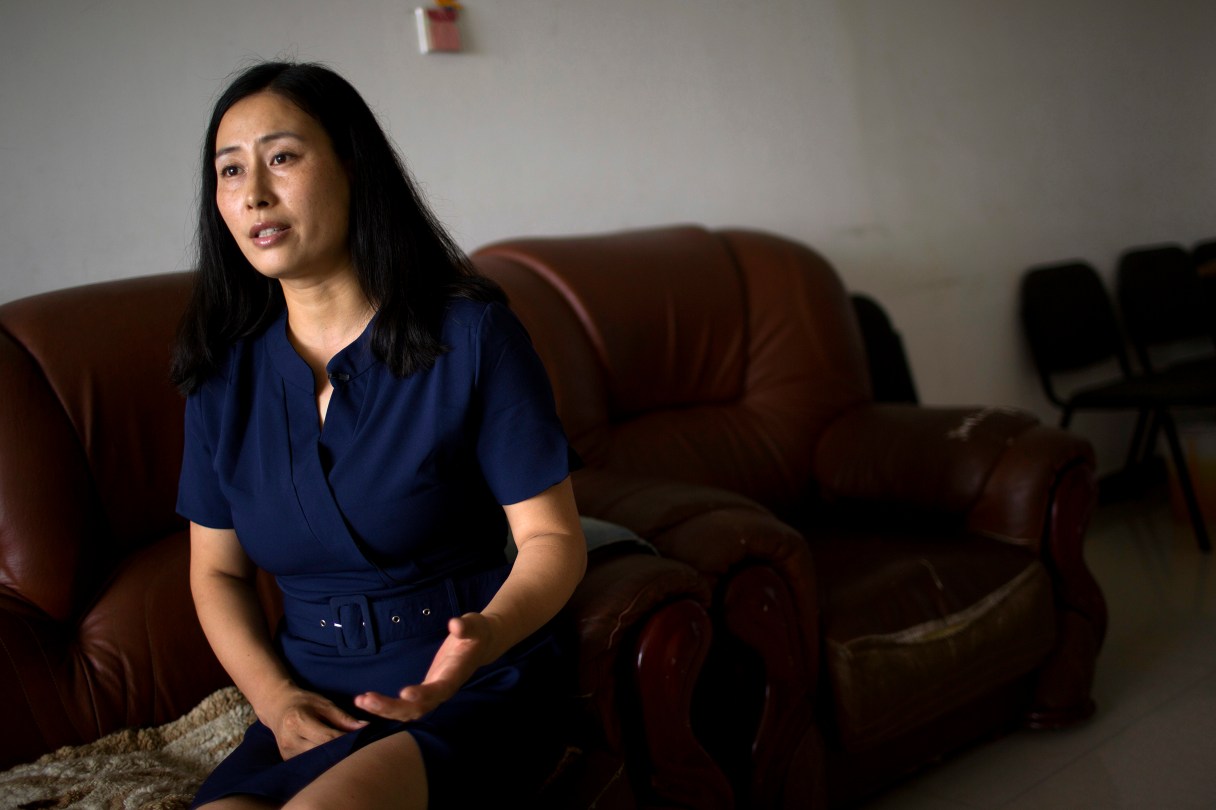
BEIJING (AP) – Unresolved questions have haunted Yuan Shanshan since her husband, the human rights lawyer Xie Yanyi, was taken away a year ago by the police.
She doesn’t know how her husband could have broken the law. She doesn’t know where she and their three children will live next month after they’re evicted. She doesn’t know what to name the 3-month-old baby girl with eyebrows shaped just like his.
Held in a jail 100 kilometers (60 miles) away, Xie probably doesn’t even know he has another child.
The Chinese government launched its largest-ever crackdown against human rights lawyers and activists on July 9, 2015, seizing and questioning hundreds of people nationwide in a campaign that sent a chill through the country’s legal system. Nearly two dozen of them remain in detention and face charges, including inciting subversion of state power – charges condemned by international rights groups and Western governments.
Twelve months later, the unprecedented sweep also has exacted a toll on the detainees’ families, who speak of financial ruin, homelessness, and physical abuse at the hands of police. Children have been denied schooling or placed under surveillance. Landlords have been pressured to evict families. Police have sought images of the detainees’ young children that could be used, relatives believe, to break their spirits and draw out confessions of wrongdoing.