
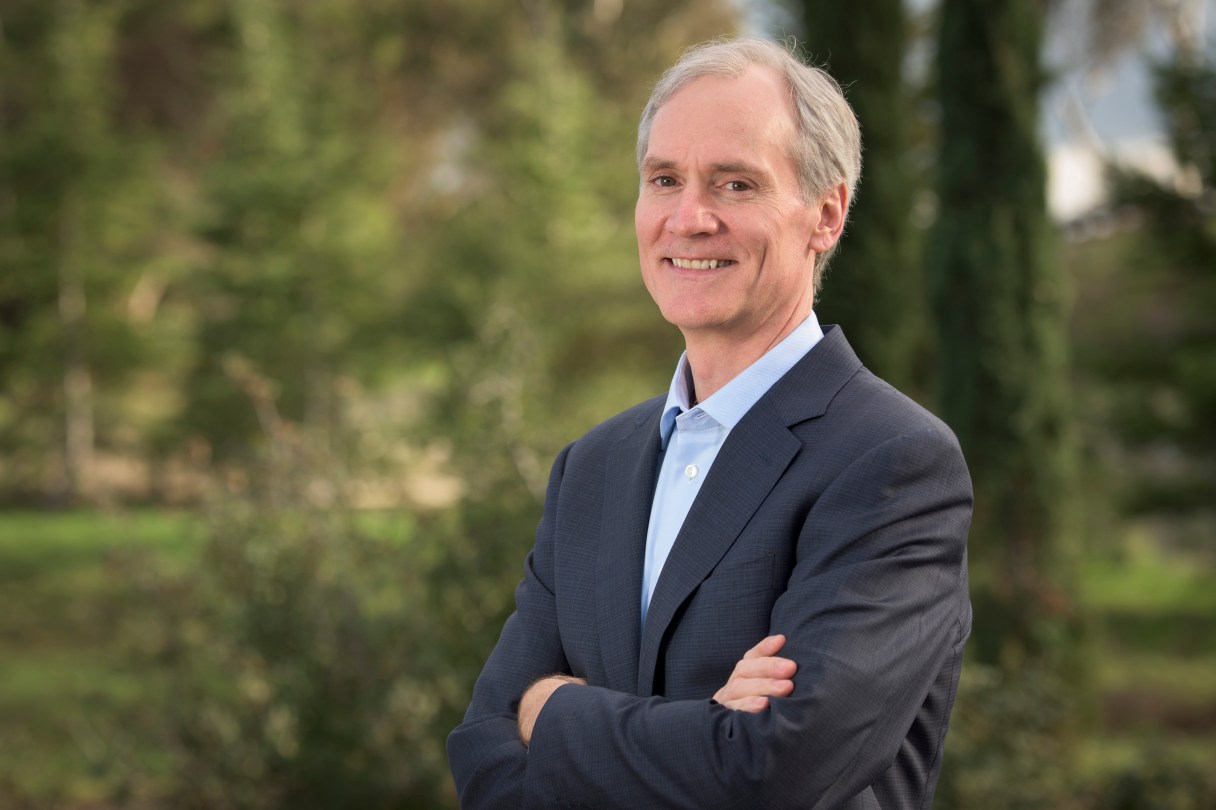
PALO ALTO, Calif. (AP) – A neuroscientist who leads a prestigious graduate school and biomedical research institute in New York City was named Thursday as Stanford University’s next president, a position he said he would use to champion basic research and the value of a liberal arts education.
Marc Tessier-Lavigne, president of The Rockefeller University, will become Stanford’s 11th president on Sept. 1, the California university’s Board of Trustees announced. Tessier-Lavigne, 56, will succeed President John Hennessy, who plans to return to teaching and research this summer after almost 16 years at Stanford’s helm.
The trustees said he was the unanimous choice of a 19-member committee charged with finding Hennessy’s replacement.
“Stanford is a leader among higher education institutions in the world and in the U.S. We need a president who will also be a leader among leaders. We have found it in Marc,” said Steven Denning, the board’s chairman.
A native of Canada who grew up attending French schools in Europe as part of an Army family, Tessier-Lavigne, 56, was a professor at Stanford from 2001 to 2005. His scholarly expertise is brain development and repair, which he has used to research treatments for spinal cord injuries and diseases such as Alzheimer’s and Parkinson’s.