
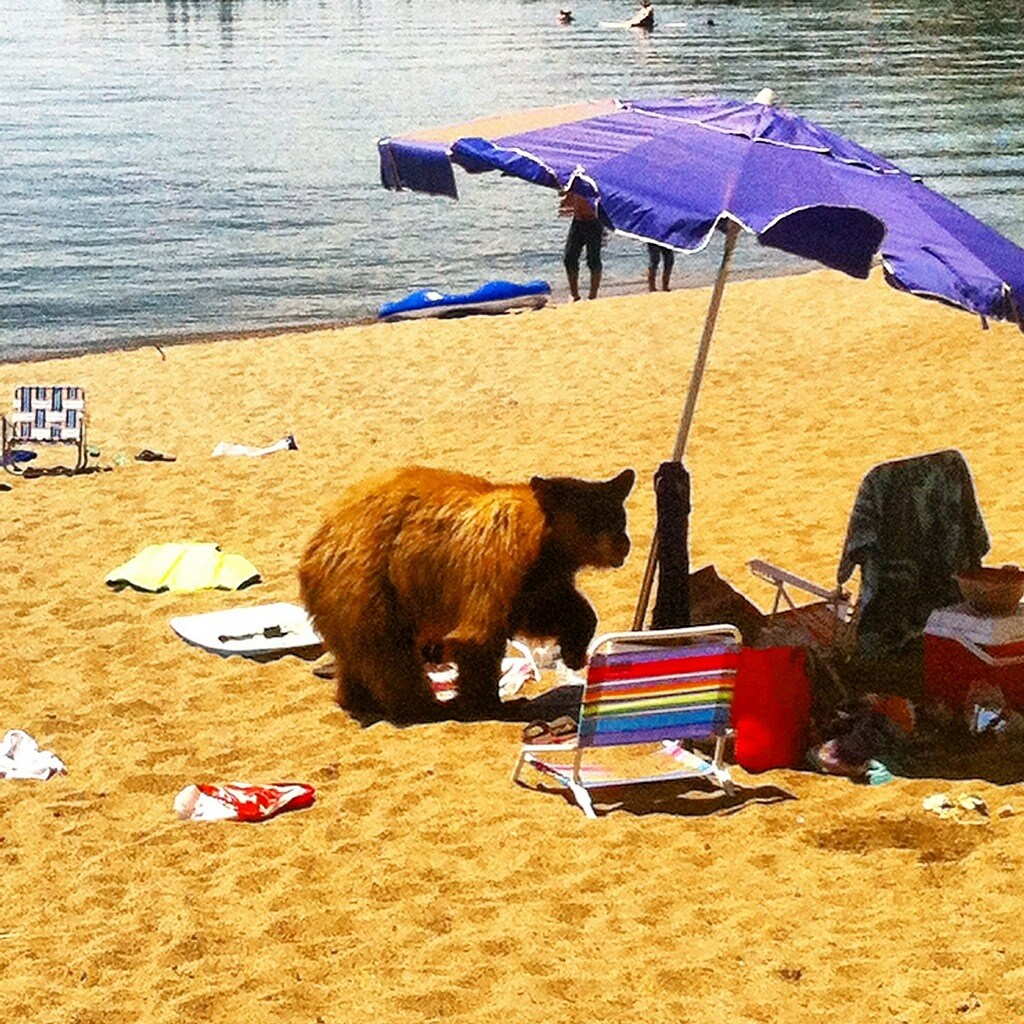
RENO, Nev. (AP) – Long accustomed to dealing with bad news “garbage” bears that become hooked on improperly stored trash at homes and businesses around Lake Tahoe, Nevada wildlife officials say they’re increasingly responding to a new kind of troublemaker they’ve started calling “drought” bears.
Experts have been predicting for months the lingering drought will lead to significantly more bear problems throughout the Sierra Nevada this summer. Three consecutive years of abnormally dry conditions have reduced most mountain creeks to a trickle and eliminated many natural food sources, forcing bears to greatly expand their search for food into urban neighborhoods, said Carl Lackey, chief wildlife biologist for the Nevada Department of Wildlife.
On Friday, wildlife officials captured their seventh problem bear in the last 10 days at Tahoe. An eighth was hit and killed by a car last week.
“We’re calling a lot of these ‘drought’ bears,” Nevada Department of Wildlife spokesman Chris Healy told The Associated Press. “These are bears that want to be wild, they are doing their best to be wild and trying to stay up in the hills, but they just don’t have any food.”
Many of the bears can be relocated and released to the wild, including a 3-year-old female trapped on Tahoe’s east shore near Glenbrook early Friday.