
Wednesday, November 4, 2026Nov 4

This story is free to read.

Anthem protest opportunities are limited in college football

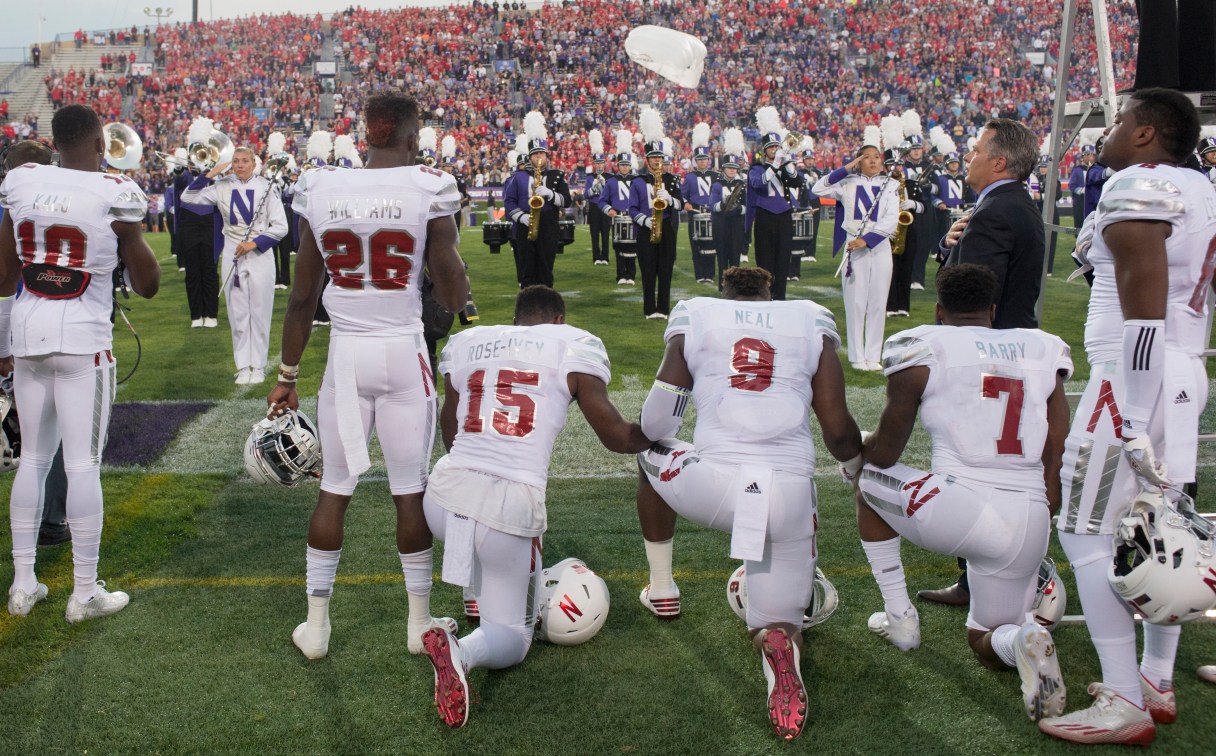
Nebraska linebacker Michael Rose-Ivey (15), defensive end DaiShon Neal (9) and linebacker Mohamed Barry (7) kneel during the national anthem before the team's NCAA college football game against Northwestern in Evanston, Ill., on Saturday, Sept. 24, 2016. Rose-Ivey said Monday he and his family have received racially charged criticism on social media, and said the responses show why the protest is necessary. (Matt Ryerson/Journal Star via AP)
Nebraska linebacker Michael Rose-Ivey (15), defensive end DaiShon Neal (9) and linebacker Mohamed Barry (7) kneel during the national anthem before the team's NCAA college football game against Northwestern in Evanston, Ill., on Saturday, Sept. 24, 2016. Rose-Ivey said Monday he and his family have received racially charged criticism on social media, and said the responses show why the protest is necessary. (Matt Ryerson/Journal Star via AP) Nebraska linebacker Michael Rose-Ivey (15), defensive end DaiShon Neal (9) and linebacker Mohamed Barry (7) kneel during the national anthem before the team's NCAA college football game against Northwestern in Evanston, Ill., on Saturday, Sept. 24, 2016. Rose-Ivey said Monday he and his family have received racially charged criticism on social media, and said the responses show why the protest is necessary. (Matt Ryerson/Journal Star via AP)

LINCOLN, Neb. (AP) – If Nebraska’s Michael Rose-Ivey and teammates want to kneel during the national anthem again, their next opportunity will be the Nov. 5 game at Ohio State.

Rose-Ivey, Mohamed Barry and DaiShon Neal each took a knee on the sideline as the anthem was sung at Northwestern last week.

Their action sparked statewide debate about whether it was an appropriate setting for their protest of police violence and racial injustice.

Unlike in the NFL, where players are on the field for the anthem, the common practice in college football is for teams to be in their locker rooms. Just a handful of schools send teams onto the field for the anthem, limiting the opportunity for the movement to spread as it has in the pros.