
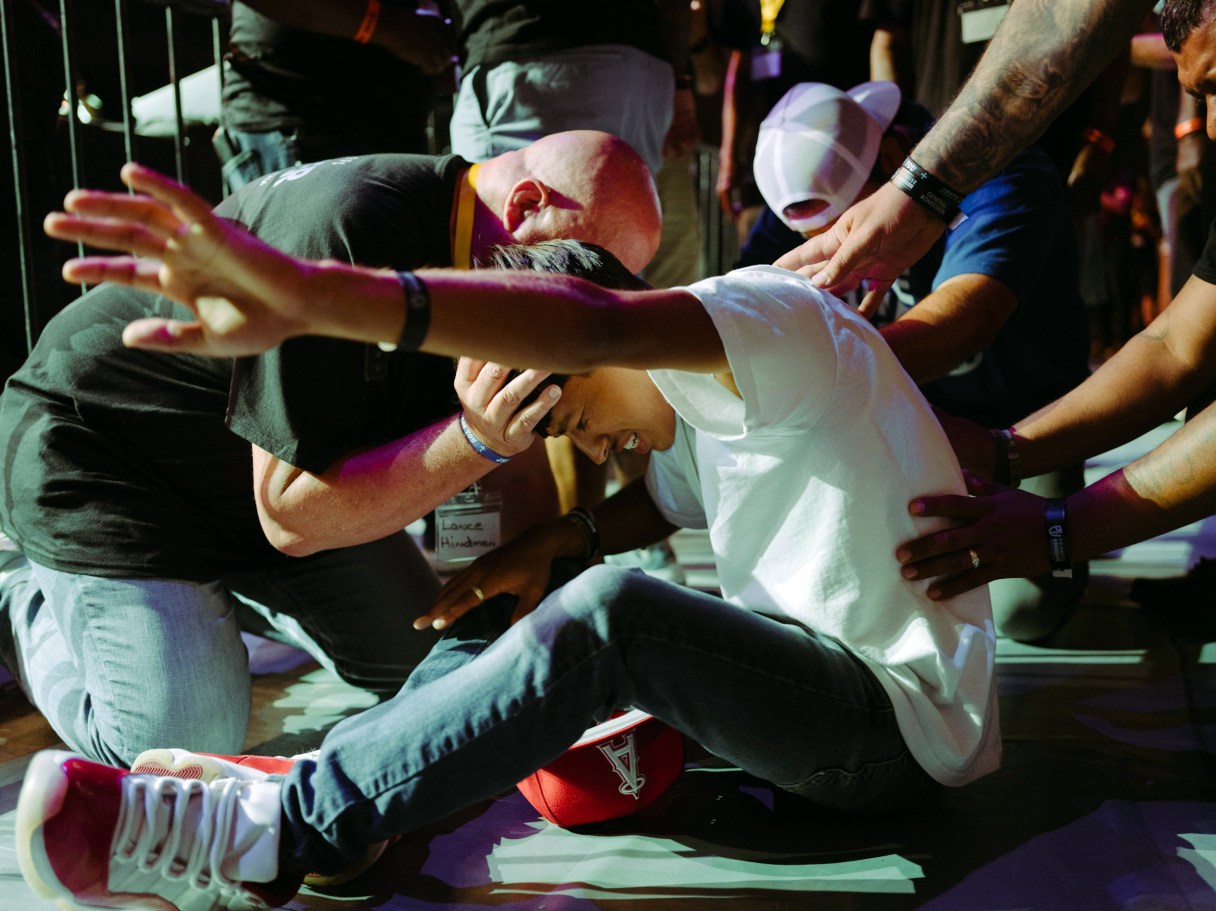
TULSA, Okla. — With his back to the U.S. Capitol, Randy Phillips faced a sea of evangelical men who had traveled from all over the country to pray, sing and recommit themselves to their families.
It was an autumn Saturday in 1997, and Promise Keepers, a fast-growing conservative Christian men’s ministry that some warned was a covert political project, had gathered at its biggest event ever. “Why are we here?” Phillips, then the organization’s president, asked the hundreds of thousands of men in attendance. “Is it to demonstrate political might? No. Is it to demonstrate masculine strength? No. Is it to take back the nation by imposing our religious values on others? No.” The crowd roared with approval.
This weekend, a much smaller group of Promise Keepers gathered in Tulsa at a very different moment for evangelicals — with less decisive answers to those questions. Headed by a new young CEO, the group is leaning into partisan politics where it once eschewed them, and equipping men to do battle not only with their own spiritual weaknesses but also with a secular culture that speakers portrayed as uniquely hostile.
“They want American men to be weak, put into corners, afraid of your own shadow,” right-wing activist Charlie Kirk said at the two-day conference, which drew about 2,000 men. “If men, and Christian men, start to recommit to the truths of the promises of the Bible, this country can and will be saved.”
Kirk’s speech went on to mock the concept of preferred pronouns and criticize pandemic lockdowns. He, like other speakers at the Daring Faith conference, also described the rise of transgender identities as a particular threat, raised the specter of men losing their jobs for speaking openly about their beliefs and pushed back on the concept of “toxic masculinity.”