
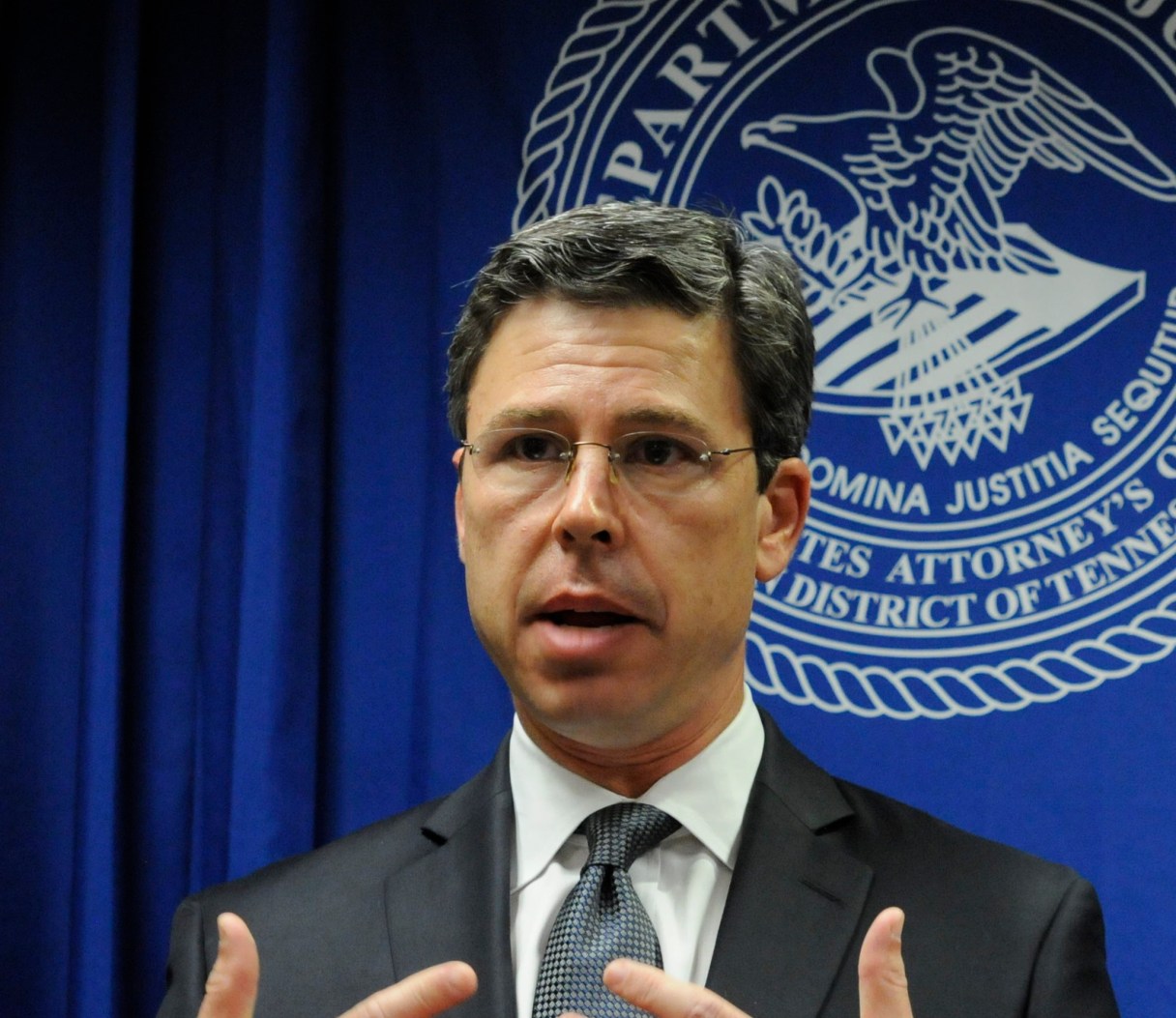
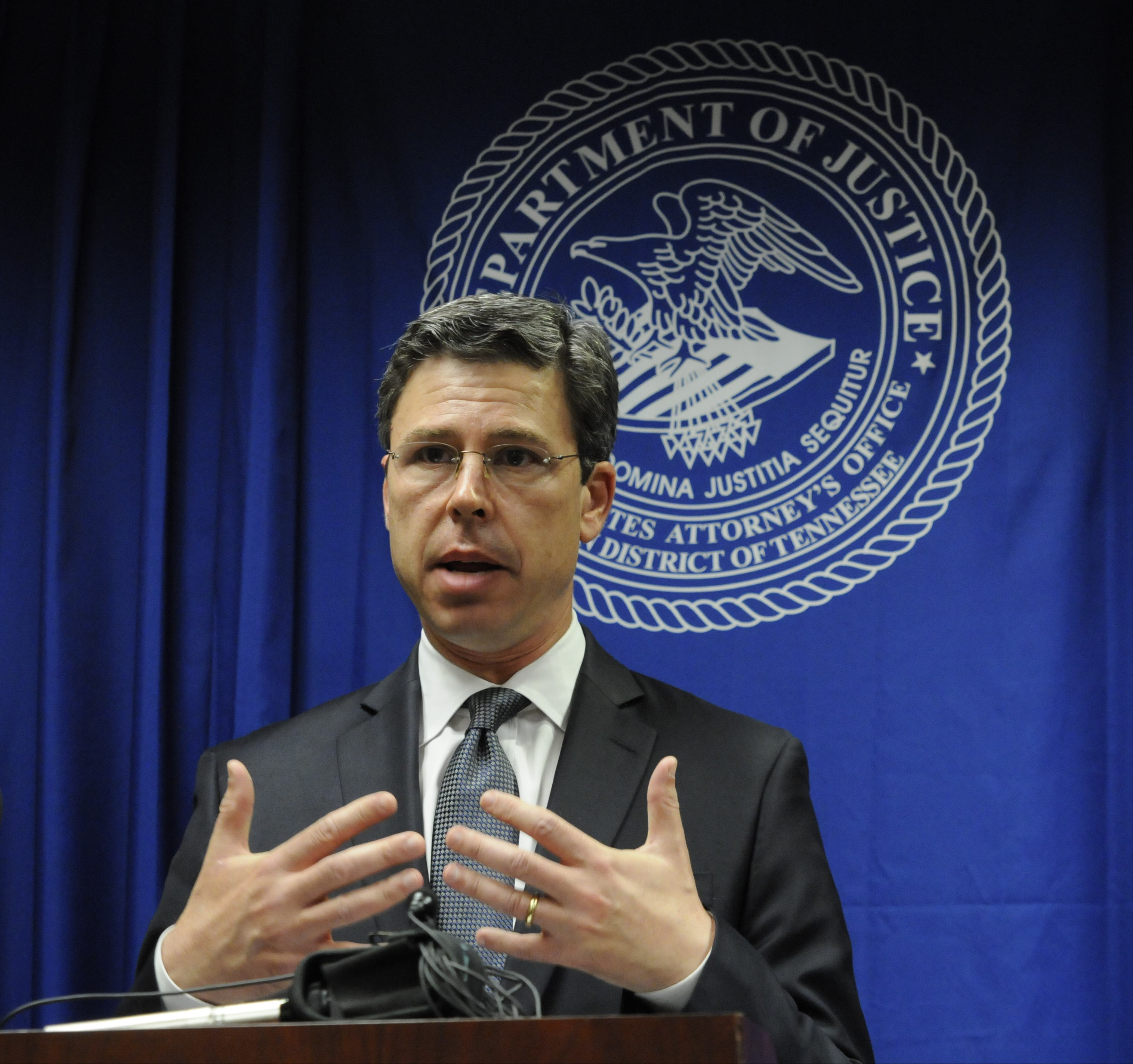
 Chattanooga Mayor Andy Berke speaks to the media from the U.S. Attorneys Office in Chattanooga in this Nov. 4, 2013, file photo.
‘Gunshot wound to neck – minor injury; Victim black male; Showed up at Memorial Hospital. Name given believed to be false … No shots-fired calls in area, no crime scene located.”
– Text to Andy Berke
The text above is but one I have received since I’ve been mayor, but it could serve as a template for many others. It’s a main reason I decided to run for this office; and these texts, and stories from countless people across our city, have led me to an inescapable conclusion: We must do something about the shootings.
I heard it on the campaign trail, and it has been repeated again and again since I took office nine months ago. Shootings affect more than just the people involved. They make people feel less safe in their homes; businesses worry their customers won’t show up; and, worst of all, shootings tend to result in more shootings.
That’s because retaliation is the main impetus behind gun violence in our community. In Chattanooga, as in every city, gun violence is concentrated among a small number of extremely active groups — “gangs,” drug crews, “sets,” and the like. Across cities, up to three-quarters of all homicide is connected with group members representing less than half a percent of the population. The thinking is not complicated. You shot at me and my group, so my group and I are going to shoot at you and your group. And the cycle keeps going. It is concentrated among young black men, who in some neighborhoods are at terrible risk for being shot, killed, and going to prison.