
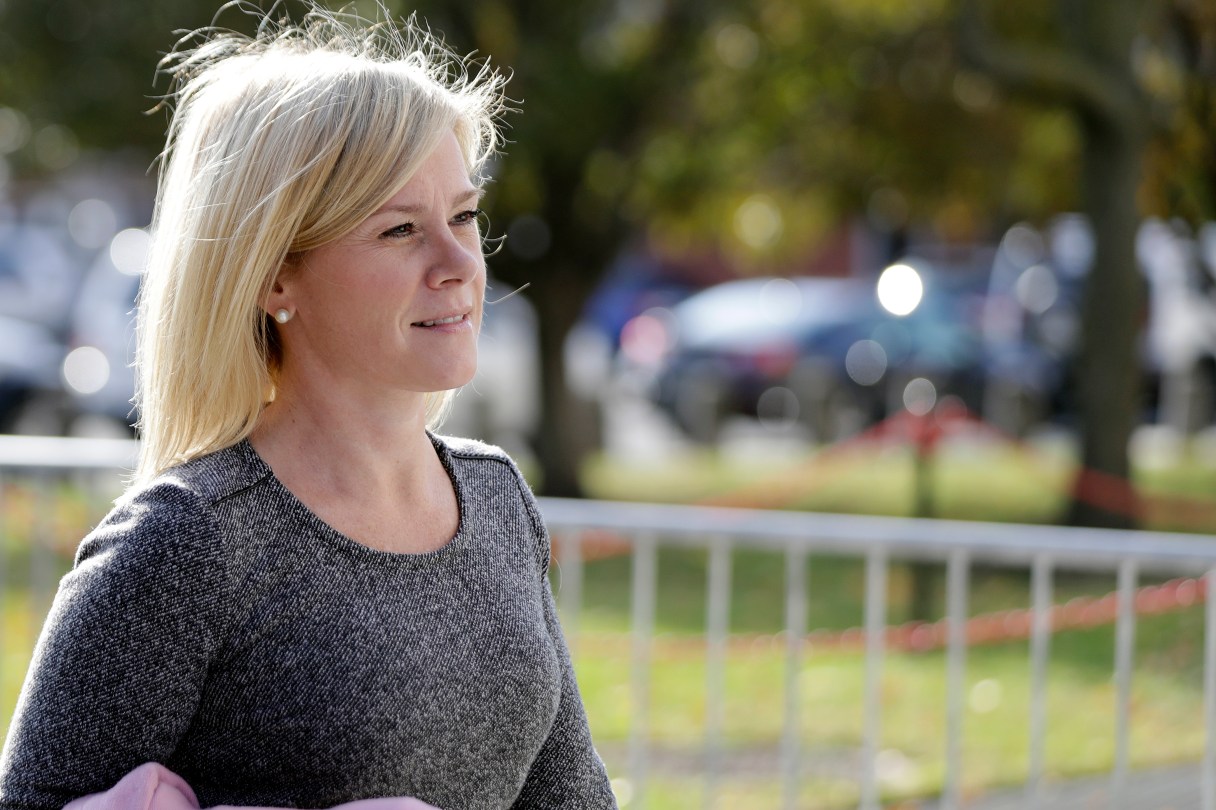
NEWARK, N.J. (AP) – In the end, the alleged political retaliation scheme involving a set of traffic cones, the country’s busiest bridge and three former allies of Republican New Jersey Gov. Chris Christie apparently wasn’t about politics at all, at least for the 12 people charged with deciding the fate of the two people on trial.
That’s due to the legal definition of conspiracy, and it’s an issue that has been at the heart of the trial of former Christie deputy chief of staff Bridget Kelly and former top appointee Bill Baroni. They are charged in a 2013 scheme to reduce access lanes near the bridge to retaliate against a Democratic mayor who wouldn’t endorse Christie.
Deliberations began late Monday, and by Tuesday morning jurors had sent questions to U.S. District Judge Susan Wigenton asking for clarification of the law. Wigenton’s response angered defense attorneys, one of whom accused her of essentially guaranteeing a guilty verdict.
A look at the legal concepts the jury, which will return for a fourth day of deliberations Thursday, must grapple with:
___