
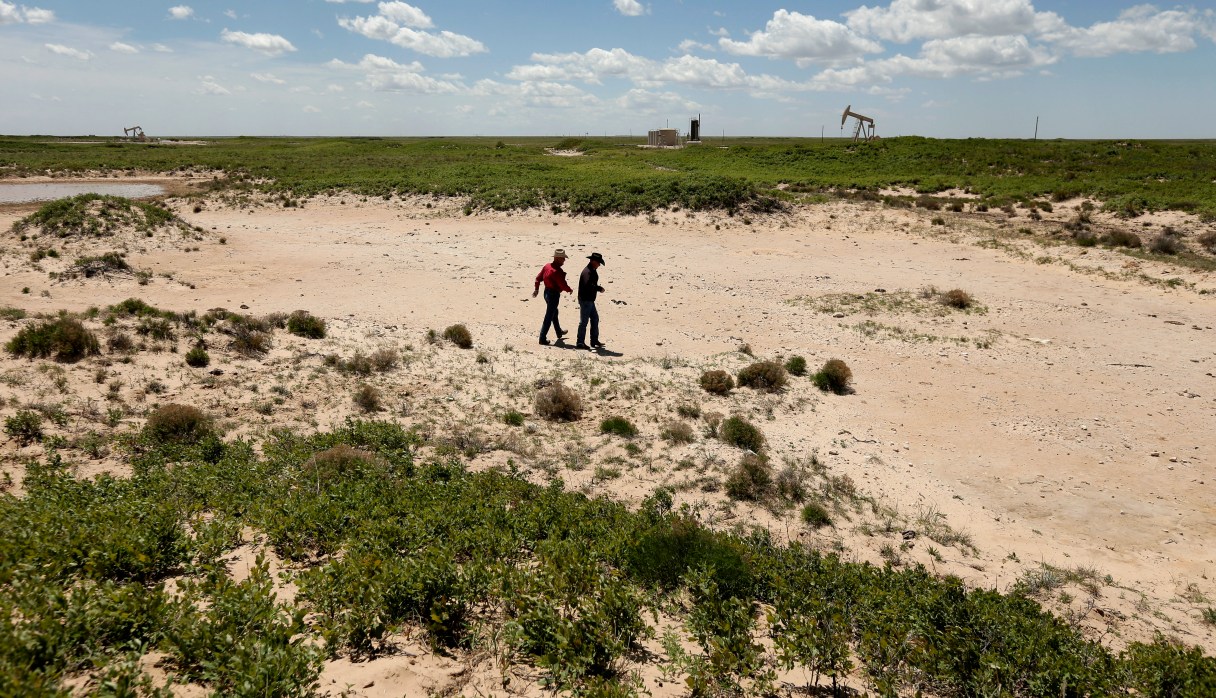
CROSSROADS, N.M. (AP) – Carl Johnson and son Justin are third- and fourth-generation ranchers who for decades have battled oilfield companies that left a patchwork of barren earth where the men graze cattle in the high plains of New Mexico. Blunt and profane, they stroll across a 1 1/2-acre patch of sandy soil – lifeless, save for a scattering of stunted weeds.
Five years ago, a broken pipe soaked the land with as much as 420,000 gallons of oilfield wastewater – a salty and potentially toxic drilling byproduct that can quickly turn fertile land into a dead zone. The leaked brine killed every sprig of grama and bluestem grasses and shinnery shrubs it touched.
For the Johnsons, the spill is among dozens that have taken a heavy toll: a landscape pockmarked with spots where livestock can no longer graze, legal fees running into the tens of thousands and worries about the safety of the area’s underground aquifer.
“If we lose our water, that ruins our ranch,” Justin Johnson said. “That’s the end of the story.”
Their plight illustrates a largely overlooked side effect of oil and gas production that has worsened with the past decade’s drilling boom: spills of wastewater that foul the land, kill wildlife and threaten freshwater supplies.